Namibia records lowest rhino poaching in more than a decade
A 53% drop in rhino poaching since 2024 highlights how coordinated conservation efforts help protect Namibia's wildlife
By
-
Stella McKitrick

© naturepl.com / Tony Heald / WWF
Key takeaways
- Namibia's government leadership and collaboration with communities, law enforcement, and conservation groups are helping to reduce wildlife crime.
- Continued investment in conservation and wildlife protection is critical to maintain progress and combat evolving trafficking threats.

© NACSO/WWF in Namibia
Namibia recorded its lowest rhino poaching levels in more than a decade, marking a major conservation milestone. While 43 rhinos were poached in 2025, the number is a 53% decrease from 2024. Wildlife crime continues to decline across the country, with major reductions in rhino poaching and other wildlife crimes involving elephants and pangolins, according to new findings from the Blue Rhino Task Team’s 2025 Namibia Wildlife Protection and Law Enforcement Annual Report.
This success reflects the power of Namibia’s dedicated, long-term, and collaborative approach to conservation, in which government agencies, conservation organizations, communities, and other partners work together to protect vulnerable wildlife. The Blue Rhino Task Team, a specialized, multi-agency wildlife crime intelligence and coordination unit, serves as a national focal point for combatting wildlife crime. It works closely with law-enforcement agencies and conservation partners to facilitate intelligence-sharing, support investigations, analyze wildlife crime trends, and strengthen the national response to wildlife trafficking and poaching. WWF helps this collaborative approach by supporting government and local partners through targeted investments in ranger capacity, wildlife monitoring technology, wildlife criminal courts, and other anti-poaching measures.
Why Namibia’s success in curbing poaching matters
© CreativeLAB / WWF-US
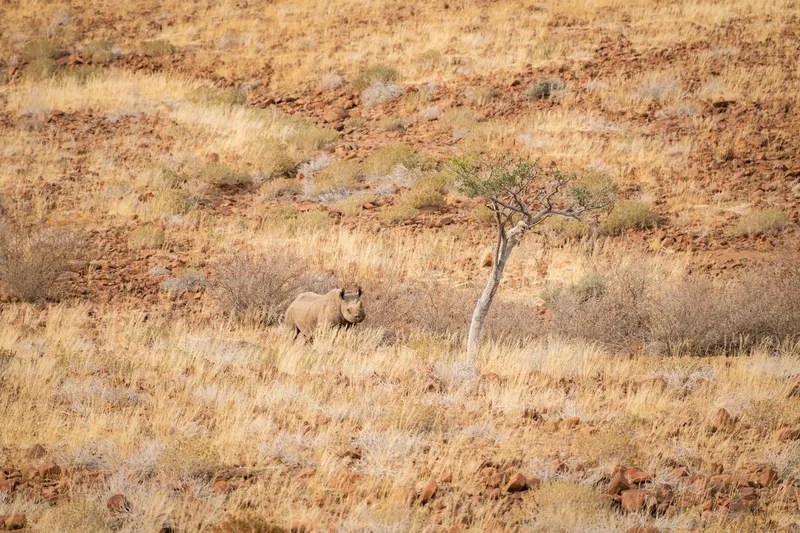
Namibia is home to extraordinary biodiversity and some of the world’s most iconic and vulnerable wildlife. Its landscapes support nearly 4,000 species found nowhere else, along with important populations of rhinos, elephants, pangolins, and many other species that are connected to healthy ecosystems, local livelihoods, and national identity. The global wild black rhino population numbers around 6,788, with Namibia holding the second-largest population after South Africa and by far the largest population of the southern black rhino, one of the species’ three remaining subspecies. When poaching and wildlife crime decline, the impact reaches far beyond individual animals; it helps protect ecosystems, sustain community-based conservation efforts, and preserve natural heritage for future generations. It also helps safeguard nature-based tourism, a key contributor to Namibia’s economy, and strengthen the benefits that wildlife generates for rural communities.
Progress against wildlife crime disrupts criminal networks, reinforces the rule of law, and builds confidence in the institutions responsible for protecting the country’s natural resources. As home to globally significant populations of several threatened species, Namibia’s success also contributes to international conservation efforts. It demonstrates how collaboration among government, communities, law enforcement agencies and conservation partners can make a lasting difference for both people and wildlife.
The fight to protect black rhinos and other wildlife isn’t over
Despite these milestones, the fight to protect wildlife is far from over. Every animal lost to wildlife crime represents a theft not only from nature, but also from the state, communities, and farmers of Namibia. Poachers and traffickers are also finding new ways to exploit wildlife, including through the illegal trade of protected plants, reptiles, insects, and other species. One of the biggest remaining challenges is the time between arrests and prosecution, which can leave suspects awaiting trial for too long and delay the justice that wildlife crimes demand.
To keep wildlife crime on a downward trend, WWF remains committed to supporting community-led conservation, ranger capacity, wildlife monitoring technology, targeted interventions such as rhino dehorning, and stronger pathways from arrest to prosecution to meaningful sentencing. The successes highlighted in the 2025 report demonstrate what is possible when prevention, enforcement, and local stewardship work together.

© CreativeLAB / WWF-US
© WWF-US / WWFGifts
Adopt an African rhino
Support WWF’s global efforts to protect wild animals and their habitats and choose from kits with plush and more.