For an Indigenous community in the Amazon, stingless bees mean sustainable livelihoods
Economic opportunity that lets them continue to protect the forest
By
-
Jill Langlois

© WWF/Tatiana Cardeal
© WWF/Tatiana Cardeal
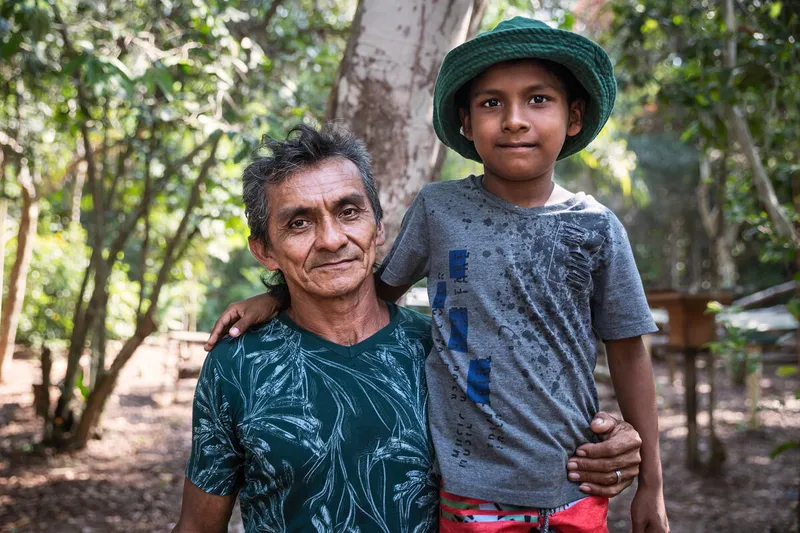
When José Ivanildo Correia dos Santos was a child, his family had picnics along the Arapiuns River. The warm breeze off the water provided much-needed respite from the afternoon sun as he and his siblings splashed and swam. Their mother stayed nearby, washing clothes on the river’s edge, while their father used a slim, fallen tree branch as a fishing pole, hoping to catch their next meal.
“It’s the best water there is,” he says, a slight smile stealing across his face at the thought of the memory.
At the time, the river, located in the Brazilian Amazon’s Tapajós River basin, provided basic necessities and joy: The Arupiuns gave them food, water, and a space to play. But unbeknownst to dos Santos, it would become even more for his family.
With nine children to raise, dos Santos was always searching for reliable and varied sources of income. Opportunities that would not damage the forest where they lived or the river they relied on—he wanted to make sure his five sons and four daughters shared the same kinds of childhood memories he had with their own kids one day. Ideally, he could find something to pass on to his children, setting them up for future success.
© WWF/Tatiana Cardeal
© WWF/Tatiana Cardeal
A solution in stingless bees
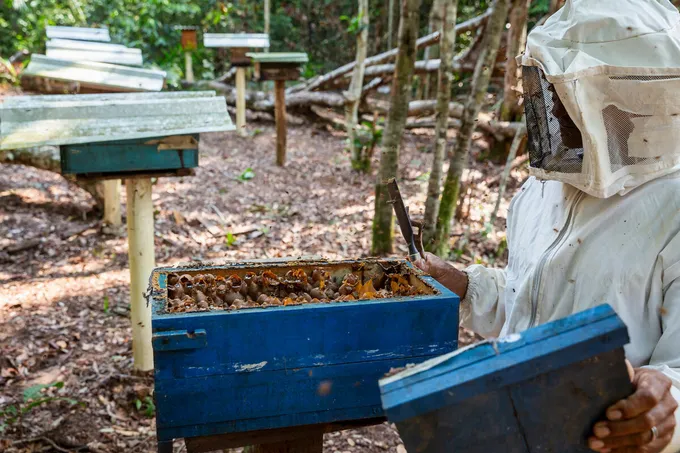
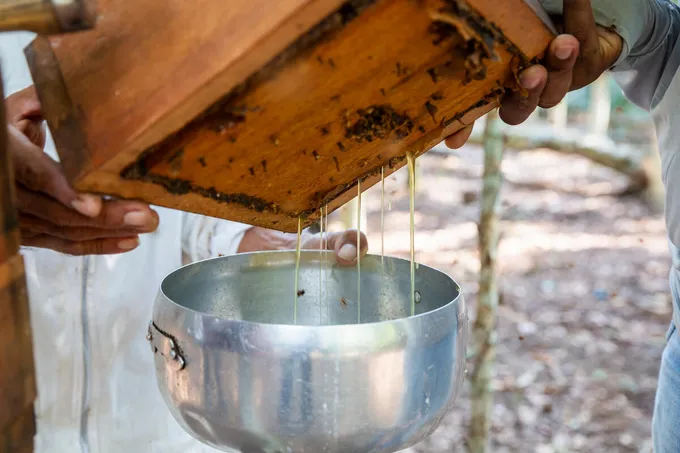
The first time dos Santos tried producing honey was in 2010. He had 12 bee boxes and hoped the native stingless bees would make enough of the sticky gold liquid for his family to enjoy. But the work was harder than he expected.
“They didn’t give much honey because I didn’t know how to take care of them,” he says. “I lost a lot of bees, and I didn’t know why.”
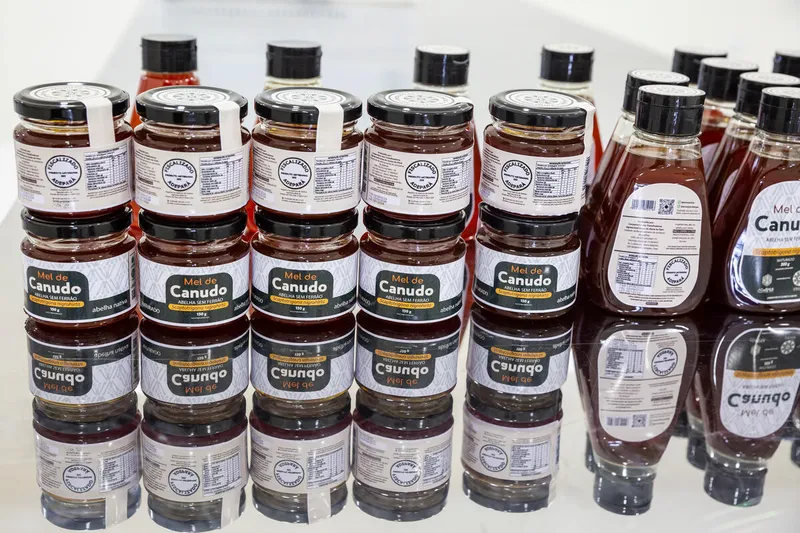
So when he heard about the Agroextractive Workers of Western Pará Cooperative (ACOSPER) and the support and education they were giving local residents interested in having their own bee boxes to sell honey, he signed up without hesitation. With the workshops and trainings ACOSPER would provide, as well as the equipment and commercial support, he was sure he would thrive.
© WWF/Tatiana Cardeal
And he did. Those first nine boxes they gave him in 2022 soon became 20, allowing dos Santos to collect and sell his honey twice so far. The river that gave him so much in his youth still gives back to him, making sure his bees don’t have to wander far for water and decide to make their home elsewhere. It also helps keep the bee-friendly cashew trees he planted near his home and other surrounding native trees healthy while still allowing his children to cool off on hot days, just like he did when he was a boy.
With the support of WWF in partnership with Projeto Saúde e Alegria, ACOSPER is able to carry out community-led sustainable economic development activities like beekeeping (sometimes labeled as part of a “socio-bioeconomy”). With proper support, traditional communities living near the Tapajós River can generate a diversified income. And that income not only gives elders the means to continue their work but also a way to pass it on to future generations, creating opportunities for them to continue protecting the rain forest in the face of numerous encroaching threats.
Sitting on a wooden bench under the shade of a mature tree thick with leaves, dos Santos watches one of his youngest children, Jackson, climb another, jumping to the sandy ground and laughing before climbing again. They’re next to their simple brick home, its corrugated metal door and shutters rusting from the high humidity in the Amazon air. Soon, the seven-year-old will join his father among the family’s bee boxes, watching how he carefully removes each top to check on the tiny flying insects and hoping for a taste of the honey in its earliest stage.
But for now, he plays, climbing up and jumping down, up and down. As his feet land on the ground with a thud, Jackson skips over to his dad.
“What do you want to be when you grow up?” dos Santos asks. “A soccer player? A scientist?”
Jackson shakes his head.
“A beekeeper,” he says matter-of-factly, his bare feet kicking the sand as he runs toward the river’s edge.
How you can help
© WWF-US/Clay Bolt
Support Tribes restore buffalo to the Great Plains
The Indian Buffalo Management Act would strengthen support for Tribal Nations who are working to bring buffalo back from the brink of extinction.