Viet Nam’s largest-ever biodiversity assessment inspires hope for wildlife
By
-
Katie Koerper

© WWF-US / Justin Mott
The largest and most comprehensive wildlife survey undertaken in Viet Nam to date has revealed that despite widespread and intensive snaring, Viet Nam still harbors unique endangered species.
In 1992, Viet Nam made global headlines when a team of scientists discovered a new species, the Saola (pronounced: saw-la), during a joint survey carried out by the then Ministry of Forestry of Viet Nam (now Ministry of Agriculture and Environment) and WWF. As the first large mammal discovery in more than 50 years, it marked a turning point for conservation in Viet Nam, highlighting the unique biodiversity of the Annamites mountain range and prompting new scientific interest and global collaboration to improve biodiversity monitoring in the region. Today, while the Saola remains critically endangered and has yet to be seen in the wild by scientists, the legacy of its discovery lives on through the investments in conservation it helped inspire.
Last year, as part of a project funded by the US government, WWF and a team of scientists from the Leibniz Institute for Zoo and Wildlife Research, with support from other partners,1 completed one of the most intensive camera trap surveys ever conducted in Southeast Asia and the largest and most comprehensive in Viet Nam to date. This effort was the culmination of years of investments in technology and capacity building to improve how biodiversity is monitored in the country. The surveys revealed that despite widespread and intensive snaring, Viet Nam still harbors globally significant species---including nine species found only in the Annamites, and 22 highly threatened species---providing hope, and more importantly, data to guide future conservation efforts.
Recording Viet Nam’s rare and endemic species
Between 2022 and 2025, WWF and partners set up 1,176 stations (equivalent to 2,352 camera traps) in 21 protected areas across eight mountainous provinces in Viet Nam. The purpose of the first survey was to establish a baseline understanding of wildlife populations in the protected areas. A second survey was conducted to measure changes since the first survey and thereby assess the impacts of conservation interventions in those protected areas.
Millions of images generated by the camera traps were analyzed in record time using Wildlife Insights, an AI-powered image recognition tool developed by WWF in collaboration with other conservation organizations and Google, resulting in 120,000 independent wildlife detections.2
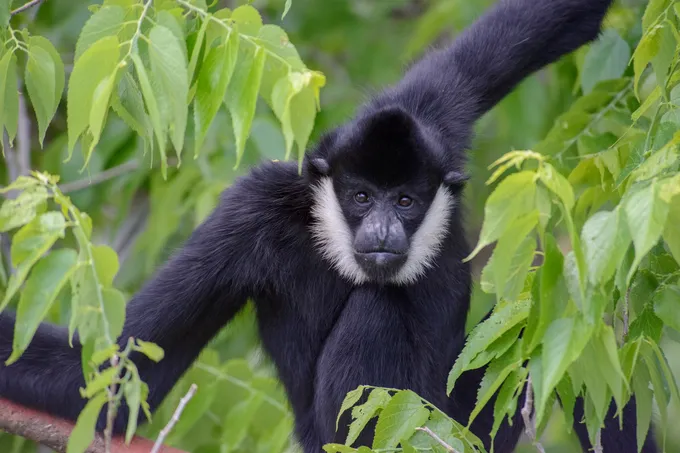
© WWF-US / Justin Mott
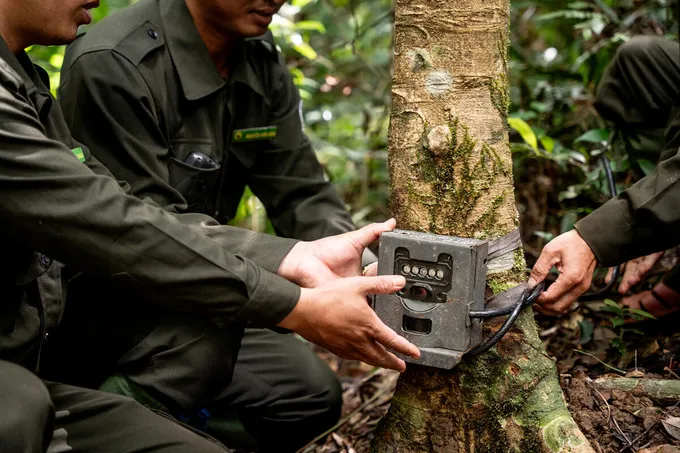
© WWF-US / Justin Mott
Key findings
The surveys showed that wildlife populations are heavily depleted compared to historical estimates, primarily due to snaring. But they ultimately revealed encouraging signs of wildlife in Viet Nam.
- Large-antlered muntjacs, sun bears, and large-spotted civets were recorded in many locations for the first time in 20 years.
- Pangolin populations remain steady despite being one of the most trafficked animals in the world.
- In Cat Tien National Park, which was recently accepted to IUCN’s robust Green List, species richness was higher in areas close to settlements, demonstrating how local communities and wildlife populations can positively coexist.
- Another surprising finding was that some highly fragmented forests had a high number of indicator species—or species that indicate the health of an ecosystem—with ten indicator species detected in one site alone, highlighting the conservation value of these forests.
Importantly, the surveys indicated that wildlife populations in the sites supported by the project have remained stable (64%) or grown (36%), suggesting that the WWF’s efforts to strengthen the management of protected areas through institutional capacity building, enhanced monitoring, and community engagement have been successful.
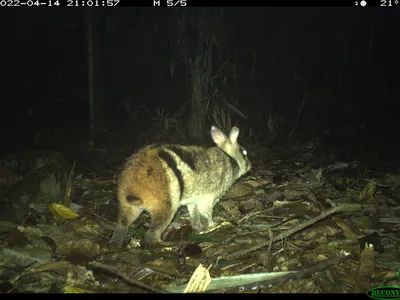
Annamite striped rabbit
© Courtesy of WWF-Viet Nam
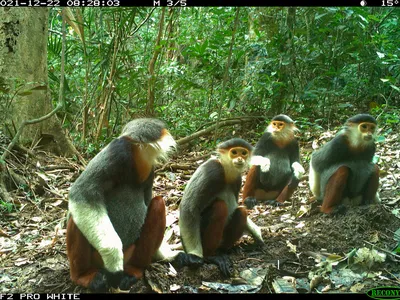
Red-shanked douc
© Courtesy of WWF-Viet Nam
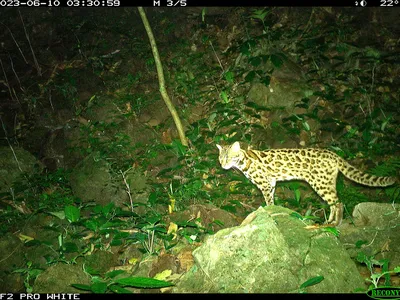
Leopard cat
© Courtesy of WWF-Viet Nam
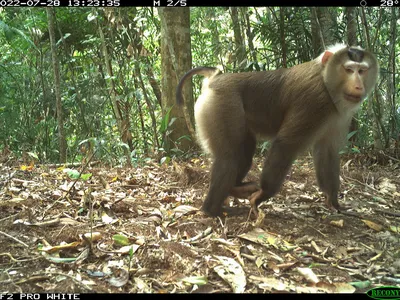
Northern pig-tailed macaque
© Courtesy of WWF-Viet Nam
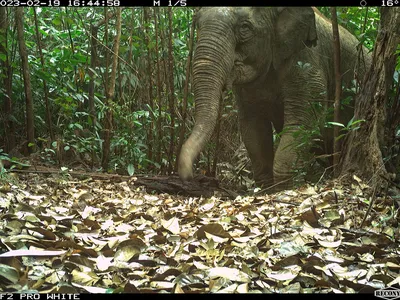
Asian elephant
© Courtesy of WWF-Viet Nam
Scaling up biodiversity assessments in Viet Nam
As one of the largest coordinated national camera trapping programs ever conducted globally, this was the first effort to scale up standardized monitoring at the landscape level across multiple provinces in Viet Nam. By replicating these methods nationwide and combining them with innovative approaches such as environmental DNA (eDNA) sampling, Viet Nam can strengthen biodiversity monitoring and better meet its international commitments. As part of these efforts, Viet Nam will now serve as a regional hub for a new eDNA initiative, WildinSync, launched by ETH Zurich and supported by WWF.
The completion of these surveys marks a major milestone in Viet Nam’s conservation trajectory. The results not only provide a crucial benchmark for future conservation efforts but can also help guide how limited resources can be most effectively deployed in biodiversity hotspots in the country. Thanks in part to these surveys, which revealed the incredible diversity of life still found in some of Viet Nam’s protected areas, efforts to maintain and restore wildlife populations have gained momentum, providing a strong justification for continuing conservation efforts and cautious optimism for the future.
1 Government of Viet Nam, institutes, researchers and FFI.
2 Other founding and core partners of Wildlife Insights include Conservation International, Wildlife Conservation Society, Smithsonian, Map of Life, Zoological Society of London, and North Carolina Museum of Natural Sciences.
How you can help
© WWF-US/Clay Bolt
Support Tribes restore buffalo to the Great Plains
The Indian Buffalo Management Act would strengthen support for Tribal Nations who are working to bring buffalo back from the brink of extinction.