
Farming for people, planet, and community in the Mississippi Delta

By

© WWF-US/Ashleigh Coleman
Drive through the Mid-Mississippi Delta, the region encompassing eastern Arkansas, western Tennessee, and northwestern Mississippi, and you see endless acres of commodity row crops—soybeans and corn grown not for human consumption but for animal feed.
The ubiquity of those commodities is a result of the federal farm policies of the 1970s. But they make little sense today. Commodity farmers are losing millions of dollars annually on those crops because of low prices and abundant supply. Grown in some of the nation’s richest soil, much of those crops will simply go to waste.
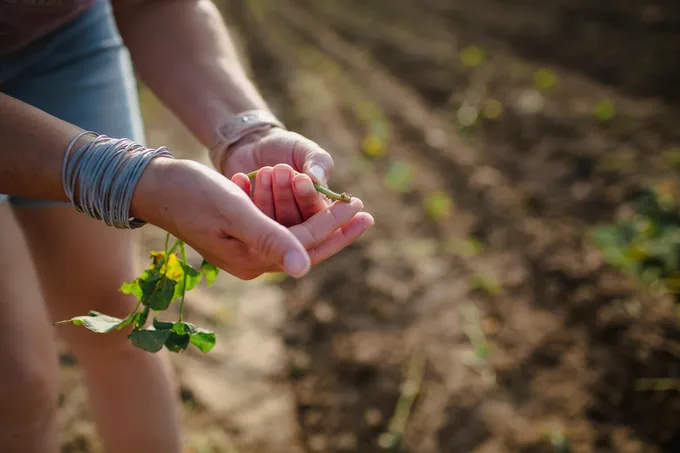
There’s a revolution afoot in the Mid-Mississippi Delta, however. A small but growing group of farmers, many part of the Delta Ag Alliance, are beginning to restore specialty crops to the region—vegetables, melons, jasmine and basmati rice, and other nutritious foods destined to be fed to people, not livestock.
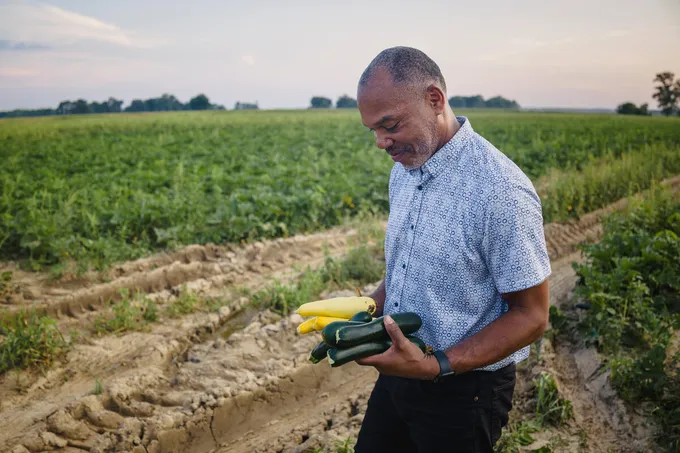
“It's funny to me to hear the food that we eat and consume referred to as ‘specialty crops,’” says Harvey Williams, an eastern Arkansas farmer who grows sweet potatoes, squash, and other vegetables in the Delta. “But I think there is a future in ‘specialty crop’ food farming in the Delta that is going underrated at the moment.”
Specialty crops are at the heart of WWF’s “Next California” project, which aims to explore where the United States will grow its fruits, vegetables, and nuts in the years to come in the face of a shifting climate. Most of those crops are currently grown in California, but a changing climate and dwindling water are ravaging that production. If not addressed proactively, there could be significant land conversion, supply chain disruptions, and economic upheaval as alternate locations are found for those crops.
We have previously reported on Phase I and Phase II of our project. Now, in our report on Phase III, we discuss pilot projects, including Delta Harvest, our first pilot, as well as our vision for the future, including a four-pillar approach to build on the momentum to date and unlock the full vision of The Next California.
WWF’s goal has been to build and support an ecosystem and platform that de-risks the transition from commodity crops to specialty crops and provides a supportive framework for farmers, entrepreneurs, and other stakeholders to move forward. We do not intend to choose specific crops or prescribe certain actions. But our overall goal is to see 3% of current agricultural land in the Mid-Mississippi Delta producing specialty crops by 2034, up from a current level of just 0.19%.
“It's funny to me to hear the food that we eat and consume referred to as ‘specialty crops.' But I think there is a future in ‘specialty crop’ food farming in the Delta that is going underrated at the moment.”
Harvey Williams Farmer, Eastern Arkansas
Such a shift would equate to more than 461,000 additional acres of specialty crops, which would bring in an additional $3.2 billion in annual farmgate revenues across the region, a 41% increase. Those extra revenues don’t include any of the additional economic value and jobs that would be created throughout the region through the potential of value-added production, such as flash freezing, canning, and the like.
© WWF-US/Ashleigh Coleman
© WWF-US/Ashleigh Coleman
Signs of progress abound in the Mid-Delta. A few major buyers have started sourcing from the region in the past year, following a Buyer Tour of the region and a Funder Opportunity Summit conducted by WWF, AgLaunch, and the Center for MS Food Systems with the support of the rest of the Delta Ag Alliance. The next steps include the de-risking that will come from whole-crop and long-term contracts in the region.
The Next California has come a long way since the original conversations about the concept began in 2019. If key partners continue to commit and bring pilot projects to fruition, the system can achieve success and revolutionize the Mid-Mississippi Delta.
To learn more, visit our Next California project page.