
When accounting tricks undermine sustainability claims

By

© Shutterstock / Rich Carey / WWF-Sweden
If products from deforestation- and conversion-free farms are mixed with products from recently deforested land without any control in the first point of aggregation of that commodity, a DCF claim is misleading, because farmers haven’t been discouraged from clearing native vegetation.
In other words, mass balance trades the “good” behavior of a farmer who did not cut down any trees (even if he did not, perhaps, have any trees to cut down!) for the “bad” behavior of a farmer who did, without any mechanism to discourage the latter. In this scenario, buyers are paying a premium and marketing a deforestation- and conversion-free (DCF) product even if the state of the world is not improving. (Nor is the buyer’s actual product deforestation-free.)
© Shutterstock / Ol Sn
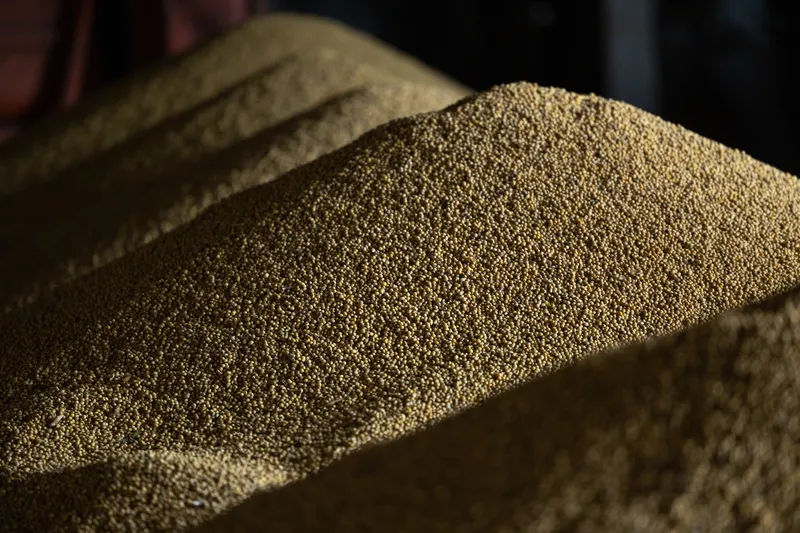
Consider another example: Currently in Brazil, over 92% of soy produced is already grown on land that is deforestation- and conversion-free since 2020 — the commonly agreed deadline to stop sourcing from destroyed habitats¹. But while "only" about 2% of the soy grown each year is implicated in ongoing conversion², because of the huge soy acreage in Brazil, this area is bigger than the US state of Delaware; this ongoing loss of habitat is one of the leading drivers of climate change and biodiversity loss. Using mass balance, if buyers certified a random 10% of Brazilian soy as DCF (which would be a huge investment and feat!) and, in the best case scenario, the certification was sufficient to stop those farms that were considering converting habitat from doing so, we’d still expect 1.8% of total soy to drive ongoing and devastating habitat loss — not a big decrease from 2%.
Instead, we need to halt habitat loss by creating market barriers to products coming from these recently cleared habitats and incentivize that destructive 2% to move production to abandoned agricultural land if they must expand.
So, all in all, if products from deforestation- and conversion-free farms are mixed with products from recently deforested land without any control in the first point of aggregation of that commodity, a DCF claim is misleading, because farmers haven’t been discouraged from clearing native vegetation.
On the other hand, if these first aggregators of commodities implement robust origin-control mechanisms and block products coming from recently converted lands, they send a signal to the market to dissuade farmers from clearing habitats. Finally, they are delivering products to the market that are really deforestation- and conversion-free, not mixed with products contaminated by the direct destruction of our beautiful planet. Reducing deforestation and conversion is the ultimate goal, and half-measures won't get us there. Urgent action toward concerted accountability and traceability is the only path forward.
[1] https://accountability-framework.org/news-events/news/afi-updates-its-operational-guidance-on-cutoff-dates/
[2] Based on MapBiomas data for soy acreage, forest, savannah and other ecosystem extent using a modified PAS-2050-1 methodology for attributing habitat loss to commodities using a 5 year (instead of 20 year) look-back.