Extended Producer Responsibility
A circular solution to plastic waste
© Milos Bicanski / WWF-UK
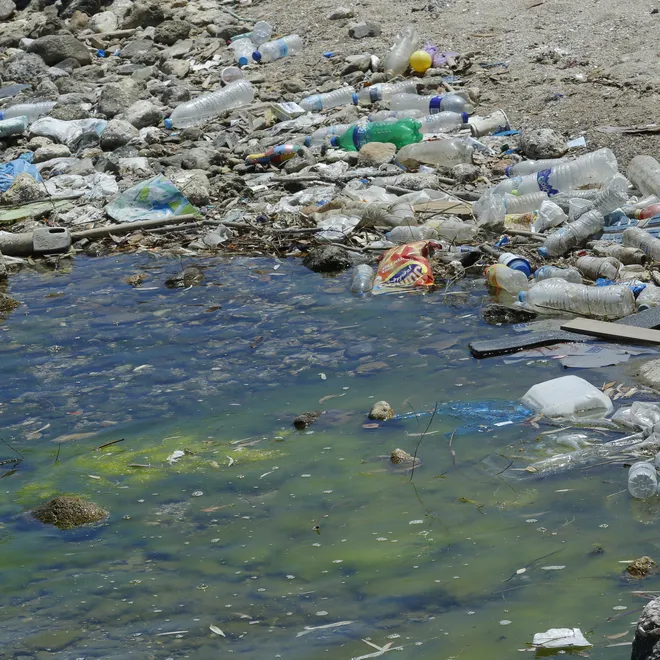
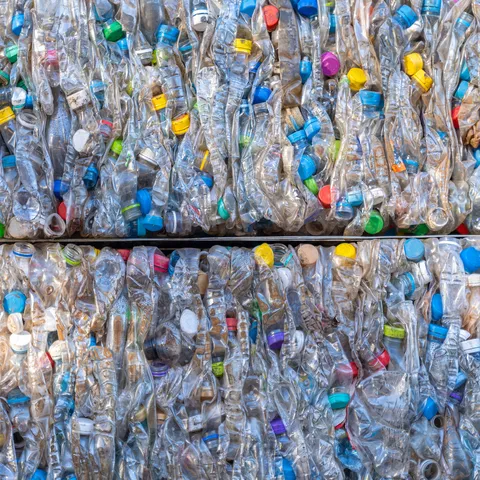
Plastic waste is polluting our air, our water, and our soil around the globe. But waste management and recycling systems are not currently equipped to handle the large amounts of waste we create today.
A solution is emerging to help ensure that the plastic products we all rely on every day are more widely reused and recycled: Extended Producer Responsibility (EPR).
With Extended Producer Responsibility, producers of plastic packaging are financially responsible for the entire life cycle of their materials. It can ensure that all sectors—public, private, and civil society—come together to solve this collective problem.
As more states and the federal government consider enacting EPR and other related recycling and circular economy policies, it will be imperative to have harmonized definitions for specific key terms to ensure consistency across all jurisdictions.

© Billy Hustace, Corbis Documentary RF, Getty Images
What is Extended Producer Responsibility?
EPR is a simple concept: companies that make and sell packaging pay for managing it after it is used.
- Companies pay fees into the system based on the type and amount of packaging they sell.
- Fees are invested into recycling and reuse systems, supporting collection, sorting, and processing infrastructure, as well as public education and program expansion.
- Expanded reuse and recycling access makes it easier for people to recycle and reduce waste going to landfills or ending up in nature.
- Because companies are financially responsible for the system, they are incentivized over time to reduce packaging, create reuse systems, and make products more recyclable.
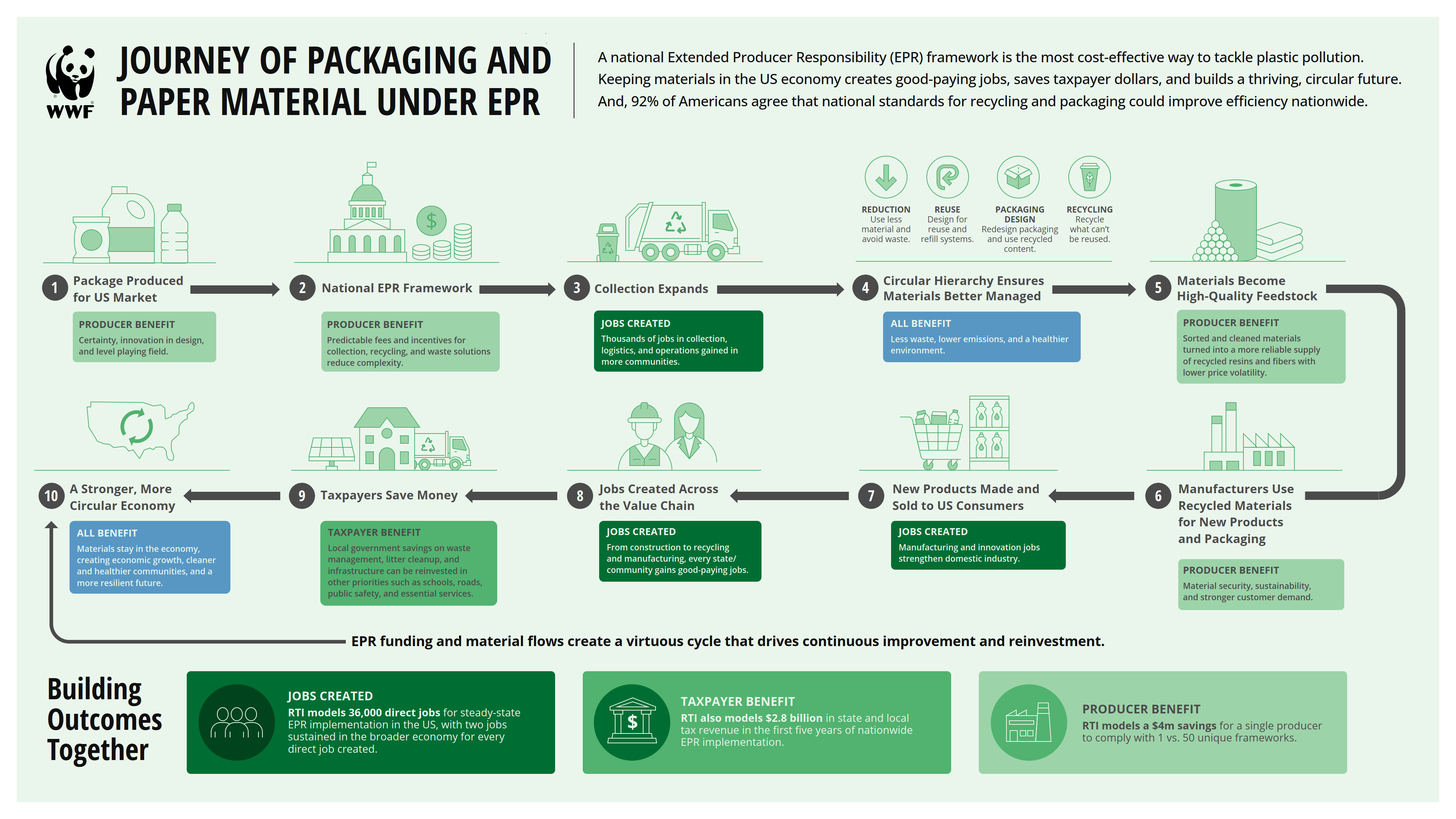
This infographic outlines the journey of a piece of packaging or paper in a harmonized national EPR system.
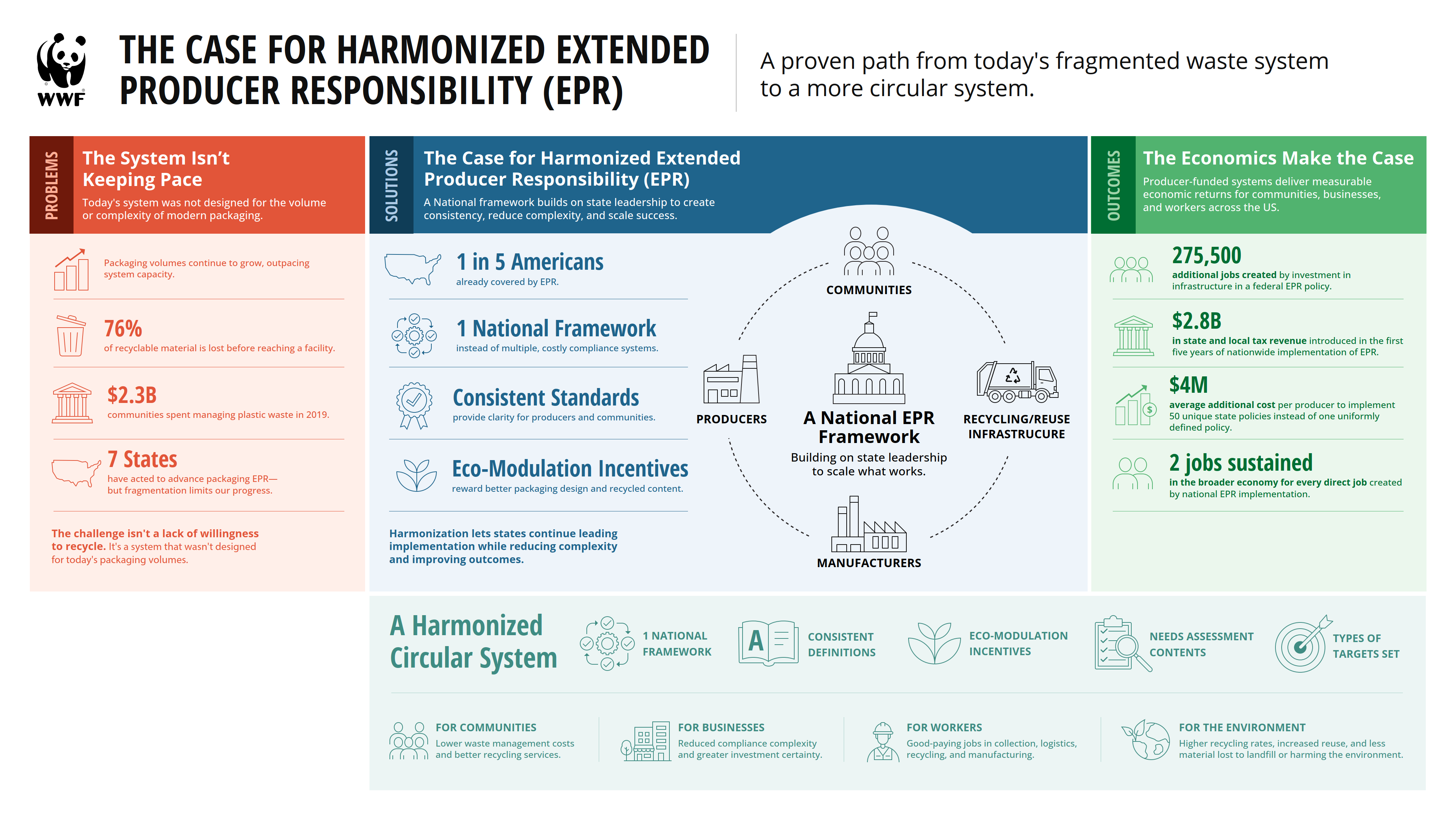
This infographic highlights the figures and proof points for harmonized national EPR.
Americans want a better system for packaging waste
They want a system that's easier to understand, more consistent across the country, better funded, and built to support recycling, reuse, and waste reduction at scale.
-
92% of Americans agree that national standards for recycling and packaging could improve efficiency
The Harris Poll finds that 92% of Americans agree that national standards for recycling and packaging could improve efficiency nationwide. 91% agree that companies are more likely to invest in recycling and packaging improvements when regulations are more consistent across states. Consumers experience inconsistent rules as confusion; businesses experience them as complexity.
-
87% of Americans support a federal Extended Producer Responsibility
The Harris Poll also finds that only 11% of Americans have heard of Extended Producer Responsibility for packaging, but once the concept is explained, 87% support a federal EPR policy.
Plastic Waste Sentiment Survey
This survey points to a broader way Americans appear to be thinking about plastic waste: less as a consumer behavior problem alone and more as a systems challenge.
© WWF / Vincent Kneefel
Economic Analysis of a National EPR Framework
This report presents a forward-looking economic analysis of a hypothetical national Extended Producer Responsibility framework in the United States, designed to evaluate dimensions of the system-wide impacts of a harmonized federal policy. It was funded by SC Johnson, with technical advisory by WWF.
© Getty Images / Vithun Khamsong
Well-designed EPR turns producer responsibility into system modernization
This happens by funding infrastructure, expanding access, improving packaging design, supporting reuse and recycling, building end markets, and creating accountability for outcomes.
-
2 jobs sustained for every direct job created
RTI models 36,000 direct jobs for steady-state EPR implementation in the US, with two jobs sustained in the broader economy for every direct job created.
-
$2.8 billion in state and local tax revenue
RTI also models $2.8 billion in state and local tax revenue in the first five years of nationwide EPR implementation.
Why do we need Extended Producer Responsibility?
© John Elk III, The Image Bank RF, Getty Images
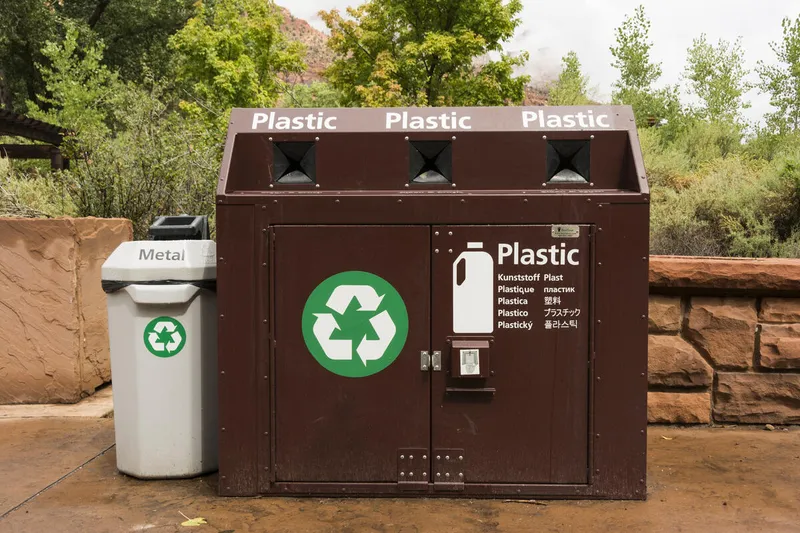
EPR helps improve recycling rates and packaging design by creating incentives and shared responsibility across the packaging system—especially plastic waste, just 5% of which is recycled in the US. At its core, EPR shifts the financial responsibility for plastic waste to the companies that produce it. Rather than placing the burden primarily on taxpayers and local governments, EPR requires producers to help fund the systems needed to collect, sort, recycle, reuse, and manage packaging materials after they are used.
Seven states have already adopted EPR for packaging laws: California, Colorado, Maine, Maryland, Minnesota, Oregon, and Washington. Several more state legislatures are also considering legislation to create EPR systems. But a patchwork state-by-state approach still creates inconsistent rules and unnecessary inefficiencies. A well-designed national framework would create greater consistency nationwide by establishing common expectations around who is responsible for packaging, what materials are covered, and how incentives reward better design. At the same time, states and regions should retain flexibility in how those goals are met, recognizing that a coastal tourism hub may face very different challenges than a rural farming community. Clear national rules would also make it easier for companies to invest in better packaging, recycling infrastructure, and reuse systems over the long term.
What's next?
Done right, EPR can help reduce landfill waste and associated emissions, expand access to recycling and reuse systems, eliminate problematic plastics through better design, and create new economic opportunities across supply chains and local communities.
The window for moving from patchwork progress to systemic change is narrowing. If we get EPR right at the federal level, we can move beyond simply managing waste—and begin reducing it at the source.

© Halfpoint Images/Moment RF/Getty Images
How WWF is taking action
WWF has advocated for federal EPR policy through congressional briefings and testimony before the Senate Environment and Public Works Committee, helping elevate the conversation around what an effective national framework could look like. WWF has also advocated for EPR policy at the state level to inform a national framework.