African dwarf frog
Hymenochirus curtipes
The risk associated with keeping this species as a pet is low. African Dwarf Frogs can be suitable pets if well cared for, but you can learn more below to check if it is a suitable pet for you.
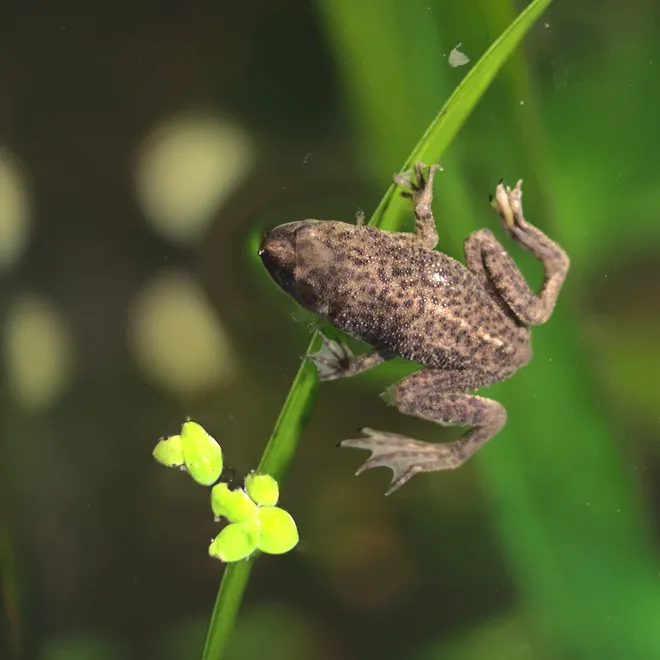
© Shutterstock.com
Assessment results
Low risk

Conservation | Medium risk
This animal is likely to be threatened by extinction in the wild, and/or it is subject to international trade controls due to demand in the pet trade. Please check that the animal you want comes from a reputable seller or rescue center that follows best practices when they source their animals. Learn more about wildlife conservation and the pet trade.

Legality | Low risk
This animal is not currently protected by any national laws or import restrictions. Exotic pet ownership, however, is regulated at the state, county, or city level, so check your jurisdiction to see if you can own it.

Human and public health | Low risk
It is likely that this animal is not a threat to human or public health, but make sure to practice good hygiene when handling any animal.

Invasiveness | Low risk
This species would not likely impact native biodiversity or habitats. However, never release a pet into the wild for any reason.

Animal welfare | Moderate risk
Care, diet, and housing needs of this species are either insufficiently known or difficult, making it hard to ensure it has a good quality of life for its lifetime. Learn more about the challenges with exotic pet welfare.
⚠️ Important considerations
- African dwarf frogs are highly demanded in the pet trade. An updated assessment is needed to understand the impact of trade on their wild populations.
- African dwarf frog housing and dietary needs require additional knowledge and effort. They need proper temperatures with the water in their enclosure between 68-78ºF, a normal day/night light cycle, and places to hide. They are also sensitive to the water quality, which should be filtered and dechlorinated, and have pH levels maintained between 6.5-7.8.
- Veterinarians are seeing issues with Mycobacteria in African dwarf frogs in the pet trade, which can have health implications for both the amphibians and people. They should not be handled, and if you must, non-powdered gloves should be worn since they have very sensitive skin.
- As with all pet amphibians, ensure there is access to a veterinarian that specializes in amphibians and consult them about proper habitat setup, diet, and care. Find an amphibian vet near you.
Basic information
Taxonomy:
Anura, Pipidae
Lifespan:
5-7 years
Weight:
About 0.03 oz. (0.85 g)
Size:
About 3 in (7.6 cm)
Native range and habitat:
Forests and wetlands of western Democratic Republic of Congo
Diet:
In captivity, sinking carnivorous freshwater fish pellets, along with thawed frozen bloodworms, blackworms, and brine shrimp
Activity and behavior:
- African dwarf frogs are a completely aquatic species, but also have lungs and breathe air at the surface
- Nocturnal, spending most of their day hiding and resting, and hunting for their food at night
- They are social animals that are best kept in groups of two or more, but it is important to ensure their enclosure is large enough for the number of animals. They can also be kept with other friendly aquatic species, though ensure they are well fed so they do not consume fish or others in the aquarium.
© WWF-Japan