Ball python
Hymenochirus curtipes
The risk associated with keeping this species as a pet is low. Ball pythons are suitable pets if well cared for, but you can learn more below to check if it is a suitable pet for you.
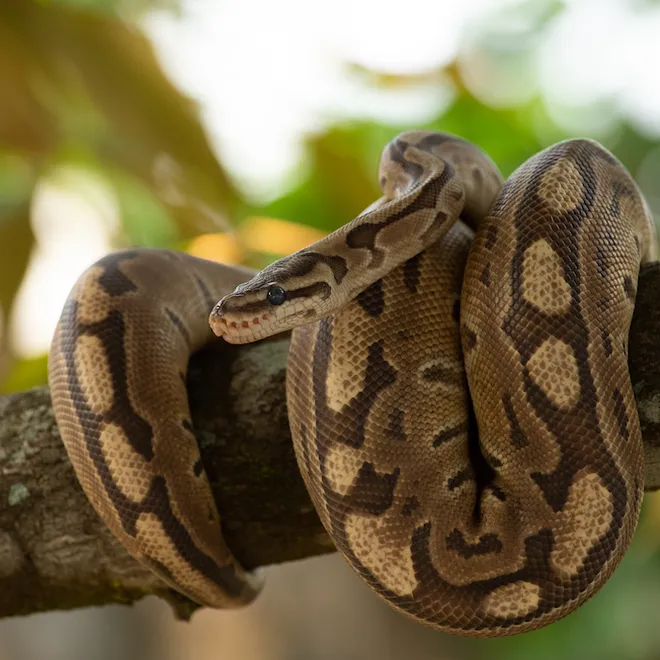
© Shutterstock/BikerPhoto
Assessment results
Low risk

Conservation | Moderate risk
This animal is likely to be threatened by extinction in the wild, and/or it is subject to international trade controls due to demand in the pet trade. Please check that the animal you want comes from a reputable seller or rescue center that follows best practices when they source their animals.

Legality | Low risk
This animal is not currently protected by any national laws or import restrictions. Exotic pet ownership, however, is regulated at the state, county, or city level, so check your jurisdiction to see if you can own it.

Human and public health | Low risk
It is likely that this animal is not a threat to human or public health, but make sure to practice good hygiene when handling any animal.

Invasiveness | Low risk
This species would not likely impact native biodiversity or habitats. However, never release a pet into the wild for any reason.

Animal welfare | Moderate risk
Care, diet, and housing needs of this species are either insufficiently known or difficult, making it hard to ensure it has a good quality of life for its lifetime. Learn more about the challenges with exotic pet welfare.
⚠️ Important considerations
- Ball python populations are threatened in the wild, targeted for poaching and illegal trade. However, they can be captive bred with a proper setup and legal and legitimate breeding facilities exist. Make sure to obtain your ball python from a reputable captive breeding source.
- Many captive-bred ball pythons can be found in a variety of color and pattern morphs, which adds to their popularity. Hobbyists and specialists try to isolate genetic mutations found naturally in the wild in order to create thousands of these interesting color variations.
- Most reptiles carry salmonella in their intestinal tract and may not be suitable for young children or immunocompromised individuals. Always practice good hygiene and hand washing around ball pythons.
- Ball pythons are relatively easy to care for, but their housing and diet needs require additional knowledge and effort. Proper temperature gradients (80-85°F and a climbing branch basking area of 90-92°F) in the tank and 60-80% humidity levels are important, along with a water dish large enough for them to soak in and enough space to stretch out full length.
- Ensure you have access to a veterinarian that specializes in reptiles and consult them about proper habitat setup, diet, and care. Find a reptile vet near you.
Basic information
Taxonomy:
Squamata, Pythonidae
Lifespan:
In captivity, 20-30 years typically but 50+ is possible; in the wild they live 10 years on average
Weight:
3-5 lbs
Size:
3-4 ft (36- 48 in) long
Native range and habitat:
Grasslands and open forests of West and Central Africa
Diet:
Carnivores that eat small rodents every 1-2 weeks depending on their age; the prey should not be larger than the girth of the snake’s mid-body
Activity and behavior:
- Nocturnal animal that spends most of their time on or under the ground in burrows
- Balling is their protective mechanism where they form a tight ball with their head in the center in response to threats, they are generally shy and timid animals
- Use chemical and visual cues to hunt their prey
© WWF-Japan