Common blue-tongued skink
Tiliqua scincoides
The risk associated with keeping this species as a pet is low. Common blue-tongued skinks can be suitable pets if well cared for, but you can learn more below to check if it is a suitable pet for you. Export of the species from Australia is prohibited, and most animals in trade are from Indonesia or captive bred.
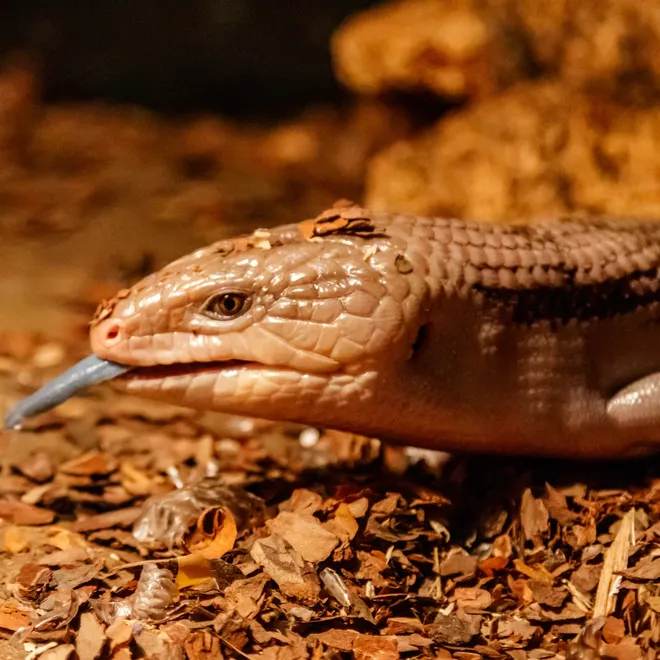
© Shutterstock.com
Assessment results
Low risk

Conservation | Low risk
This animal is most likely not threatened by extinction, and/or the exotic pet trade does not impact the wild population. Please check that the animal you want comes from a reputable seller or rescue center that follows best practices when they source their animals.

Legality | Low risk
This animal is not currently protected by any national laws or import restrictions. Exotic pet ownership, however, is regulated at the state, county, or city level, so check your jurisdiction to see if you can own it.

Human and public health | Moderate risk
It is likely that this animal is a potential threat to human or public health, either due to potential zoonotic diseases or due to physical attributes that can harm humans. Learn more about animal-related illness and injuries.

Invasiveness | Low risk
This species would not likely impact native biodiversity or habitats. However, never release a pet into the wild for any reason.

Animal welfare | Moderate risk
Care, diet, and housing needs of this species are either insufficiently known or difficult, making it hard to ensure it has a good quality of life for its lifetime. Learn more about the challenges with exotic pet welfare.
⚠️ Important considerations
- Most reptiles carry salmonella in their intestinal tract and may not be suitable for young children or immuno-compromised individuals. Always practice good hygiene and handwashing around skinks.
- Common blue-tongued skink housing and diet needs require additional knowledge and effort. They need a tall glass 20-gallon vivarium with plenty of branches and vines for climbing, places to hide and rest during the day, and good ventilation. Their enclosure needs a gradient of temperatures (71-79ºF on the cool end and 86-95ºF on the warm end) in their environment to be able to regulate their own body temperature, proper humidity (40-90% through nightly misting), and proper amounts of UVA and UVB light from a lamp on a normal light-dark cycle, to ensure good health. They are prone to metabolic bone disease without UV light exposure and enough calcium and vitamin D3. The substrate used in their environment is important and should not be something they could ingest.
- As with all pet reptiles, ensure there is access to a veterinarian that specializes in reptiles and consult them about proper habitat setup, diet, and care. Find a reptile vet near you.
Basic information
Taxonomy:
Squamata, Scincidae
Lifespan:
10-15 years, and can live to over 20 years old in captivity
Weight:
1-1.5 lbs. (0.45-0.68 kg)
Size:
13-17in. (33-43 cm)
Native range and habitat:
Savannas, grasslands, and scrub forests in Australia
Diet:
Insects, small reptiles, plants, fruits
Activity and behavior:
- Docile animals that spend a lot of time in hollow logs or ground debris, though they are diurnal and bask in the warm daylight hours for sun exposure.
- Their distinct blue tongue is used as a defensive behavior.
- They are not considered social animals and should be kept alone due to their territorial nature
© WWF-Japan