Indian star tortoise
Geochelone elegans
There is a high risk associated with keeping this species as a pet. This is not a suitable pet.
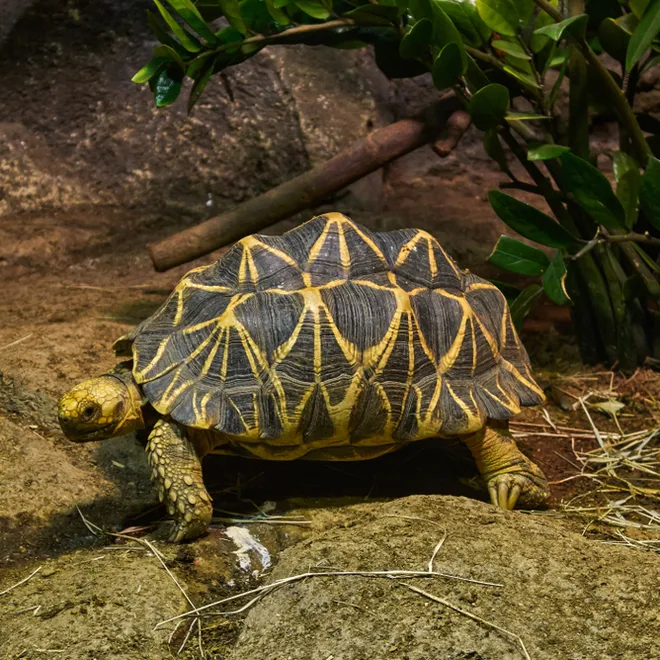
© Shutterstock
Assessment results
High risk

Conservation | High risk
This animal is threatened by extinction in the wild, and there is global demand which is creating potentially more unsustainable and illegal poaching of the species. By having it as a pet creates more demand for these animals, which can worsen their situation in the wild. Learn more about wildlife conservation and the pet trade.

Legality | Low risk
This animal is not currently protected by any national laws or import restrictions. Exotic pet ownership, however, is regulated at the state, county, or city level, so check your jurisdiction to see if you can own it.

Human and public health | Moderate risk
It is likely that this animal is a potential threat to human or public health, either due to potential zoonotic diseases or due to physical attributes that can harm humans. Learn more about animal-related illness and injuries.

Invasiveness | Low risk
This species would not likely impact native biodiversity or habitats. However, never release a pet into the wild for any reason.

Animal welfare | High risk
Care, diet, and housing needs of this species are extremely difficult to meet for its lifetime, and potential owners are unlikely to be able to provide a good quality of life. Learn more about the challenges with exotic pet welfare.
⚠️ Important considerations
- Indian Star Tortoise populations are declining in the wild, illegally collected for the pet trade, and they are listed on CITES Appendix I, meaning they are threatened with extinction and international trade is highly regulated. They are not commonly captive bred at this time either.
- Most reptiles carry salmonella in their intestinal tract and may not be suitable for young children or immuno-compromised individuals. Always practice good hygiene and hand washing around tortoises.
- Indian star tortoise diet and habitat needs are hard to provide in captivity. Proper temperature gradients (77 degrees F on the cool end and 95-104 degrees F on the basking end), humidity levels, and exposure to UV light consistent with a day-night cycle are important for good health.
- As with all pet reptiles, ensure there is access to a veterinarian that specializes in reptiles and consult them about proper habitat setup, diet, and care. Find a reptile vet near you.
Basic information
Taxonomy:
Testudines, Testudinidae
Lifespan:
35-80 years in the wild, and up to 25 years in captivity
Weight:
2-14.5 lbs. (0.9-6.6 kg)
Size:
6-15 in. (15-38 cm)
Native range and habitat:
Moist deciduous forest, semi-arid lowland forests, thorn scrub forests, arid grasslands, and semi-deserts of western India, southeastern Pakistan, southeastern India, and Sri Lanka.
Diet:
Grasses and fibrous plant materials, fruit, flowers, and sometimes insects and carrion
Activity and behavior:
- Solitary animals that prefer to be housed alone
- Most active in the early morning and late afternoon, sheltering under vegetation for the rest of the day. They are more active during the rainy season and become inactive during winter months in some regions.
© WWF-Japan
© WWF-US / WWFGifts
Adopt a giant tortoise
Support WWF’s global efforts to protect wild animals and their habitats and choose from kits with plush and more.