Leopard gecko
Eublepharis macularius
The risk associated with keeping this species as a pet is low. Leopard geckos are suitable pets if well cared for, but you can learn more below to check if it is a suitable pet for you.
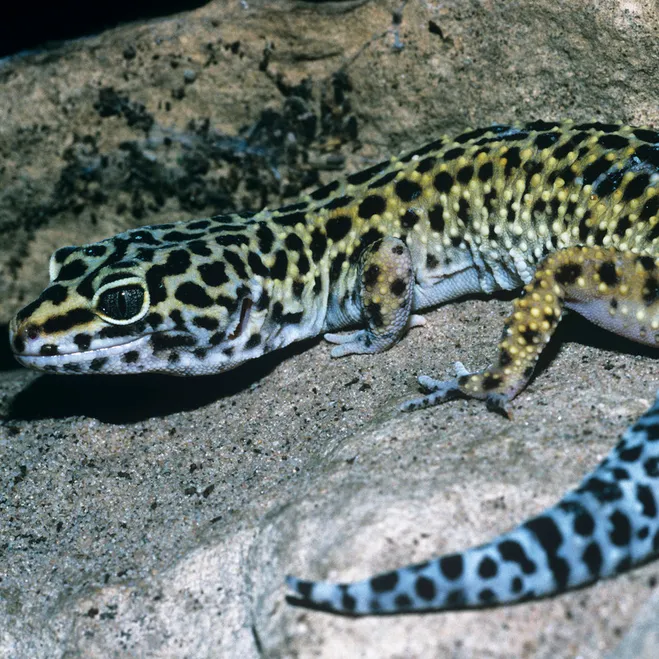
© David Lawson / WWF-UK
Assessment results
Low risk

Conservation | Low risk
This animal is most likely not threatened by extinction, and/or the exotic pet trade does not impact the wild population. Please check that the animal you want comes from a reputable seller or rescue center that follows best practices when they source their animals.

Legality | Low risk
This animal is not currently protected by any national laws or import restrictions. Exotic pet ownership, however, is regulated at the state, county, or city level, so check your jurisdiction to see if you can own it.

Human and public health | Low risk
It is likely that this animal is not a threat to human or public health, but make sure to practice good hygiene when handling any animal.

Invasiveness | Low risk
This species would not likely impact native biodiversity or habitats. However, never release a pet into the wild for any reason.

Animal welfare | Moderate risk
Care, diet, and housing needs of this species are either insufficiently known or difficult, making it hard to ensure it has a good quality of life for its lifetime. Learn more about the challenges with exotic pet welfare.
⚠️ Important considerations
- Most reptiles carry salmonella in their intestinal tract and may not be suitable for young children or immunocompromised individuals. Always practice good hygiene and hand washing around leopard geckos.
- Leopard geckos are relatively easy to care for but do not enjoy being handled and their housing and diet needs require additional knowledge and effort. They need a gradient of temperatures (73-75ºF on the cool end to 88-90ºF on the warm end) in their environment to be able to regulate their own body temperature, proper humidity, and a small amount of UVA and UVB light for good health. They are prone to metabolic bone disease without UV light exposure and enough calcium and vitamin D3. The substrate used in their environment is important and should not be something they could ingest.
- Ensure you have access to a veterinarian that specializes in reptiles and consult them about proper habitat setup, diet, and care. Find a reptile vet near you.
Basic information
Taxonomy:
Squamata, Eublepharidae
Lifespan:
10-25 years
Weight:
45-60 g
Size:
7-10 in (17-25 cm) long including tail
Native range and habitat:
Arid mountainous deserts of Afghanistan, Pakistan, Northwest India, and Iran
Diet:
Insectivores that eat a variety of live crickets, waxworms, and some mealworms; in captivity, ensure the insects you feed are gut-loaded and coated in a calcium/vitamin D3 supplement
Activity and behavior:
- Most active at night
- Communicate with their tails and can self-amputate their tail as a defense mechanism
- Generally solitary animals unless mating
© WWF-Japan