Mongolian gerbil
Meriones unguiculatus
The risk associated with keeping this species as a pet is low. Gerbils are suitable pets if well cared for, but you can learn more below to check if it is a suitable pet for you.
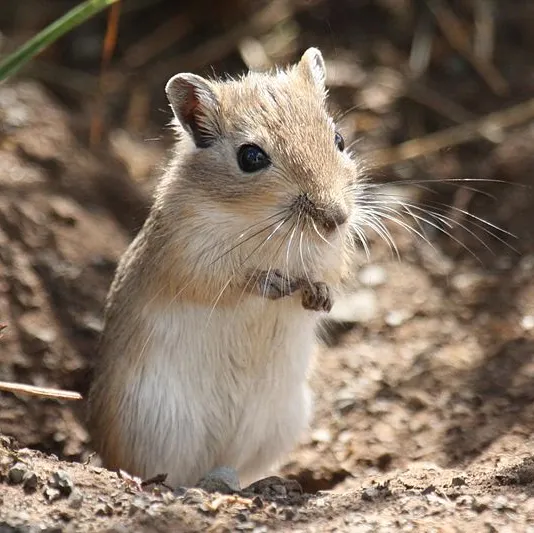
© Alastair Rae/Wikimedia Commons
Assessment results
Low risk

Conservation | Low risk
This animal is most likely not threatened by extinction, and/or the exotic pet trade does not impact the wild population. Please check that the animal you want comes from a reputable seller or rescue center that follows best practices when they source their animals.

Legality | Moderate risk
It’s likely that the animal has some national legal protections or import restrictions; however, exotic pet ownership is regulated at the state, county, or city level, so check your jurisdiction to see if you can own it. Keeping these protected or prohibited species can have legal consequences for the owner, including fines or bans on pet ownership or sale. Learn more about relevant exotic pet trade and ownership laws.

Human and public health | Moderate risk
It is likely that this animal is a potential threat to human or public health, either due to potential zoonotic diseases or due to physical attributes that can harm humans. Learn more about animal-related illness and injuries.

Invasiveness | Low risk
This species would not likely impact native biodiversity or habitats. However, never release a pet into the wild for any reason.

Animal welfare | Low risk
Care, diet, and housing needs of this species are relatively easy to meet for its lifetime to ensure it has a good quality of life.
⚠️ Important considerations
- Check your local laws on exotic pet ownership. In the US, some states or municipalities do not allow you to keep a gerbil as a pet.
- Gerbils are relatively easy to care for, but they should be kept in same-sex pairs or small groups that are littermates or grow up together since they are social animals. Adults are territorial and not introduced easily. They should also be provided lots of opportunities for climbing, burrowing, and playing with enriching toys, along with an exercise wheel since they are very active, and things to chew to trim their teeth.
Basic information
Taxonomy:
Rodentia, Muridae
Lifespan:
2-3 years, but up to 8
Weight:
38-56 g
Size:
4 in (10 cm) body with a 4 in (10 cm) tail
Native range and habitat:
Clay or sandy deserts, grasslands, scrub, arid steppes, and mountain valleys of the highlands of inner Mongolia, along with southern Siberia and northern China
Diet:
Mugwort, saltwort, bristle grass, and lyme grass. A high-quality pelleted diet or rodent diet can be used in captivity, but a seed diet should not be used as it can cause nutritional diseases.
Activity and behavior:
- Curious, playful, active, and very social animals that live in family groups in small burrows.
- They are most active at night and natural burrowers that spend most of their time foraging. They tend to reduce activity or be inactive during the hottest and coldest parts of the day and year.
- Sunbathe to remove excess oil and to regulate body temperature
© WWF-Japan