Pacman frog/South American horned frog
Ceratophrys ornata
The risk associated with keeping this species as a pet is low. Pacman frogs can be suitable pets if well cared for, but you can learn more below to check if it is a suitable pet for you.
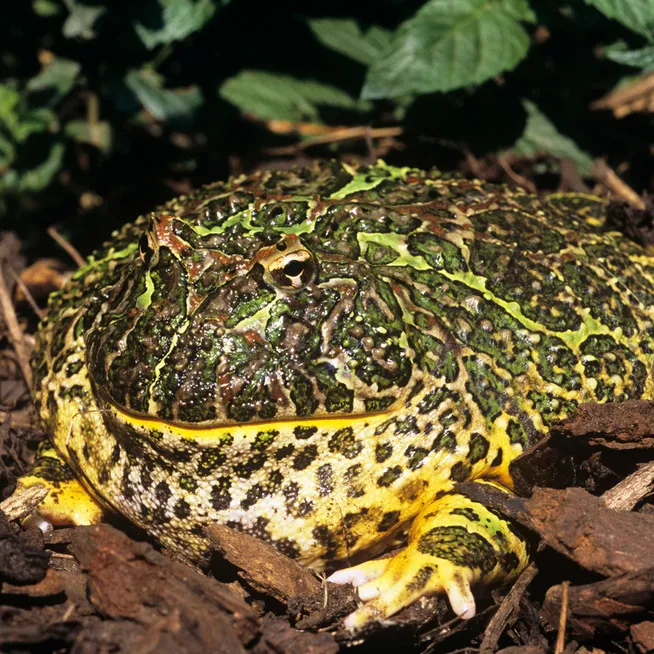
© David Lawson / WWF-UK
Assessment results
Low risk

Conservation | Low risk
This animal is most likely not threatened by extinction, and/or the exotic pet trade does not impact the wild population. Please check that the animal you want comes from a reputable seller or rescue center that follows best practices when they source their animals.

Legality | Low risk
This animal is most likely not threatened by extinction, and/or the exotic pet trade does not impact the wild population. Please check that the animal you want comes from a reputable seller or rescue center that follows best practices when they source their animals.

Human and public health | Moderate risk
It is likely that this animal is a potential threat to human or public health, either due to potential zoonotic diseases or due to physical attributes that can harm humans. Learn more about animal-related illness and injuries.

Invasiveness | Low risk
This species would not likely impact native biodiversity or habitats. However, never release a pet into the wild for any reason.

Animal welfare | Moderate risk
Care, diet, and housing needs of this species are either insufficiently known or difficult, making it hard to ensure it has a good quality of life for its lifetime. Learn more about the challenges with exotic pet welfare.
⚠️ Important considerations
- Pacman frog populations are declining in the wild and they are a near threatened species, highly demanded for the pet trade and sometimes illegally collected from the wild for this purpose.
- Pacman frog's housing and diet needs require additional knowledge and effort. They need proper temperatures between 75-85 ºF during the day and 65-75 ºF at night with 50-80% humidity, a normal day/night light cycle, places to hide, and a water bowl that they can sit in. They are very sensitive to the water quality, and it should be filtered and de-chlorinated before use.
- They should not be handled, and if you must handle them, non-powdered gloves should be worn since they have very sensitive skin.
- As with all pet amphibians, ensure there is access to a veterinarian that specializes in amphibians and consult them about proper habitat setup, diet, and care. Find an amphibian vet near you.
Basic information
Taxonomy:
Anura, Ceratophyridae
Lifespan:
About 6 years
Weight:
up to 1 lb. (0.45 kg)
Size:
3-6 in (7.6-15.2 cm) long and wide
Native range and habitat:
Rainforests of Argentina, Uruguay, and southern Brazil
Diet:
Lizards, mice, frogs, insects (occasionally dusted with vitamin and mineral supplementation in captivity)
Activity and behavior:
- Solitary animals that should be housed alone
- Nocturnal animals that are not very active
© WWF-Japan