Serval
Leptailurus serval
There is a high risk associated with keeping this species as a pet. This is not a suitable pet.
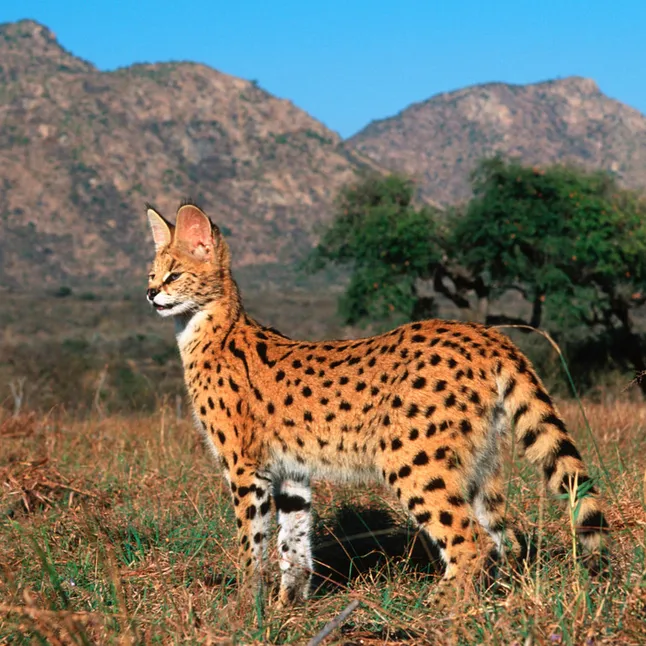
© Martin Harvey/WWF
Assessment results
High risk

Conservation | Low risk
This animal is most likely not threatened by extinction, and/or the exotic pet trade does not impact the wild population. Please check that the animal you want comes from a reputable seller or rescue center that follows best practices when they source their animals.

Legality | Moderate risk
It’s likely that the animal has some national legal protections or import restrictions; however, exotic pet ownership is regulated at the state, county, or city level, so check your jurisdiction to see if you can own it. Keeping these protected or prohibited species can have legal consequences for the owner, including fines or bans on pet ownership or sale. Learn more about relevant exotic pet trade and ownership laws.

Human and public health | High risk
It’s likely that the animal has some national legal protections or import restrictions; however, exotic pet ownership is regulated at the state, county, or city level, so check your jurisdiction to see if you can own it. Keeping these protected or prohibited species can have legal consequences for the owner, including fines or bans on pet ownership or sale. Learn more about relevant exotic pet trade and ownership laws.

Invasiveness | Low risk
This species would not likely impact native biodiversity or habitats. However, never release a pet into the wild for any reason.

Animal welfare | High risk
Care, diet, and housing needs of this species are extremely difficult to meet for its lifetime, and potential owners are unlikely to be able to provide a good quality of life. Learn more about the challenges with exotic pet welfare.
⚠️ Important considerations
- Check your local laws on serval ownership. Laws on pet ownership vary at the city, county and state level in the US and it is illegal or you need proper permits to keep a serval as a pet in some states and municipalities.
- Servals will bite and scratch and should not be handled.
- Their housing, diet, and social needs are very hard to meet in captivity, and are financially expensive and time consuming. They are very active and need a lot of room. Veterinary care is also very challenging to find for servals.
Basic information
Taxonomy:
Carnivora, Felidae
Lifespan:
Up to 10 years in the wild and 20 years in captivity
Weight:
15-40 lbs (7- 18 kg)
Size:
2- 3 ft (0.6- 0.9 m) long, 1.5- 2 ft (0.4- 0.6 m) tall
Native range and habitat:
Forest, grasslands, savannas in sub-Saharan Africa.
Diet:
Carnivore, prefers living prey, small mammals, birds and amphibians.
Activity and behavior:
- They are solitary animals and territorial; they rarely spend time with other individuals of the same species except during breeding season, to raise young, and for territorial disputes.
- They are highly athletic, with a strong jumping ability.
© WWF-Japan