Sugar glider
Petaurus breviceps
There is moderate risk associated with keeping this species as a pet, as explained below. Prospective pet owners should research if they can safely keep the animal for its lifetime, including housing, proper food and veterinary care, and be sure it can be kept as a pet in their jurisdiction.
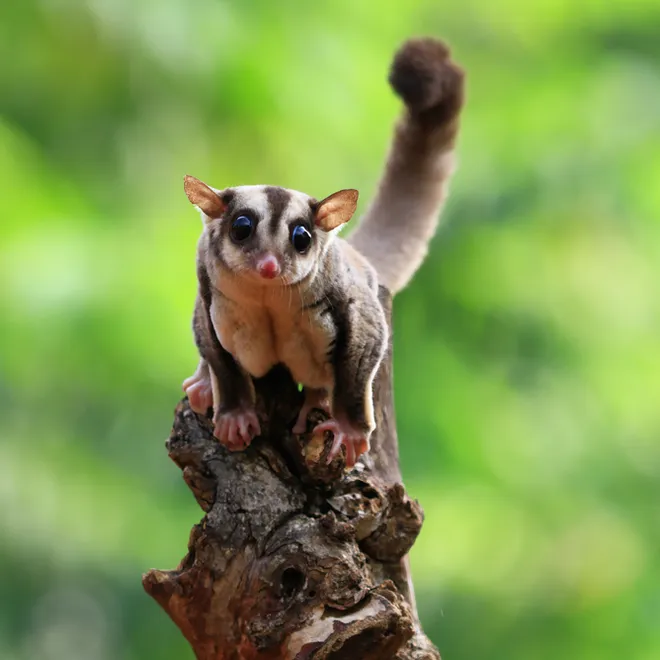
© Shutterstock/Kurit afshen
Assessment results
Moderate risk

Conservation | Low risk
This animal is most likely not threatened by extinction, and/or the exotic pet trade does not impact the wild population. Please check that the animal you want comes from a reputable seller or rescue center that follows best practices when they source their animals.

Legality | Low risk
This animal is not currently protected by any national laws or import restrictions. Exotic pet ownership, however, is regulated at the state, county, or city level, so check your jurisdiction to see if you can own it.

Human and public health | Low risk
It is likely that this animal is a potential threat to human or public health, either due to potential zoonotic diseases or due to physical attributes that can harm humans. Learn more about animal-related illness and injuries.

Invasiveness | Low risk
This species would not likely impact native biodiversity or habitats. However, never release a pet into the wild for any reason.

Animal Welfare | High risk
Care, diet, and housing needs of this species are extremely difficult to meet for its lifetime, and potential owners are unlikely to be able to provide a good quality of life. Learn more about the challenges with exotic pet welfare.
⚠️ Important considerations
- Sugar gliders are often imported from Indonesia and there is an increased conservation and zoonotic disease risk (particularly salmonella and other bacterial infections) from animals originating from the wild. However, sugar gliders are also captive bred in the US and animals sourced from captive breeding have a reduced risk of carrying zoonotic diseases.
- Check your local laws on sugar glider ownership. Laws on pet ownership vary at the city, county and state level in the US and it is illegal or you need proper permits to keep a sugar glider as a pet in some states and municipalities.
- Their housing, diet, and social needs are very hard to meet in captivity, and are financially expensive and time consuming. An ideal captive diet for sugar gliders is unknown, so nutritional diseases are very common and they are not recommended as a pet for this reason. They are also highly active, and need lots of space to run and jump, along with an environment that is 75-90 degrees F and not in bright sunlight.
- Ensure you have access to a veterinarian specializing in exotic mammals and consult them about proper habitat set up, diet, and care. Find an exotic mammal vet near you.
Basic information
Taxonomy:
Diprotodontia, Petauridae
Lifespan:
In captivity, they live an average of 14 years; some records indicate a lifespan of 17.8 years.
Weight:
0.2-0.3 lbs (90-130 g)
Size:
6-8 in (16-20 cm) body with 6.5-8 in (16.5-21 cm) tail
Native range and habitat:
Widely found in forests and grasslands in northwestern and southeastern Australia, Indonesia, and Papua New Guinea.
Diet:
In the wild, they are omnivorous, eating tree secretions, fruits, and nectar, along with insects and bird eggs. Strict requirements must be met in captivity.
Activity and behavior:
- In the wild, they live in highly social groups consisting of one male, several females, and their young, gliding tree to tree, and communicating with each other through their scent and calls. In captivity, they should be housed with other sugar gliders and provided an environment that allows leaping and climbing with enriching toys and nesting boxes.
- They are most active at night, when people are asleep.
© WWF-Japan