Zebra finch
Taeniopygia guttata; Taeniopygia castanotis
The risk associated with keeping this species as a pet is low. Zebra finches are suitable pets if well cared for, but you can learn more below to check if it is a suitable pet for you.
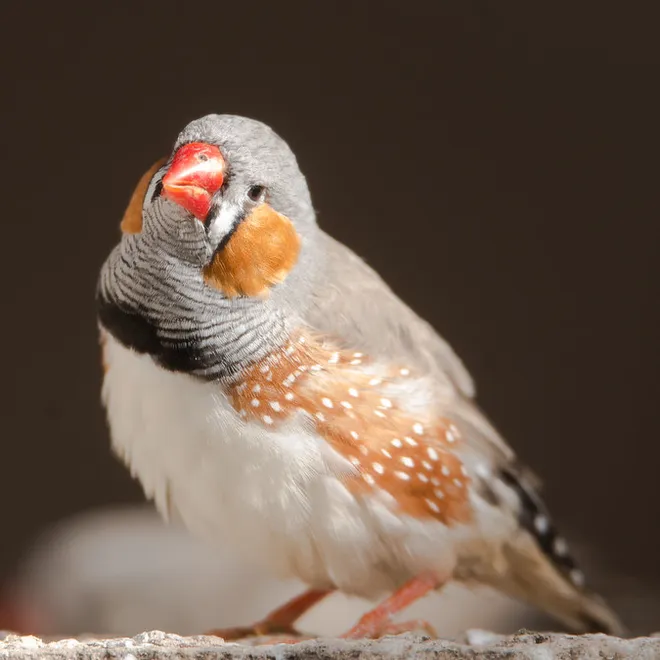
© Nicholls of the Yard / Flickr.com / Creative Commons
Assessment results
Low risk

Conservation | Low risk
This animal is most likely not threatened by extinction, and/or the exotic pet trade does not impact the wild population. Please check that the animal you want comes from a reputable seller or rescue center that follows best practices when they source their animals.

Legality | Low risk
This animal is not currently protected by any national laws or import restrictions. Exotic pet ownership, however, is regulated at the state, county, or city level, so check your jurisdiction to see if you can own it.

Human and public health | Moderate risk
It is likely that this animal is a potential threat to human or public health, either due to potential zoonotic diseases or due to physical attributes that can harm humans. Learn more about animal-related illness and injuries.

Invasiveness | Low risk
This species would not likely impact native biodiversity or habitats. However, never release a pet into the wild for any reason.

Animal welfare | Low risk
Care, diet, and housing needs of this species are relatively easy to meet for its lifetime to ensure it has a good quality of life.
⚠️ Important considerations
- Zebra finches are known to carry and spread diseases to humans. Make sure to follow hygienic practices during and after handling, like hand washing.
- In captivity, it is important to mimic their foraging instincts for seeds and the seeds provided should be fresh and at peak nutritional value. Additionally, a large habitat for horizontal flight that also contains perches is needed to meet their activity needs.
- Zebra finches do not enjoy being handled by people.
- Ensure you have access to a veterinarian that specializes in birds and consult them about proper habitat set up, diet, and care. Find an avian vet near you.
Basic information
Taxonomy:
Passeriformes, Estrildidae
Lifespan:
In the wild, the lifespan is about 2-3 years. In captivity, it is 5-7 years.
Weight:
10- 16 g
Size:
3.9- 4.3 in (10- 11 cm) long and 8-9 in (20- 23 cm) wingspan
Native range and habitat:
The Timor finches inhabit forests, grasslands, shrublands, marine intertidal zones, and artificial environments in Indonesia, Australia, and East Timor. Both species have introduced populations in Portugal and Puerto Rico.
Diet:
Forage for seeds from plants, weeds, pine cones, and berries in the wild. In captivity, they need to forage for seeds and should also be fed a variety of greens like romaine lettuce, kale, dandelion greens, and spinach, as well as fresh fruits and vegetables. Include some pelleted food as a formulated nutrition source, along with eggs or an egg supplement.
Activity and behavior:
- They are highly social and live in flocks of around 100 birds. During the breeding season, they divide into small flocks of about 50.
- They are very active and communicate with each other through their calls.
© WWF-Japan