Publications
-
WWF-Nepal organized a visit to India for government officials from Nepal in December 2023. The delegates visited several important sites in Haridwar and Dehradun and interacted with experts and officials from India. They also observed sites with successful examples of wildlife-friendly infrastructure and safeguard measures. This was the second visit of this kind, after the first visit to the same site by federal-level stakeholders in August 2023.
The visit‚'s main objective was to facilitate cross-learning, best practices sharing, and field observation to broaden and enhance participants‚' knowledge and understanding of natural resource safeguards in linear infrastructure. Fifteen government officials from federal and provincial ministries related to forestry, environment, physical infrastructure development, and province policy and planning commissions participated in the visit.
-
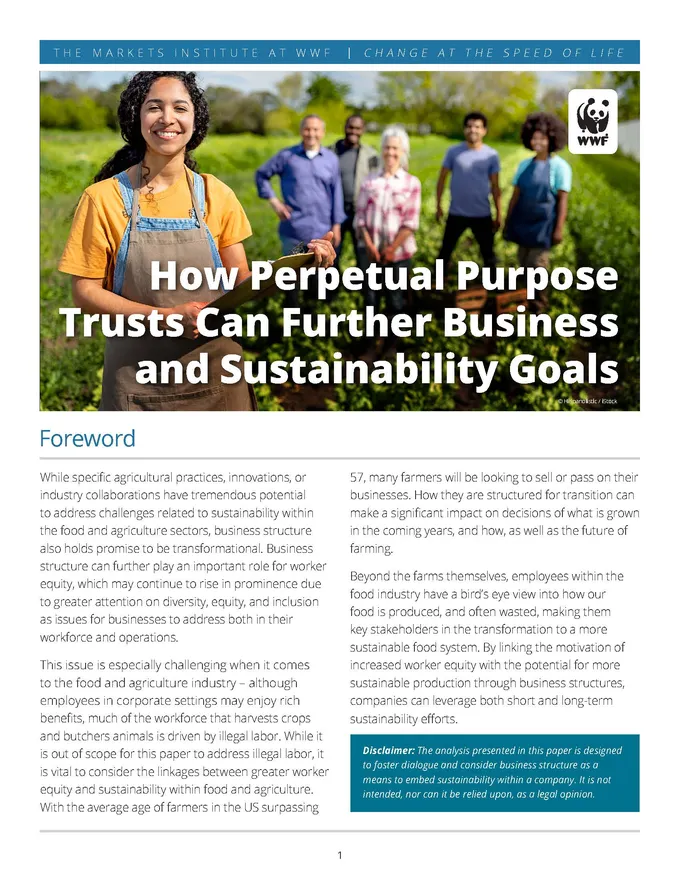
What if you could leverage the structure of a business to embed sustainability and worker equity into a company‚'s DNA? One way some companies have sought to improve worker equity is through different forms of employee ownership, such as employee stock ownership plans, worker cooperatives, or Perpetual Purpose Trusts.
This business case explains these different business structures and discusses the advantages and disadvantages of each.
-
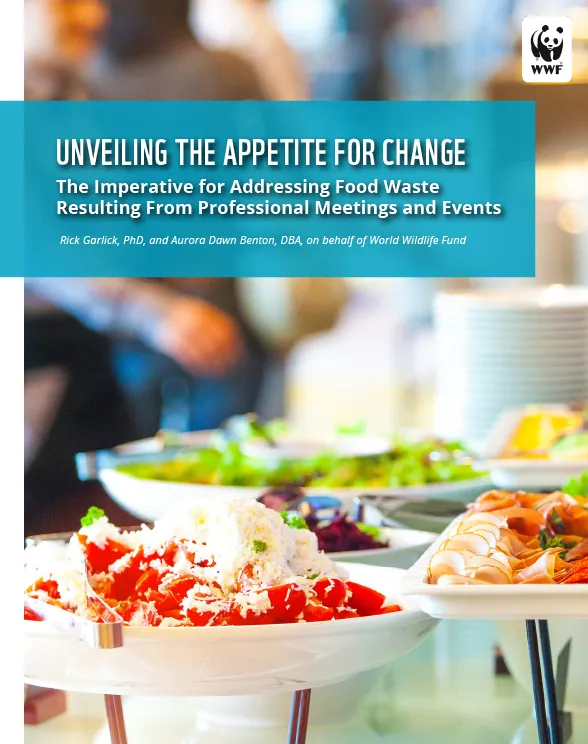
In the United States, nearly 40 percent of food is wasted every year. Professional meetings and events significantly contribute to this problem, with uneaten delicacies and untouched platters quietly discarded after every buffet and coffee break, even though high percentages of meeting planners wish to host sustainable meetings. World Wildlife Fund collaborated with Astrapto, a sustainability consultancy, to survey meeting planners regarding their attitudes toward food waste prevention. The findings reveal a compelling narrative: most planners and their clientele acknowledge that food waste is a significant industry problem, but proactive suggestions from venues to prevent food waste remain scarce. This white paper seeks to shed light on the gap between intention and action in addressing food waste in professional gatherings.
-
wwf gef MAR2R Terminal evaluation and management response
-
-
The Blueprint for Credible Action on Plastic Pollution is a helpful tool both for companies initiating a new plastic strategy and those seeking to maintain leadership or expand existing strategies and plans. Companies with strategic plans in place to address plastic pollution can use the Blueprint to identify gaps in existing programs and pinpoint opportunities for expansion and collaboration.
-
-
This document is the quarterly newsletter of the USAID-funded Targeting Natural Resource Corruption (TNRC) project, which operated from 2018 to 2024. Its content included latest news, resources, and training opportunities.
---
This content is made possible by the generous support of the American people through the United States Agency for International Development (USAID). The contents are the responsibility of World Wildlife Fund (WWF) and do not necessarily reflect the views of USAID, the United States Government, or individual TNRC consortium members.

-
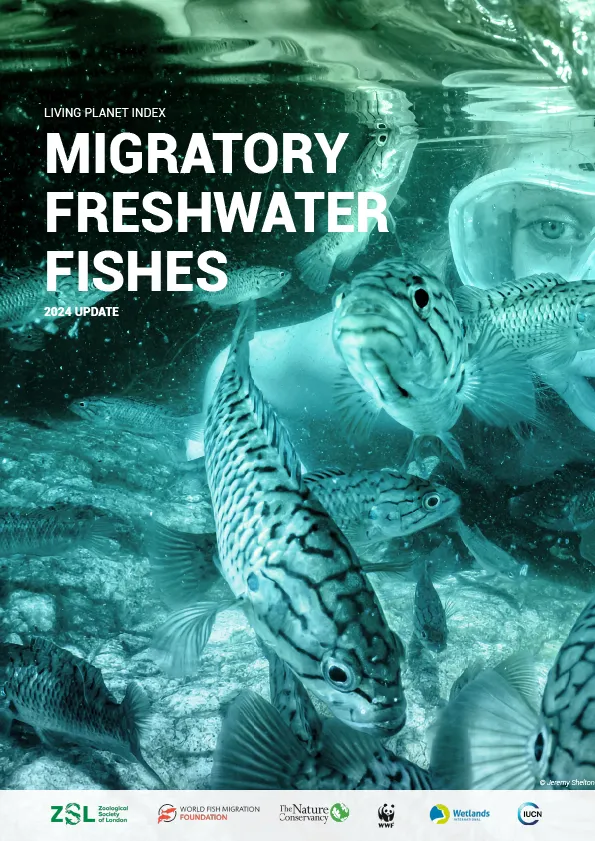
The 2024 Living Planet Index (LPI) update for Migratory Freshwater Fishes unveils a startling 81% decline in monitored populations of freshwater migratory fishes from 1970 to 2020. This distressing trend is attributed to habitat loss and degradation, with factors like river fragmentation due to dams and agricultural encroachment on wetlands accounting for half of the threats. Over-exploitation exacerbates the situation, alongside rising pollution and the escalating impacts of climate change, which have relentlessly plagued freshwater migratory fish species for three decades. Beyond ecological implications, these fish are lifelines for millions, sustaining food security and nutrition for vulnerable communities in Asia, Africa, and Latin America, while supporting the livelihoods of tens of millions involved in local fisheries, global trade, and the recreational fishing industry. Yet amidst this bleak scenario, there's hope. The report highlights actionable solutions, ready to be implemented by governments and communities today. It underscores the effectiveness of conservation efforts and improved management practices, emphasizing strategies such as species-focused fisheries management, habitat restoration, dam removals, establishment of conservation sanctuaries, and legal protections, laying out a pathway toward reversing this alarming decline.
-
While tiger populations have increased in some countries over the last decade, these gains are fragile, and tigers remain the world‚'s most threatened big cat. Today, there are approximately 5,574* tigers left in the wild across Asia (*GTF 2023), and those that remain are restricted to less than 6% of their historic range. Since 1850, tigers have been lost from at least 14 countries, and three of these extirpations (Cambodia, Lao PDR, and Viet Nam)occurred in just the last 25 years.
As a result of poaching and the loss of important prey species, the reduction in tiger range continues; the area where tigers occur has declined by approximately 50 per cent since 1994. In order to stem the decline, much more ambitious commitments and innovations will be required. These commitments should include high level goals to reverse the centuries-long decline in tiger range and return the species to sites, landscapes, countries, and ecosystems from which they are currently absent.
This report analyses the geographic opportunities for tiger range recovery across 30 current and former range countries, based on the relationship between tiger presence and intensity of human activity. In 15 counties, expanses of currently unoccupied but potentially suitable tiger habitat remain. Partnering with local communities to secure and increase the protection of such areas is essential to sustaining tiger recovery in the long-term.