Publications
-
Complex corporate structures, while legal, and jurisdictions that allow or encourage the use of such mechanisms such as flags of convenience and financial secrecy jurisdictions, obscure the identity of beneficial owners in the fisheries sector. The lack of transparency, oversight, standardized rules, and enforcement around beneficial ownership facilitates corruption and complicates efforts to combat IUU fishing.
Large-scale reforms are needed to regulate the use of complex company structures, improve transparency of ultimate beneficial owners, and prevent the exploitation of opaque jurisdictions and flag states that facilitate illegal fishing and associated crimes.
---
This content is made possible by the generous support of the American people through the United States Agency for International Development (USAID). The contents are the responsibility of World Wildlife Fund (WWF) and do not necessarily reflect the views of USAID, the United States Government, or individual TNRC consortium members.
-
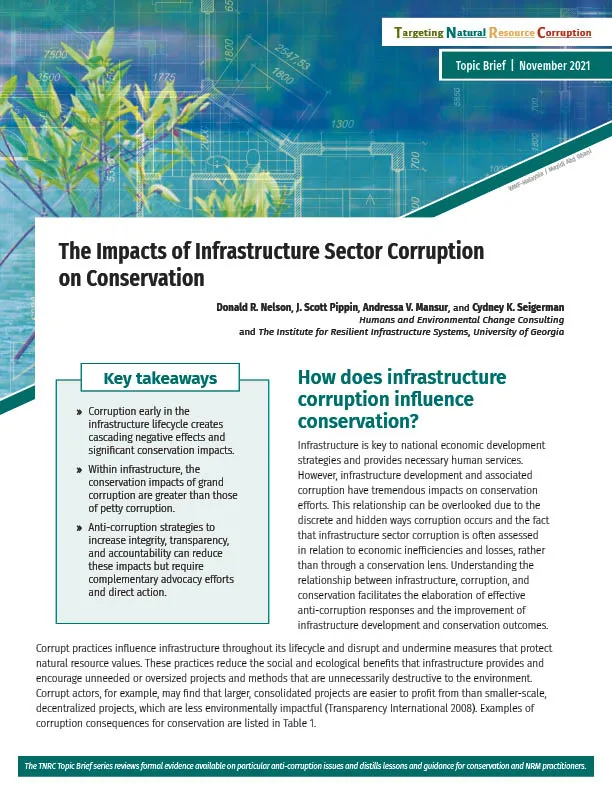
Corruption early in the infrastructure lifecycle creates cascading negative effects and significant conservation impacts. Within infrastructure, the conservation impacts of grand corruption are greater than those of petty corruption. Anti-corruption strategies to increase integrity, transparency, and accountability can reduce these impacts but require complementary advocacy efforts and direct action.
---
This content is made possible by the generous support of the American people through the United States Agency for International Development (USAID). The contents are the responsibility of World Wildlife Fund (WWF) and do not necessarily reflect the views of USAID, the United States Government, or individual TNRC consortium members.
-
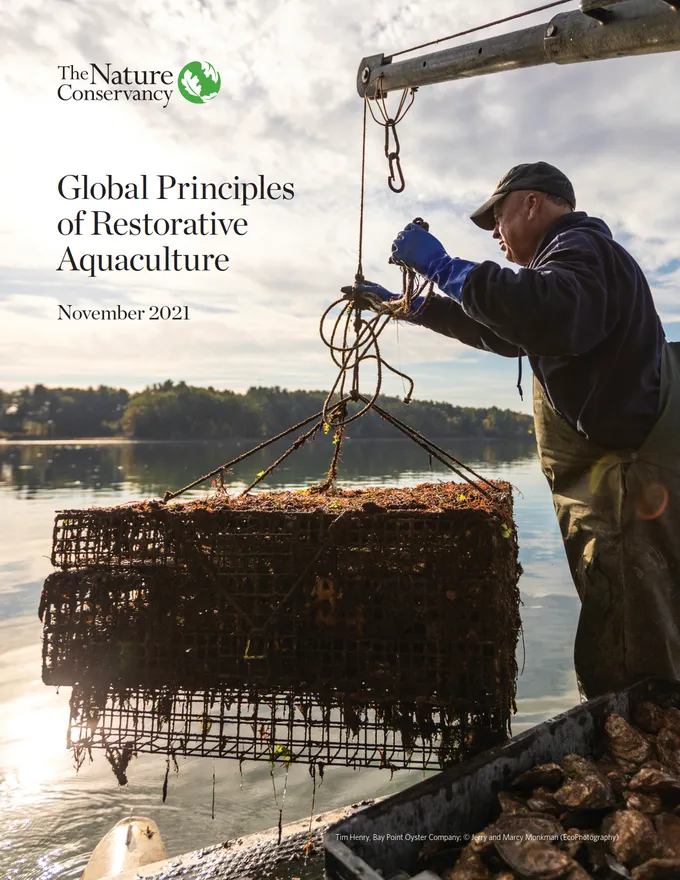
Restorative aquaculture may be one of the best opportunities to simultaneously improve the health of aquatic environments and provide food for a growing population. The Global Principles of Restorative Aquaculture report establishes a clear definition of restorative aquaculture and provides clarity on how this approach can be effectively implemented and fostered. The report is a collaborative effort with co-authors from 12 highly regarded global universities, government, non-profits, and financial institutions.
The Nature Conservancy. 2021. Global Principles of Restorative Aquaculture. Arlington, VA.
-
The IUCN World Conservation Congress hybrid in-person and virtual forum session(Sept 6, 2021) hosted by WWF, UNEP-WCMC, and the Development Corridors Partnership brought together experts from across public and private sectors to explore practical solutions to the complex challenges faced in the planning and implementation of sustainable infrastructure. Setting the tone of the session, Nicolas Buchoud, a leading infrastructure expert and our session moderator, posed the question: How can we break barriers to acquaint the world of infrastructure with biodiversity?
Over the course of the ninety-minute session, key insights and examples were provided to illuminate the practical and realistic solutions available for future sustainable infrastructure development. The discussion was guided by overarching responses to the challenges surrounding data and standards; awareness, technical capacity, and know-how; collaboration & participatory approaches; and policy and regulatory incentives.
-
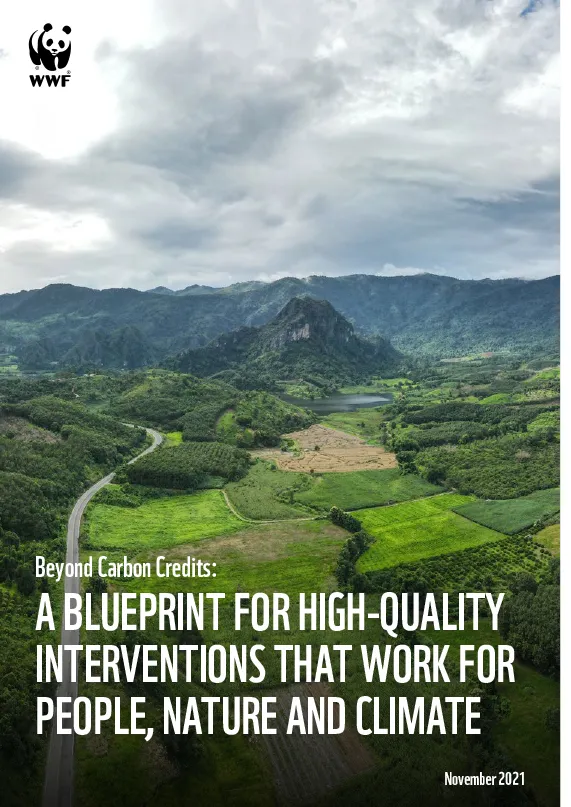
This sets out WWF‚'s views on implementing high-impact and high-quality nature-based solutions for climate mitigation from the perspective of the people and the places where we work, as a companion to WWF‚'s Blueprint for Corporate Action on Climate and Nature, which focuses on business- or demand-side integrity.
-
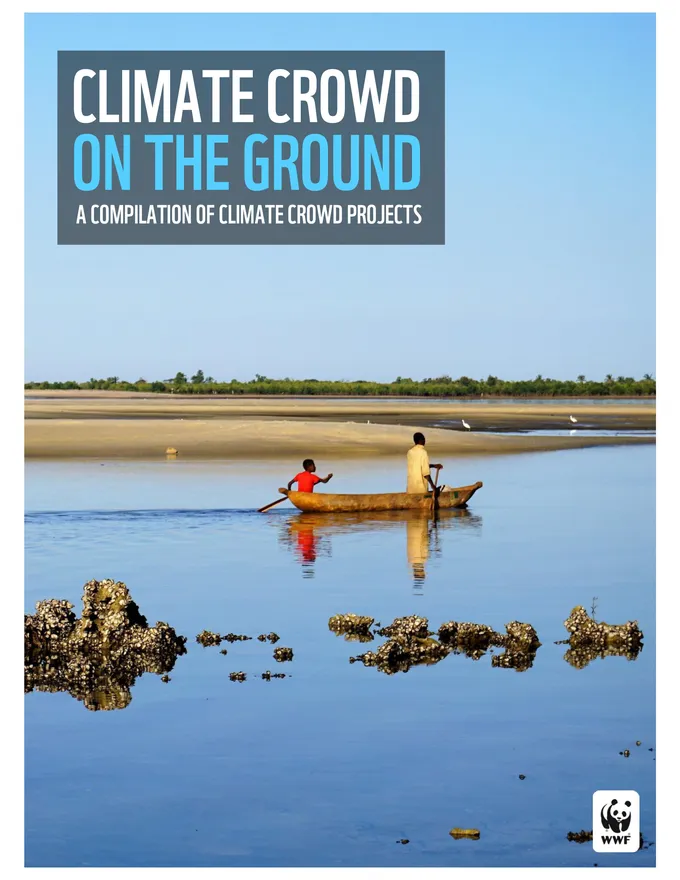
Climate Crowd on the Ground is a compilation of 15 Climate Crowd projects implemented in 8 countries, helping to build the resilience of people and nature to a changing climate. These projects are informed, designed, and implemented hand in hand with rural communities around the world. A big focus of the projects is improved water security, for example through rainwater harvesting, drip irrigation, fog catchers, solar-powered boreholes, and greywater recycling. Other projects focus on climate-smart agriculture, alternative livelihoods, education for schools, reforestation, clean cookstoves, and weather stations. The Climate Crowd methodology is to provide training and guidance to local partners who work with communities to collect data using a key informant survey. The Climate Crowd team then analyzes the data, compiling summary reports that highlight key trends. The findings are then presented back to the communities, and we work with them to co-design and implement on-the-ground projects to address climate vulnerabilities using funding from Climate Crowd.
-
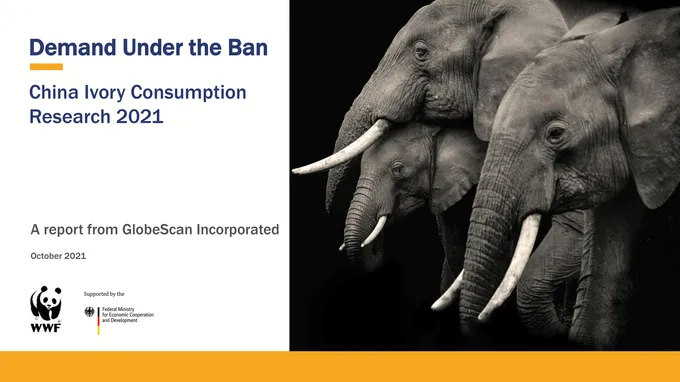
A "game-changing" ban on commercial processing and trade in elephant ivory was implemented by the State Council, China's Cabinet, on December 31, 2017. TRAFFIC and WWF commissioned GlobeScan before the ban became effective in 2017 to conduct the largest-ever ivory consumer research in China. This research has been conducted annually using the same methodology and surveying consumers in the same 15 cities. We believe this to be the most in-depth, longest-running research effort into consumer demand for ivory to date.
-
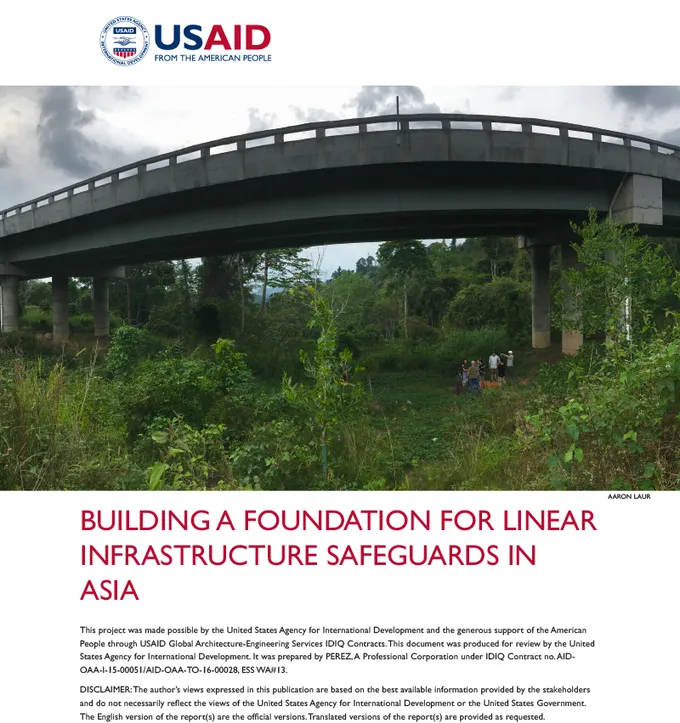
The Center for Large Landscape Conservation is pleased to announce the completion of the 14-month, USAID-funded "LISA Project" to advance wildlife-friendly linear infrastructure in Asia.
As Asia experiences unprecedented economic growth, the continent‚'s rich biodiversity and complex ecosystems are threatened by the rapid expansion of linear infrastructure development like roads, railways, and power lines. In 2020, the U.S. Agency for International Development (USAID) launched their Linear Infrastructure Safeguards in Asia (LISA) Project‚ – an assessment of the capacity of Asian countries to develop wildlife-friendly linear infrastructure. Due to the Center‚'s expertise in this area of conservation, including road ecology, we were selected to be the lead investigator on this project for USAID‚'s contractor, Perez, APC.
Twenty-four experts from seven countries formed the LISA Project team to build a base of knowledge to support Asian countries in planning wildlife safeguards for future linear infrastructure development. The project conducted its research through an in-depth literature review, a policy assessment, Asia-wide and fine-scale spatial analyses, personal interviews, an electronic survey, and the compilation of case studies.
-
To combat the worst impacts of climate change, governments, companies, and consumers alike are forcing a shift to low-carbon energy economies. In this paper, WWF examines the possibility of future oil developments within Alaska‚'s Arctic National Wildlife Refuge given this changing energy landscape. This study used the most recent data and modeling from Rystad Energy to analyze both potential of future oil development and the practical and economic uncertainties related to development brought about by the impacts of warming temperatures and an economy that is shifting to a reduced carbon-based energy dependence.
-
WWF‚'s inaugural Native Nations Partnership Report presents a summary of WWF's collaborative projects with Native nations over the past several years. Community collaboration and support allow our work to have a meaningful impact. Whether it is restoring bison to Native lands or developing strategies for sustainable financing, it is the personal connections that bring our efforts to life. In the following pages, you'll have the opportunity to read about exciting new initiatives that are underway including the expansion of bison habitat at the Wolakota Buffalo Range, returning black-footed ferrets to new partner lands, and developing the future of the Buffalo Nations Grasslands Alliance.