Publications
-
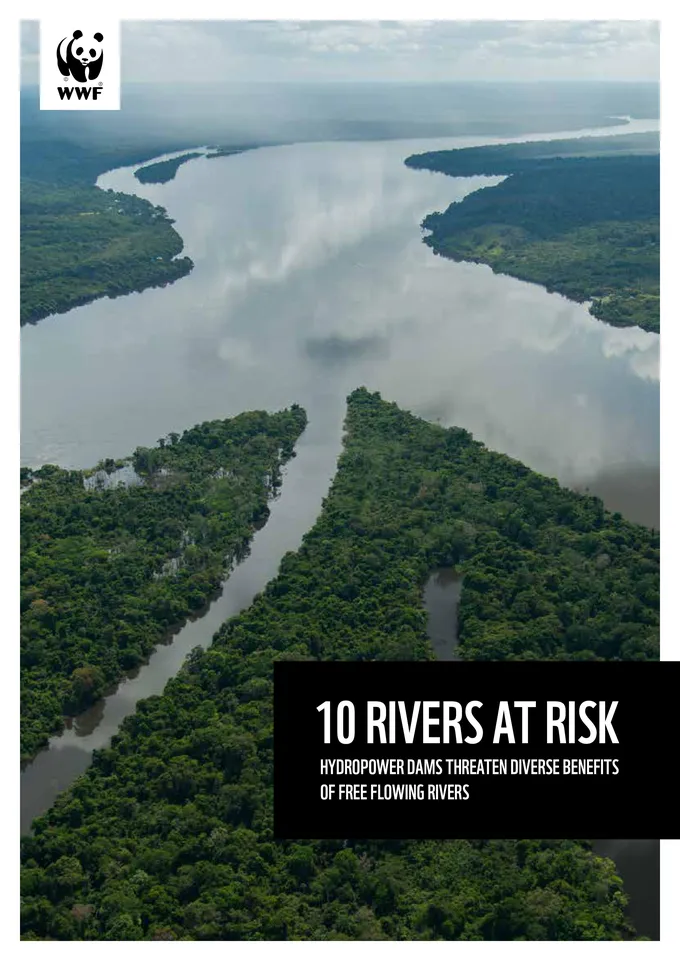
Free-flowing rivers provide a myriad of benefits including sustaining freshwater fisheries that are critical to the food security of hundreds of millions, fertilizing floodplain fields, buffering cities from extreme floods, keeping heavily populated deltas above the rising seas, and providing habitat for an extraordinary diversity of species both in and out of the water.
Yet, hydropower dams threaten the health of iconic rivers around the world from large, biodiverse tropical rivers, like the Irrawaddy, Mekong, Tapajos and Sepik, to the last free-flowing glacial river in the Alps, the last wild river in Europe, and rivers that are the lifeblood of the world-famous Okavango delta and Mara wildebeest migration.
However, for the first time, we can now meet global climate and energy goals without the need for hydropower dams. The key is for countries to focus on renewable energy solutions using LowCx3‚ – low cost, low carbon, and low conflict‚ – solutions and determine the best energy mix for their needs.
The 10 Rivers at Risk report offers a glimpse into 10 iconic rivers, the threats facing the rivers and the surrounding communities, and opportunities for action.
-
In a concerning trend, WWF's 2021 Plowprint Report has revealed that, for the second year in a row, grassland plow-up across the Great Plains has continued to accelerate. The 2021 report, which utilizes the USDA‚'s annual Cropland Data Layer and the Canadian Annual Crop Inventory from two years prior to its release date, finds that from 2018-2019 an estimated 2.6 million acres of grassland were plowed-up, primarily to make way for row crop agriculture. This is an area larger than Yellowstone National Park. Within the Northern Great Plains (NGP), the Great Plains‚' most intact region, nearly 600 thousand acres were plowed up during this same period.
-
Conservation in the Classroom
Leftover Lunch‚ – How Saving Food Saves the Planet
September 30, 2021 at 1 pm EDT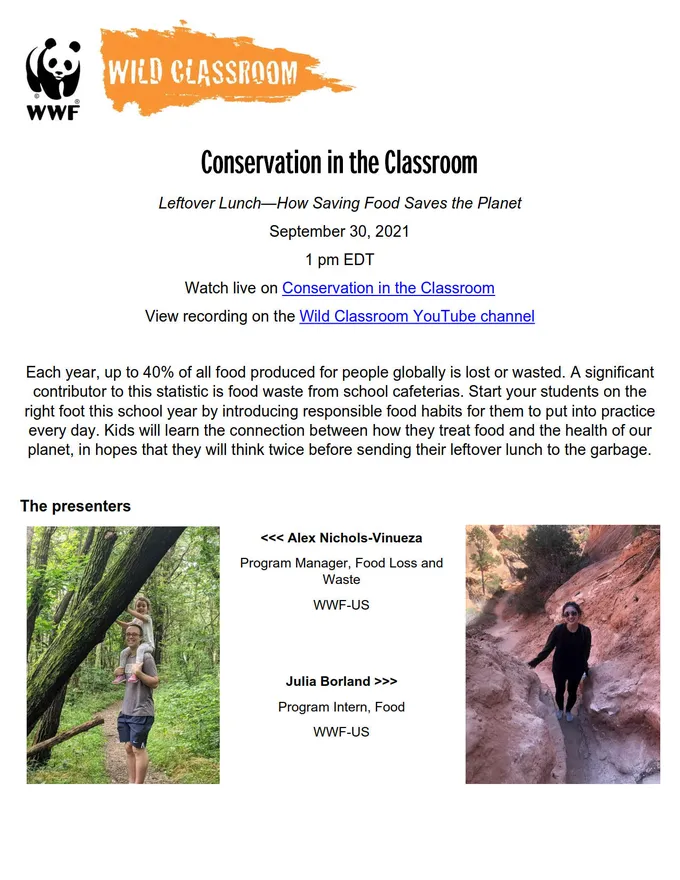
-
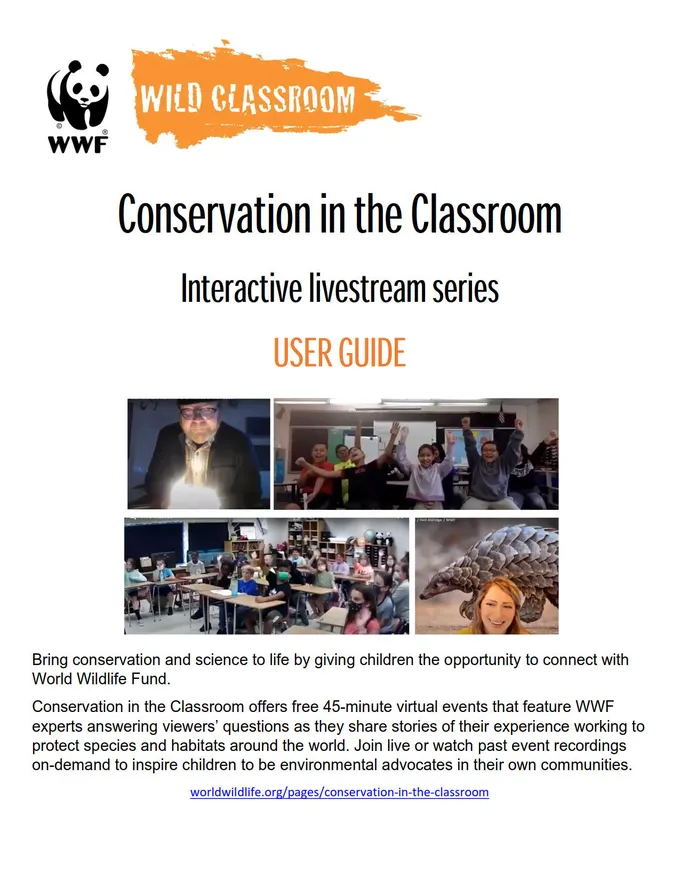
Conservation in the Classroom Interactive Livestream Series User Guide
-
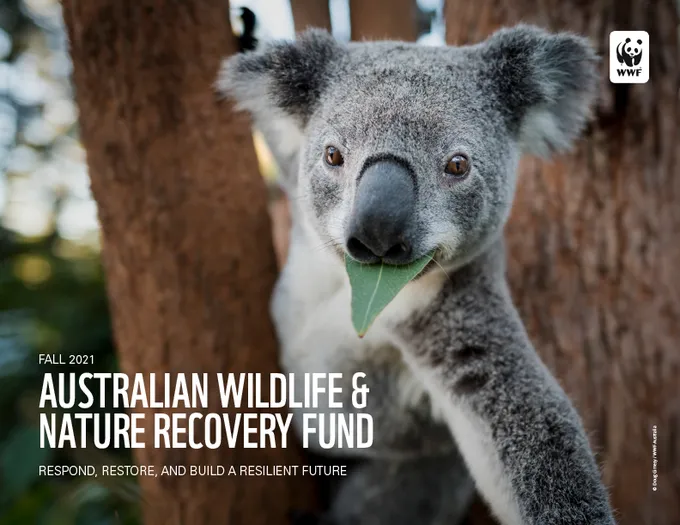
In January 2020, WWF launched the global Australian Wildlife and Nature Recovery Fund and began mobilizing an urgent response to the bushfire emergency. Working with scientists across Australia, we established a framework to address the full scope of work required to recover what had been lost and put in place safeguards for the future. Thanks to the generous support we received from Australia and around the world, we raised over $50 million for bushfire recovery and resiliency.
During Phase I – the emergency response – we formed partnerships at a grand scale, ensuring that as much wildlife could be saved and rehabilitated as possible.
We are now realizing our Phase II long-term recovery plan of mitigating natural hazards and protecting Australian nature. Regenerate Australia will be the largest landscape restoration and wildlife program in Australia‚'s history.
-
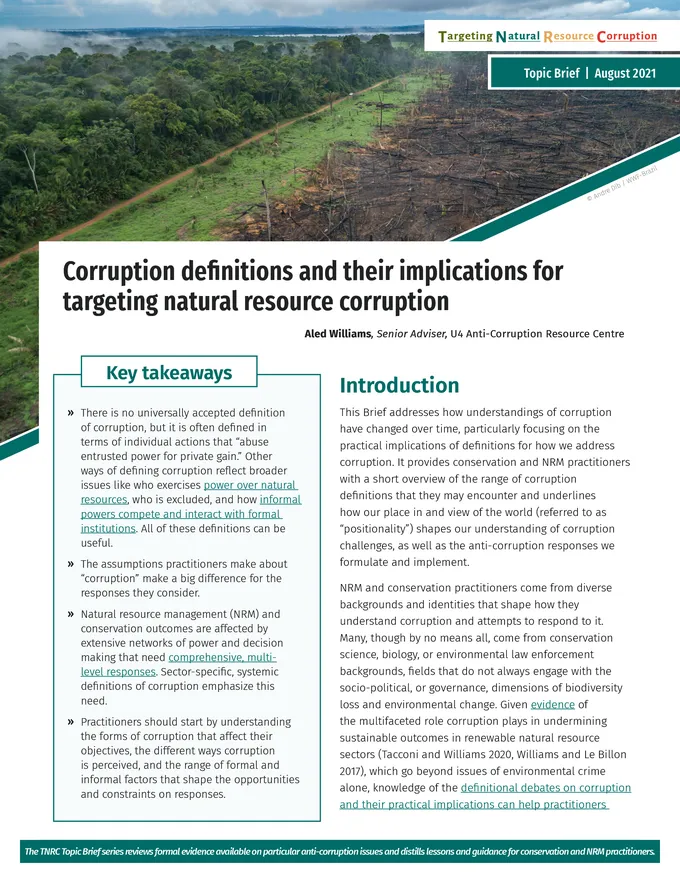
This Brief addresses how understandings of corruption have changed over time, particularly focusing on the practical implications of definitions for how we address corruption. It provides conservation and NRM practitioners with a short overview of the range of corruption definitions that they may encounter and underlines how our place in and view of the world (referred to as "positionality") shapes our understanding of corruption challenges, as well as the anti-corruption responses we formulate and implement.
For more resources, go to the Targeting Natural Resource Corruption project's Knowledge Hub.
---
This content is made possible by the generous support of the American people through the United States Agency for International Development (USAID). The contents are the responsibility of World Wildlife Fund (WWF) and do not necessarily reflect the views of USAID, the United States Government, or individual TNRC consortium members.
-
Wildlife dispersal from one forested area to another is crucial for gene flow and maintaining genetic diversity. Unfortunately, growing urbanization and development across landscapes has led to the fragmentation of forested wildlife habitats and, today, these patches of forests are primarily contained within protected areas. Corridors, which include defined forested areas intermixed with grasslands and wetlands, provide connectivity between protected areas and are integral for easy dispersal of wildlife populations in conservation landscapes. With wildlife populations declining globally, it is imperative to prioritize or scale up restoration efforts in corridors, particularly in large natural areas and interconnected forests.
This publication addresses the many interventions, achievements, challenges, and setbacks faced while restoring the critical corridors of the Terai Arc Landscape, highlighting its relationship with the Government of Nepal, local communities, and conservation partners.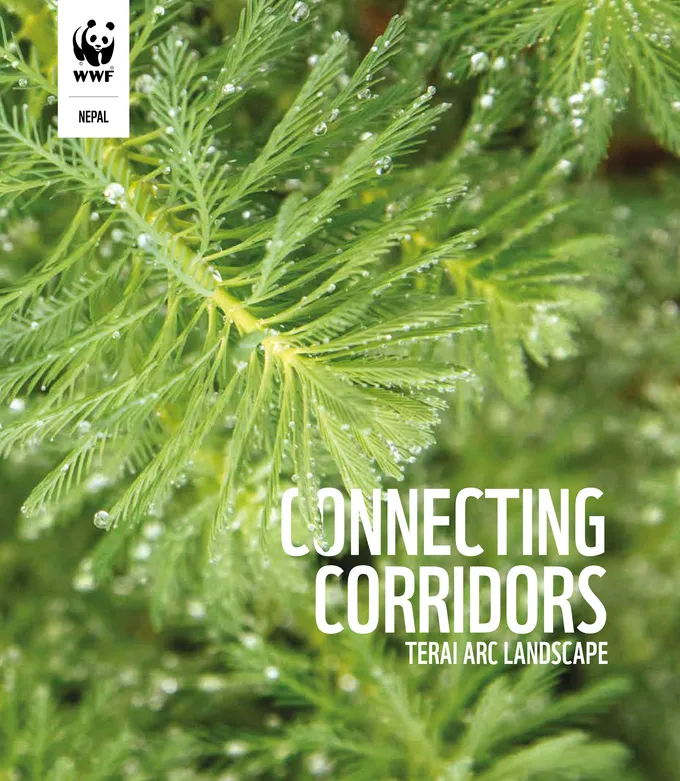
-
This toolkit was put together by WWF to provide better tools and resources for communicating with guests about food waste. Food waste is an industry-wide challenge in the hospitality sector, and chances are you‚'ve seen the scope of the problem yourself. Reducing food waste is one of the most effective ways the hospitality sector can make a positive environmental impact, but the effect goes beyond just sustainability. It also impacts your bottom line and shapes your brand image; guest research tells us that people prefer brands that are actively trying to go more green ‚Äì especially luxury brands!
The information and assets included in this toolkit are designed to create awareness of the problem and gently shift guest behaviors. It uses insights gathered over several months of research, and talking with and observing dozens of guests at hotels, resorts, and cruise ships in North America. More importantly, the concepts and messages have been tested with real people, so we can say with confidence: it works!
If you would like to learn additional strategies and recommendations for tackling food waste on your property, please check out hotelkitchen.org. The platform, published by WWF in 2016, offers comprehensive guidance for addressing operational food waste. Hotels piloting this program have shown a reduction of food waste of up to 38%.
-
Illegal logging, fishing, and the associated trade in their products are major threats to sustainability and are often abetted by corruption. One reason that the illegal timber and fish trade and the corruption that facilitates it have flourished is that it is possible and often easy to "launder" illegal products in ways that make them difficult to distinguish from legal ones. This Brief finds vulnerabilities in some traceability systems that reduce their effectiveness in preventing laundering and combating illegality and corruption. While they can be strengthened in a variety of ways, the efficacy of traceability systems as anti-crime/corruption tools will always be conditional upon the will and capacity of authorities to act on the information the systems provide.
For more resources, visit the Targeting Natural Resource Corruption project Knowledge Hub.
---
This content is made possible by the generous support of the American people through the United States Agency for International Development (USAID). The contents are the responsibility of World Wildlife Fund (WWF) and do not necessarily reflect the views of USAID, the United States Government, or individual TNRC consortium members.
-
Driven to Waste: Global Food Loss on Farms, a new report from WWF and Tesco, reveals an estimated 2.5 billion tonnes of food goes uneaten around the world each year. That is an increase of approximately 1.2 billion tonnes on the established estimates of 1.3 billion tonnes wasted each year. These new estimates indicate that of all the food grown, approximately 40% goes uneaten, which is higher than the previously estimated figure of 33%.
The report focuses on food losses on farms, around and during harvests and slaughter as well as after. This is the first quantification of total on-farm food loss since 2011. When combined with updated data on loss in supply chains and waste at retail and consumption, we have a clearer picture of the scale of food loss and waste from farm to fork demonstrating how important it is to halve food loss and waste through the whole supply chain, not just in retail and consumption.