Publications
-
Following China’s announcement late last year of a domestic ivory trade ban by the end of 2017, TRAFFIC and WWF surveys have found that the number of ivory items offered for sale—in both legal and illegal ivory markets in China—has declined alongside falling ivory prices.
Earlier this year, TRAFFIC and WWF researchers undertook a series of surveys of physical and online markets to assess their status after announcement of the incoming domestic ivory ban in China and the effectiveness of subsequent regulatory measures. The findings are now published in TRAFFIC and WWF’s new report Revisiting China’s ivory market in 2017.
-
A new trade study led by TRAFFIC, with support from World Wildlife Fund (WWF) and the International Fund for Animal Welfare (IFAW), has established a baseline for the status of the US elephant ivory market around the time that a series of changes to federal regulations were imposed by the US Fish and Wildlife Service. The study documents the availability, quantity, and price of elephant ivory offered by US-based sellers and includes recommendations directed at US law enforcement agencies to improve regulation of the domestic ivory trade, and to US e-commerce companies and other retailers in an effort to increase knowledge and adherence to relevant state and federal legislation.
-
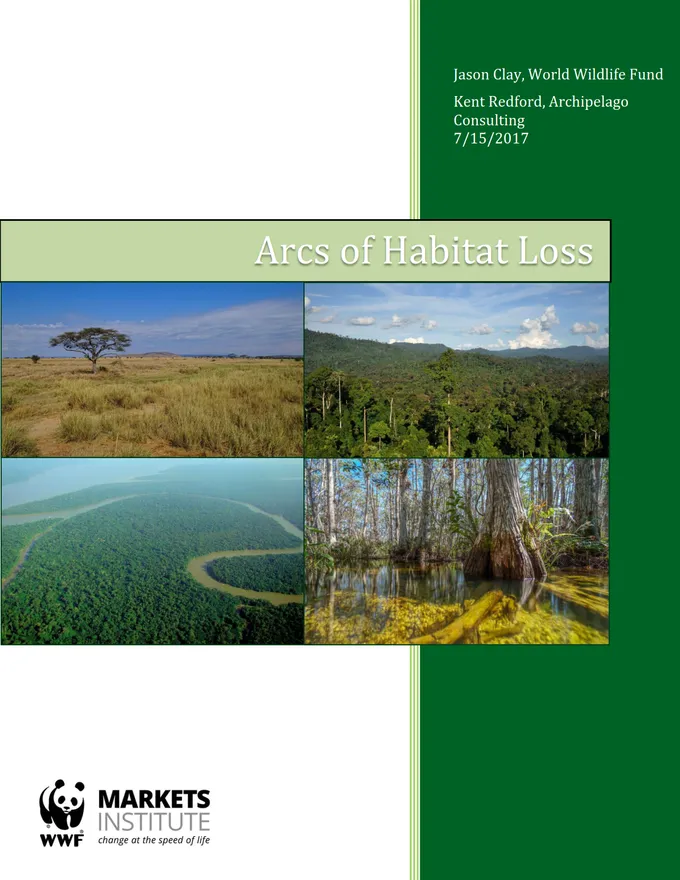
The expansion of food production has involved many more ecosystem impacts than deforestation, and we must learn more about the impacts on terrestrial and aquatic ecosystems beyond tropical forests. The goal of this topic is to present a system of "arcs" – how food production is impacting a range of critical habitats that must be examined for protective and mitigation action. The primary arcs discussed are& soils, groundwater, freshwater systems, temperate and tropical grasslands, tropical dry forests, and the ocean floor.
Learn about other issues investigated by the Markets Institute.
-
Post-disaster recovery and reconstruction can cause many adverse environmental impacts. This guide outlines ways in which they can be avoided in Nepal, and good practices can be promoted, in order to reduce future disaster risk and ensure long-term livelihoods and well-being for local people. The guide covers settlements and land use planning; building construction; waste management; energy; infrastructure; water, sanitation and hygiene; agriculture and livelihoods; and education. It highlights flood risk management, landslide prevention and treatment, and management of forests after disasters, with climate change, and gender equality and social inclusion as cross-cutting themes. The guide is written for government and non-government organization staff working in development, humanitarian and environmental fields; policy makers; the private sector; academics; and donor agency staff. While it is intended primarily for a Nepal audience, there are many results and lessons that are valuable for other countries.
-
A large-scale hydropower dam planned for Selous Game Reserve World Heritage site puts protected areas of global importance - as well as the livelihoods of over 200,000 people who depend upon the environment - at risk, reveals independent research commissioned by WWF.
Released today, the research says that the dam would have direct impacts on the UNESCO site’s core environmental value and tourism. It reveals that the knock-on effects of the dam in Steigler’s Gorge, in the heart of the Selous Game Reserve, also risk damaging a wetland of international importance: the Rufiji-Mafia-Kilwa Marine Ramsar Site. The potential impacts on this site would directly affect communities that depend on fishing, and other livelihoods connected to it.
-
The Belize Barrier Reef is the largest barrier reef in the western hemisphere, second in size globally only to Australia’s Great Barrier Reef. The Belize Barrier Reef Reserve System (BBRRS) was the first marine World Heritage site in the Caribbean region when inscribed on the World Heritage List in 1996. It is home to almost 1,400 species of flora and fauna, a complex of reef, mangrove and seagrass ecosystems, and over 300 cayes. These ecosystems are treasured by the Belizean populace for their economic and socio-cultural values.
The aim of this scorecard is to assess how the Belizean government is currently performing in protecting the reef and to provide some recommendations in the lead-up to the WHC in July 2017 and beyond. We will use this scorecard to track future policies and actions by the Belizean government.

-
A new study by World Wildlife Fund conducted in Vietnam and Thailand finds more intensive shrimp farming can yield better environmental and economic results. By producing more shrimp per hectare of land, farmers can increase production to meet growing demand for shrimp without increasing pressure on the region’s natural resources.

-
Natural and Nature-Based Flood Management: A Green Guide was developed to support local communities around the world in using natural and nature-based methods for flood risk management. Globally, flooding is the most common disaster risk and that risk is growing with more people in harm‚'s way as cities grow larger and rainstorms become more intense. Managing floods with a balanced, combination of methods including policy, planning, and governance approaches as well as natural and nature-based methods, can reduce costs while maximizing co-benefits for people and the environment.
The Flood Green Guide, developed in partnership with the U.S. Agency for International Development Office of U.S. Foreign Disaster Assistance (USAID/OFDA), provides a step-by-step framework for flood managers to understand the factors contributing to flood risk in their region, and to pull together the appropriate policies, nature-based solutions, and traditional engineering to address the problem.
-
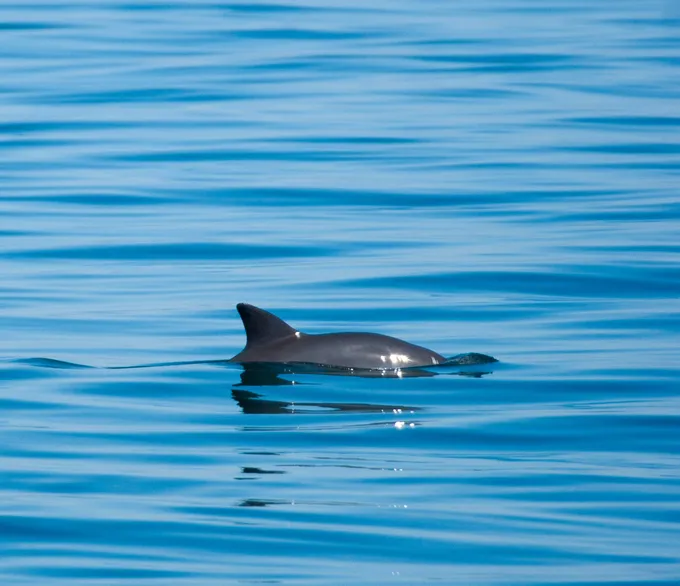
This report presents a call for global action to save the vaquita and conserve the protected areas of the Upper Gulf of California, a World Heritage Site. With fewer than 30 individuals remaining, this species could go extinct before the next Mexican presidential election in 2018. This document provides a critical path for securing the future of vaquita urging an immediate, increased response from the Mexican government, the World Heritage Committee and CITES parties, NGOs and civil society groups to protect the last remaining vaquitas and set the Upper Gulf of California on a pathway to recovery. Failure to act will result in the imminent extinction of this unique species.
-
A new report from WWF, Calvert Investments, CDP and Ceres finds nearly half of Fortune 500 companies‚ – 48%‚ – have at least one climate or clean energy target, up 5% from an earlier 2014 report.
This is the next report in the series after: Power Forward 2.0: How American Companies Are Setting Clean Energy Targets and Capturing Greater Business Value .
Other key findings:
- Nearly 80,000 emission-reducing projects by 190 Fortune 500 companies reporting data showed nearly $3.7 billion in savings in 2016 alone.
- The annual emission reductions from these efforts are equivalent to taking 45 coal-fired power plants offline for one year.
- The largest companies in the Fortune 500–the Fortune 100–continue to lead: Sixty-three percent of Fortune 100 companies have set one or more clean energy targets.
- There has been strong improvement among the smallest 100 companies in the Fortune 500, with 44% setting goals in one or more categories, up 19 percentage points from the 2014 report.
- A growing number of companies are setting 100% renewable energy goals and science-based greenhouse gas reduction targets that align with the global goal of limiting temperature rise to below two degrees Celsius.
The report documents how different sectors compare in setting targets and how Fortune 500 companies are doing in meeting the targets they‚'ve set. The report also includes key recommendations for companies, policymakers and investors to continue to scale clean energy efforts, such as:
- Companies should continue to set, implement, and communicate clean energy targets, while supporting local, state, and national policies that make it easier to achieve their climate and energy commitments.
- Federal and state policymakers should establish clear, long-term low-carbon polices that will help companies meet their clean energy targets while also helping the US meet its carbon-reducing commitments under the Paris Climate Agreement.
- Investors should consider allocating their investments to companies well-positioned for the low-carbon economy and continue to file shareholder resolutions and engage in dialogues with companies to encourage them position themselves for the coming low-carbon future.
- Utilities should provide renewable energy purchasing options in line with what their corporate customers want.
For additional information, please visit the following WWF pages:
For previous reports in the Power Forward series, please see: