Publications
-
-
Polar bears rely almost entirely on the sea ice environment for traveling, hunting, mating and resting. Global warming and subsequent ice loss has been most pronounced in the Arctic, and this trend is projected to continue. Explore this and other traits which make polar bears vulnerable to climate change, as well as recommended climate-adaptive management strategies.
-
New analysis by WWF finds that over 85 percent of global fish stocks can be considered at significant risk of Illegal, Unreported, and Unregulated (IUU) fishing. This evaluation is based on the most recent comprehensive estimates of IUU fishing and includes the world's major commercial stocks or species groups, such as all those that are regularly assessed by the United Nations Food and Agriculture Organization.
-
-
This briefing paper provides and overview on how the private sector can‚ – and already is‚ – helping deliver on global goals, particularly the Sustainable Development Goal (SDG) #6 on ensuring availability and sustainable management of water and sanitation for all.
-
California is in the midst of a multi-year drought—-the worst in 1200 years—and according to climate scientists, this is just the beginning. Hardest hit is Central Valley, a large, flat region that is home to some of the country’s most productive agricultural areas. Here, WWF is helping businesses use the Alliance for Water Stewardship (AWS) to earn recognition for existing water improvements, identify gaps and risks, and connect with others who use shared freshwater resources. The document offers insights from two companies that piloted the AWS Standard.
-
Although metrics such as water use efficiency ratios are commonly employed within businesses to measurably demonstrate progress, assessing the benefits of water projects beyond a company‚'s four walls is much more difficult. To fill the gap, some companies are developing "replenish" methodologies to capture how quantitative or qualitative water benefits can be calculated for a given water-related community activity or conservation project. This brief introduces WWF‚'s perspectives on replenish and how it can fit into broader water stewardship strategies.
-
WWF's Living Blue Planet Report takes a deep look at the health of our oceans and the impact of human activity on marine life. Data on marine ecosystems and human impacts upon them is limited, reflecting the lack of attention the ocean has received to date. Nevertheless, the trends shown here present a compelling case for action to restore our ocean to health.
-
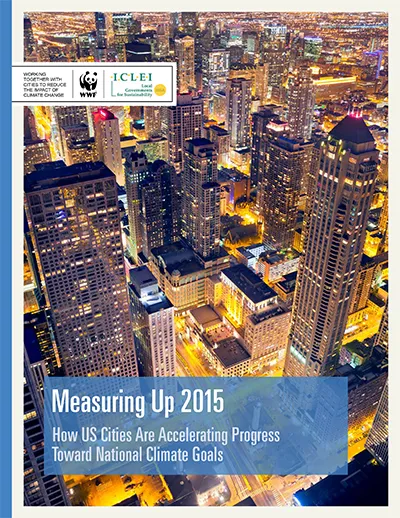
The most extensive national report of its kind, Measuring Up 2015: How Local Leadership Can Accelerate National Climate Goals analyzes data from 116 US cities representing more than 14 percent of the US population, and includes in-depth case studies of four communities: Atlanta, Cincinnati, Minneapolis, and Portland, Ore.
The data and city profiles demonstrate that local governments can cut greenhouse gas emissions, reduce climate threats, and achieve multiple community goals like lower energy costs, better air quality, improved health, and enhanced economic development.
-
This newsletter captures the outputs of the first workshop for developing a basin report card for the Meta River, a crucial tributary to the Orinoco. Held in Puerto Lopez, the workshop gathering input from diverse stakeholders and began to reveal how people and nature value the Meta’s freshwater ecosystems.