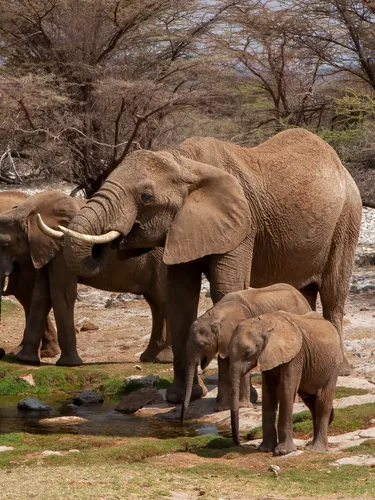
© Bruce D. Taubert
African savanna elephants
African savanna elephants are the largest species of elephant and the biggest terrestrial animal on Earth. They are easily distinguished by their very large ears—which allow them to radiate excess heat—and front legs which are noticeably longer than the hind legs.
African savanna elephants are found in 23 countries and live in a variety of habitats, from open and wooded savannas to even some deserts and forests. The largest populations are in Southern and Eastern African countries, including Botswana, Zimbabwe, Tanzania, Kenya, Namibia, Zambia, and South Africa.
As a result of their visibility within the open areas where they live, African savanna elephants are well studied, and populations are easily estimated. Each family unit usually consists of around 10 females and their calves, and the bulls associate with these herds only during mating. Several family units often join together to form a “clan” consisting of up to several hundred members led by a female matriarch. Due to their habitat, savanna elephants are often found grazing on grasses, but they also browse on a wide variety of plants and fruits. This selection varies depending on the time of year; during the rainy seaso,n the elephant will feed more on grass than during the dry season.
At a glance
- Status Learn more about endangered status categories and explanation
- Endangered
- Scientific name
- Loxodonta africana africana
- Weight
- 4–7 tons
- Height
- 10–13 ft.
- Habitats
- All of sub-Saharan Africa except for Central Africa’s dense tropical forest
Why African savanna elephants matter
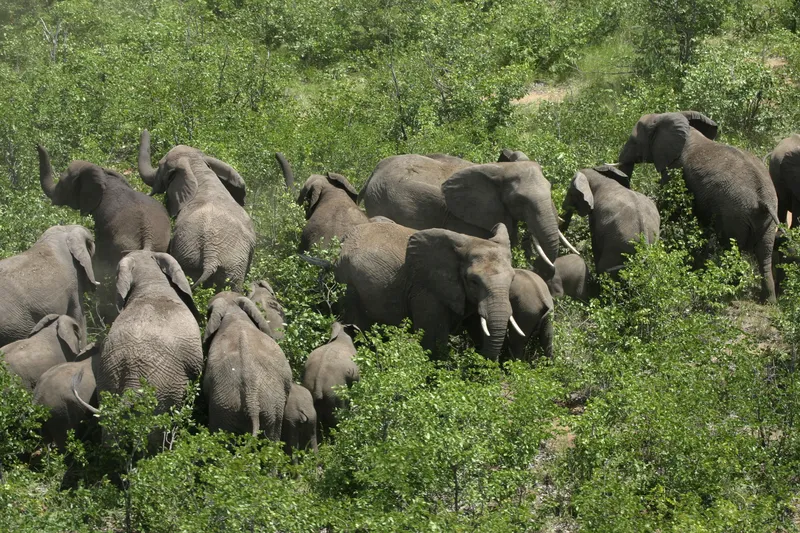
© WWF-Canon / Folke Wulf
Savanna elephants contribute to the maintenance of the savannas and open woodlands by reducing tree densities. Without them, many other plants and animals would not survive in the woodland areas.
Threats to African savanna elephants

© Steve Morello / WWF-Canon
Illegal wildlife trade
The illegal demand for ivory is the biggest driver of elephant poaching. Despite a global CITES ban on international sales of elephant ivory since 1990, tens of thousands of African elephants are killed annually to meet illicit demand for ivory products like carvings and jewelry. Consumer demand in Asia has created the main market for illegal ivory globally over the past few decades. While poaching in Africa and demand in Asia have declined somewhat since the peak of 2012, there remains a devastating level of poaching of elephant ivory for the markets that persist in Asia, Africa, and globally. The year 2016 saw the highest volume of illegal ivory seized since global records began in 1989, and it was estimated that Africa’s elephant population dropped by 111,000 elephants in the span of a decade prior to 2016, leaving only about 400,000 elephants remaining.
Facilitated by transnational organized crime networks with links to drug, human, and weapons trafficking, illegal wildlife trade is a high-profit, low-risk crime that threatens wildlife populations, global security, human health, livelihoods of local communities, and legitimate business operations. Limited resources, combined with large areas of remote elephant habitats, make it difficult to monitor and protect elephant herds. At the same time, advances in technology and connectivity across the world have streamlined the communication, payment, and transport of illegal wildlife along the trafficking chain from the wild to the buyer. With the cloak of anonymity and ease of connecting online, wildlife traffickers can identify interested buyers across the globe and complete transactions using everyday apps and services.
Human-elephant conflict
Human-elephant conflict impacts savanna elephant populations. Killings are often retaliatory as elephants eat and trample crops, raid food stores, and damage village infrastructure, including precious water sources. Since an elephant can eat over 600 pounds of food a day, even a small herd can wipe out a farmer’s annual crop in a single night. Elephants disrupt community life—occasionally leading to injury and death of people. In such instances, authorities are obliged to take action, and as a result, many elephants are shot. As elephant and human populations grow, the threat only worsens. Small protected areas are inadequate to stop conflict since elephants require plenty of freedom to roam.

© Jo Benn / WWF-Canon
How WWF is taking action to protect African savanna elephants
Research and monitoring
At the landscape level, WWF advocates for the creation and adequate management of protected areas and the identification and securitization of migration corridors. This means improved zoning for land use so that farmers don’t plant too close to elephant paths, and so known wildlife dispersal areas remain intact. Tracking elephant movements within Namibia’s Zambezi region (formerly Caprivi Strip) has allowed us to better understand the impact of barriers, such as fences and roads, on elephant movement. We are working in the Kavango Zambezi Transfrontier Conservation Area (KAZA), 109 million acres across five southern African countries that are home to 50% of Africa's remaining elephants—Angola, Botswana, Namibia, Zambia, and Zimbabwe—to facilitate the free transboundary movement of elephants and other wildlife across the world's largest terrestrial transboundary conservation area.

© WWF-Canon / Folke Wulf
Bringing benefits to communities
To foster a growing ecotourism economy within conservancies, WWF helps find investors and offers business training to conservancy members. Joint-venture lodges and campsites provide the largest overall source of benefits to conservancies. Tourism creates employment and fosters a variety of other sources of revenue, such as craft markets.
Easing human-elephant conflict
Since 2001, WWF has established a number of projects to tackle the conflict with elephants. WWF supports successful short-term approaches, especially if they are focused on early detection, increased guarding, and use of active deterrents as well as passive, chili-based barrier methods. The key, however, lies in integrated land-use planning accompanied by incentives to conserve wild spaces. WWF has helped hundreds of villages implement practical measures to protect their crops and property from elephants. These include deterring elephants by spreading chilli or tobacco near crops, using beehives as fences, and using noisemakers like vuvuzelas. We’ve also created alternative water points for wildlife to mitigate conflict

© WWF-Canon / Folke Wulf
Fighting illegal wildlife trade
To reduce the illegal trade in elephant products, WWF supports antipoaching efforts within and around protected areas. We also work to establish new protected areas to provide safe havens for elephants. We work through long-standing cooperative partnerships with governments, enforcement agencies, local communities, and conservation organizations to provide tools, monitoring, training, incentives, and innovative actions to protect elephants and their habitats, while benefiting local people.
In tackling the consumer demand for elephant ivory, WWF has been at the forefront of global campaigns to influence governments, the private sector, and the public to help stop wildlife crime. Using social and behavior change science, we have developed the longest-running assessments of consumer demand and motivations for elephant ivory in Asian markets, which we have used to tailor consumer-specific awareness campaigns to deter buyers of elephant ivory.
WWF also works with e-commerce, social media, and technology companies through the Coalition to End Wildlife Trafficking Online to address elephant ivory trade and other wildlife crimes on web-based platforms. Launched in 2018, the Coalition includes 47 member companies operating across Africa, Asia, Europe, and the Americas.
Experts
How you can help
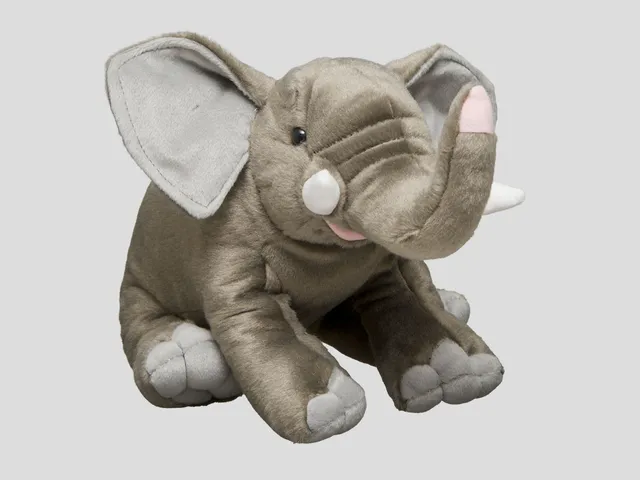
© WWF-US / WWFGifts
Adopt an African elephant
Support WWF’s global efforts to protect wild animals and their habitats and choose from kits with plush and more.