© Yashpal Rathore / naturepl.com / WWF
Indian elephants
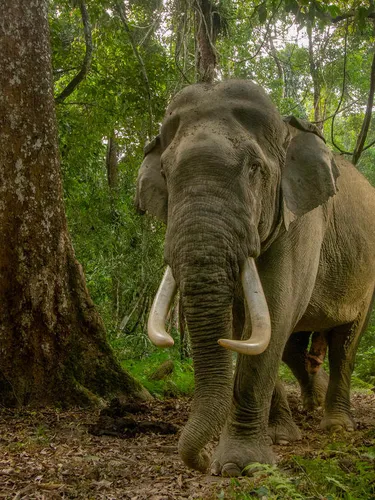
Indian elephants may spend up to 19 hours a day feeding and they can produce about 220 pounds of dung per day while wandering over an area that can cover up to 125 square miles. This helps to disperse germinating seeds. They feed mainly on grasses, but large amounts of tree bark, roots, leaves, and small stems are also eaten. Cultivated crops such as bananas, rice, and sugarcane are favored foods as well. Since they need to drink at least once a day, these elephants are always close to a source of fresh water.
Indian elephant facts
- Status Learn more about endangered status categories and explanation
- Endangered
- Population
- 20,000–25,000
- Scientific name
- Elephas maximus indicus
- Weight
- 5 tons
- Height
- 6–11 ft.
- Length
- Up to 21 ft.
- Habitats
- Subtropical broadleaf forest, tropical broadleaf moist forest, dry forest, grassland
Why Indian elephants matter
© Ola Jennersten / WWF-Canon
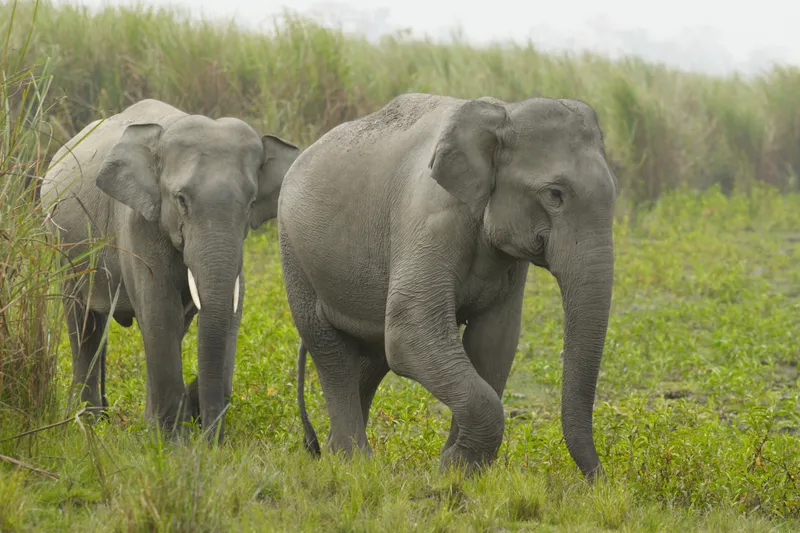
Elephants are not only a cultural icon in India and throughout Asia, but they also help to maintain the integrity of their forest and grassland habitats.
Threats to Indian elephants

© Subhamoy Bhattacharjee / WWF-US
The quest for land by an increasing human population throughout the Indian elephant’s habitat is leaving little room for them. Illegal encroachment into protected areas and forest clearing for roads or other development are all causing habitat loss and fragmentation. Habitat loss not only leaves elephants without reliable food sources and shelter, but it can also cause them to be confined to isolated populations that cannot follow ancient migratory routes or mix with other herds.
Human-elephant conflict
Habitat loss forces elephants to seek alternative food sources in the many farms, settlements, and plantations that have replaced their ancient forest homes. Elephants are large and destructive animals, and small farmers can lose their entire livelihood overnight from an elephant raid. Elephants have also caused millions of dollars of damage to large agricultural operations. As a result of their destructive raids, elephants are often killed in retaliation.
Illegal wildlife trade
Asian elephants are poached for their ivory tusks, but unlike their African cousins, only male Asian elephants have tusks. Every poaching event further skews the sex ratio, which constrains breeding rates for the species. Poaching rates are currently increasing because the Asian middle class fuels demand despite the fact that there is a worldwide ban on the elephant ivory trade.
How WWF is taking action
© Martin Harvey / WWF
Protecting elephant habitat
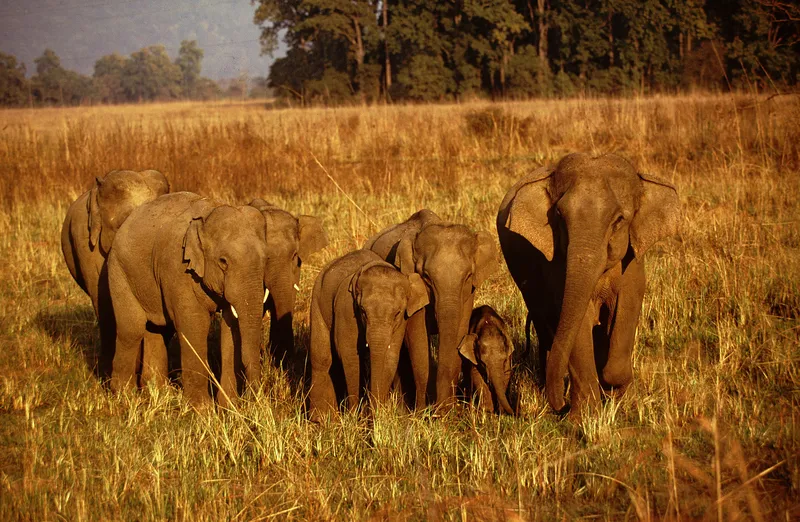
In the foothills of the Eastern Himalayas, the North Bank Landscape—made up of almost 1,160 square miles—provides a safe harbor for the single largest elephant population in northeast India. This population is among the five largest elephant populations in Asia. WWF works to secure this elephant population for the long term by maintaining habitat, significantly reducing existing and contiguous threats, and building support for conservation of the population and its habitat.
Bhutan’s old-growth forests extend into northeast India, where a growing population and infrastructure projects threaten some of the largest and last intact forests in Asia. WWF applies its experiences from community-based conservation in other parts of India to restore critical elephant habitats and reduce incidents of human-elephant conflict.
Mitigating human-elephant conflict
WWF supports human-elephant conflict mitigation, biodiversity conservation, and awareness-building among local communities in two elephant habitats in the Eastern Himalayas, the North Bank Landscape and the Kaziranga Karbi-Anglong Landscape, and in the Nilgiris Eastern Ghats Landscape in South India. In Cambodia, WWF trains, equips, and supports local staff to patrol protected areas and assess elephant distribution and numbers.
In Vietnam, WWF supports an average of 20 forest guards who have been deployed by the Vietnamese government authorities. WWF supports these teams with equipment and allowances so that they can better execute their duties and spend more time out on patrol. The increased presence of park guards benefits a small number of wild Asian elephants and tigers that also live in the park, as well as the many other endangered species that have disappeared from other parts of Asia, but still remain in Cat Tien National Park.
Reconnecting protected areas
In the Terai Arc Landscape, which encompasses parts of western Nepal and eastern India, WWF and its partners are restoring degraded biological corridors so that elephants can access their migratory routes without disturbing human habitations. The long-term goal is to reconnect 12 protected areas and encourage community-based action to mitigate human-elephant conflict.
Experts

How you can help
© WWF-US / WWFGifts
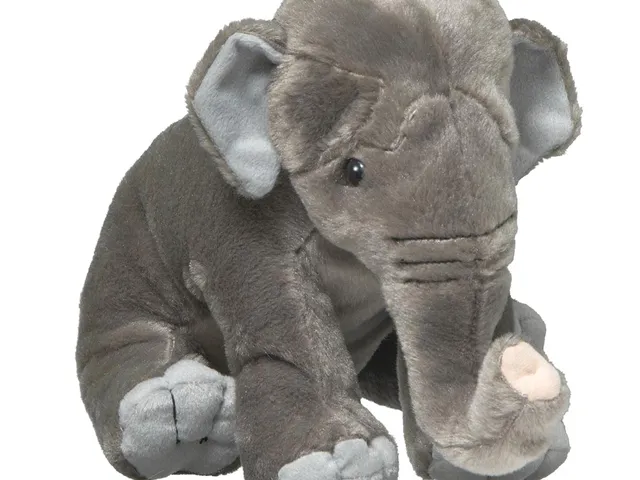
Adopt an Asian elephant
Support WWF’s global efforts to protect wild animals and their habitats and choose from kits with plush and more.