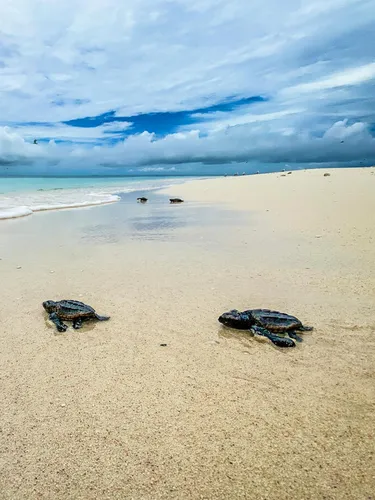
© Bastien Preuss / WWF France
Loggerhead turtles
Loggerhead turtles are named for their large heads that support powerful jaw muscles, allowing them to crush hard-shelled prey like clams and sea urchins. They are less likely to be hunted for their meat or shell compared to other sea turtles. Bycatch, the accidental capture of marine animals in fishing gear, is a serious problem for loggerhead turtles because they frequently come in contact with fisheries.
Loggerheads are the most common turtle in the Mediterranean, nesting on beaches from Greece and Turkey to Israel and Libya. Many of their nesting beaches are under threat from tourism development. Sea turtles are the living representatives of a group of reptiles that has existed on Earth and travelled our seas for the last 100 million years. They are a fundamental link in marine ecosystems and help maintain the health of coral reefs and sea grass beds.
Loggerhead turtle facts
- Status View status categories and descriptions
- Vulnerable
- Scientific name
- Caretta caretta
- Weight
- 175–400 pounds
- Length
- 33–48 inches
- Habitats
- Oceans
News and stories
Why loggerhead turtles matter
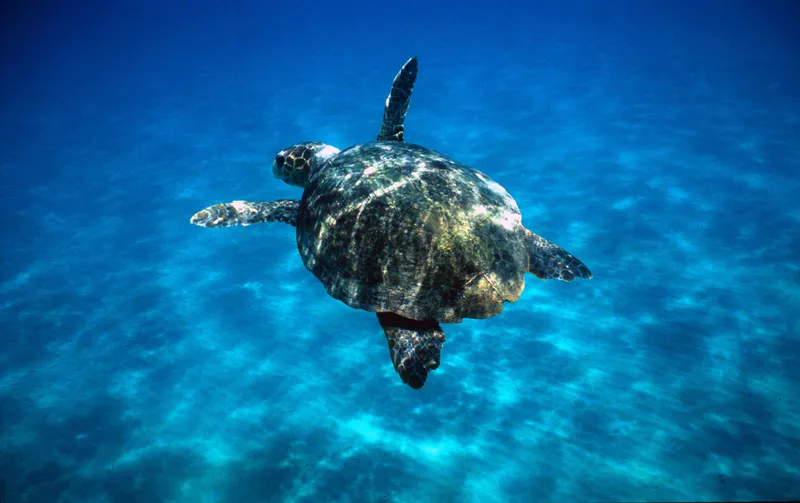
© Michel Gunther / WWF-Canon
The way loggerhead turtles feed on their hard-shelled prey recycles important nutrients and keeps ocean floor sediments in balance. Loggerhead turtles carry colonies of small plants and animals on their shells which serve as important habitat themselves. As many as 100 species of animals and plants have been recorded living on one single loggerhead turtle.
Threats to loggerhead turtles

© Michel Gunther / WWF-Canon
Worldwide, hundreds of thousands of sea turtles a year are accidentally caught in shrimp trawl nets, on longline hooks and in fishing gillnets—a threat known as bycatch. Sea turtles need to reach the surface to breathe, and therefore many drown once caught. Loggerheads are highly migratory and are very likely to come in contact with a fishery, particularly in shrimp gillnets and longlines.
How WWF is taking action to protect loggerhead turtles

© Michel Gunther / WWF-Canon
Eliminating bycatch
WWF aims to reduce turtle bycatch by working with fisheries to switch to more turtle-friendly fishing hooks (“circle” hooks) and advocates for the use of devices that exclude turtles from nets. We run an international competition called Smart Gear to attract creative new ways to solve bycatch problems and to advance those ideas. Winning devices have been designed to minimize the bycatch of turtles on tuna longlines and help turtles avoid gillnets. We work with fishermen to help them save turtles caught in fishing gear. We also use satellite devices to track turtle movements to help prevent future interactions between fisheries and turtles.

© WWF-US/Jill Hatzai
Protecting sea turtle habitat
WWF works around the world to establish marine protected areas (MPA) to ensure sea turtles have a safe place to nest, feed and migrate freely. We encourage governments to strengthen legislation and provide funding for sea turtle protection. WWF also supports the monitoring and patrolling of turtle nests in many parts of the world and helps equip local turtle conservationists. This often leads to ecotourism opportunities and offers alternative livelihoods.
How you can help
© WWF
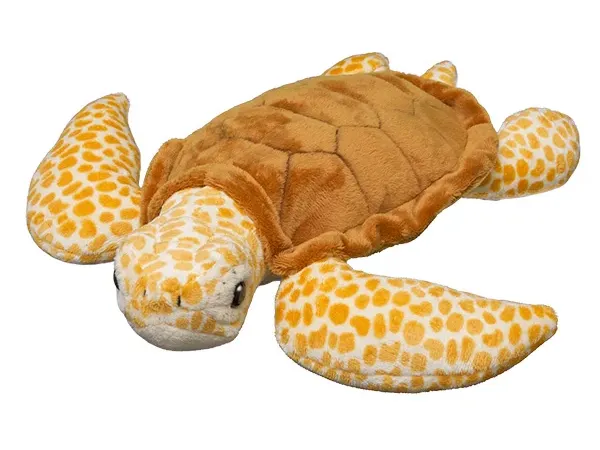
Adopt a loggerhead turtle
Support WWF’s global efforts to protect wild animals and their habitats and choose from kits with plush and more.