How scientists use DNA to protect sea turtles
ShellBank, a global genetic traceability toolkit, helps experts uncover new insights
By
-
Callie Cho

© WWF-Australia/ Christine Hof
Sea turtles are some of the ocean’s most beloved inhabitants, not just because they’re cute, but also because they are critical for healthy ecosystems: sea turtles help maintain healthy coral reefs and seagrass beds, keep balance within marine food webs, and, as ocean travelers, transport nutrients among ocean ecosystems. Their presence is a sign of ocean health.
But despite their importance, five of seven sea turtle species are threatened with extinction, with many populations depleted and continuing to decline. Sea turtles face a host of anthropogenic threats—dangers caused by humans—including bycatch, climate change, overexploitation, and the illegal take and trade of turtle parts and products. To combat this deadly cocktail of threats, scientists are turning to DNA. Like a fingerprint, DNA can help researchers identify turtle populations, understand how populations are connected, and determine which populations are most at risk.

© naturepl.com / Visuals Unlimited / WWF
Closing data gaps and increasing understanding of sea turtles with ShellBank
Thanks to ShellBank, a global genetic traceability toolkit launched in 2022, we are uncovering new insights into the origins of sea turtles and how sea turtle populations are connected across oceans. We are also learning which populations are being targeted in the illegal trade, poached, or even caught in fisheries bycatch.
As the world’s first global open access DNA traceability platform designed specifically for sea turtles, ShellBank highlights critical data gaps and under-sampled turtle populations and helps guide future research, monitoring, and conservation efforts. And it’s transforming how scientists understand and protect these remarkable reptiles, according to a new paper in Frontiers in Marine Science.

© Greta Frankham / Australian Museum
The tool has already brought together more than 20,000 sea turtle mitochondrial DNA sequences from 59 countries into a single, standardized global database. This remarkable dataset spans nesting beaches, feeding grounds, bycatch incidents, and even illegal trade samples—offering a better understanding of populations worldwide.
By making genetic data more accessible, practical, and actionable, ShellBank is bridging the gap between science and real-world impact—empowering conservation scientists, fisheries and marine protected area managers, and law enforcement agencies everywhere to better safeguard sea turtles for generations to come.
So far, scientists have used ShellBank to uncover powerful insights.
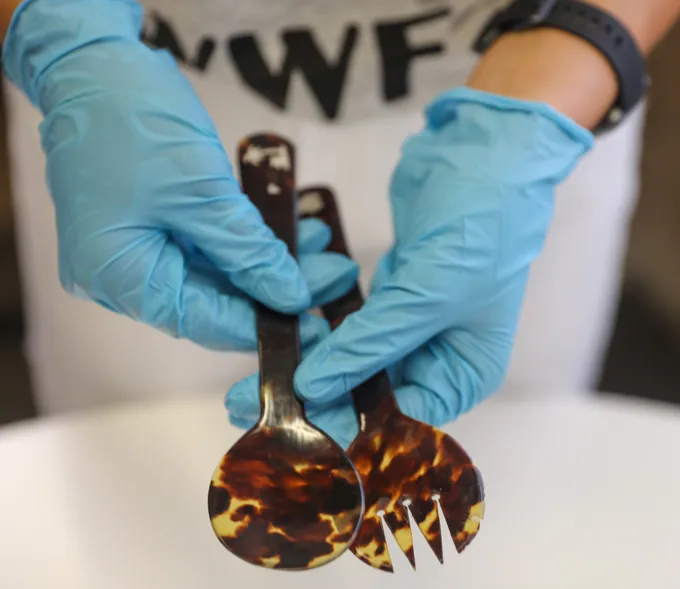
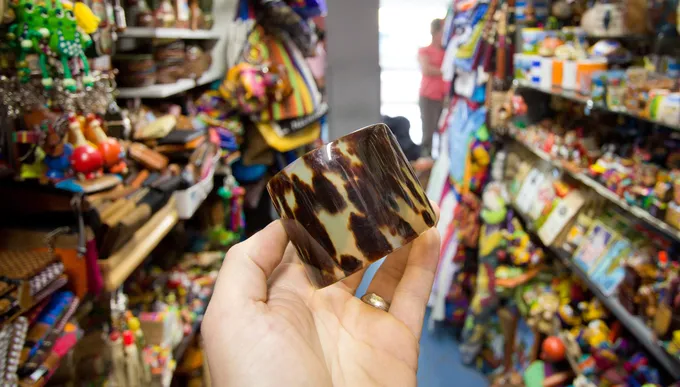
1. DNA can trace the origin of illegal tortoiseshell products
© Greta Frankham / Australian Museum
© Hal Brindley / TravelforWildlife.com
In 2022, the UK Border Force seized 59 items made from sea turtle shell. By comparing DNA from these products with sequences in ShellBank, scientists were able to trace their likely origin to hawksbill turtles from the southern Caribbean—specifically Colombia, Tobago, or Nicaragua.
This case highlights that the illegal turtle trade is still active and globally connected. It also shows how genetic tools can play a crucial role in wildlife crime investigations, helping authorities track turtle trade and understand where exploited populations are under pressure.
2. Sea turtles connect entire oceans
© Jürgen Freund / WWF
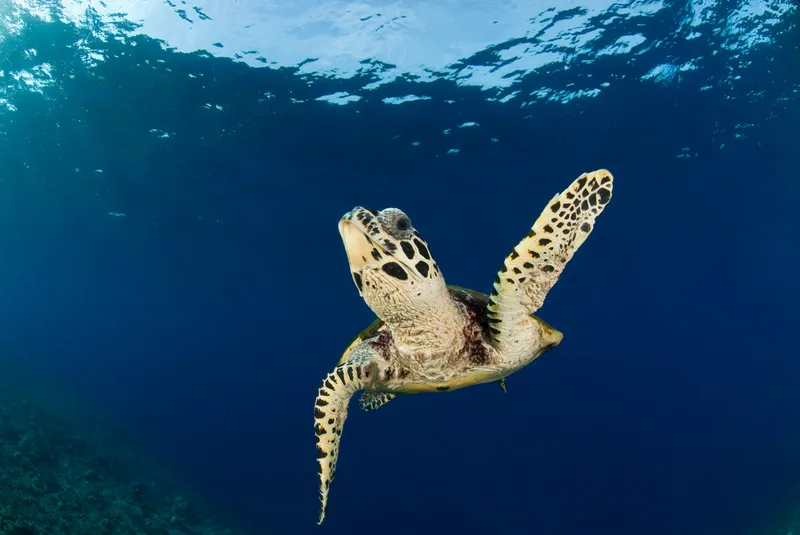
ShellBank also reveals how turtle populations are connected across vast distances. In another case study, hawksbill turtles feeding on the Great Barrier Reef were found to originate from multiple nesting beaches across the western Pacific, including Papua New Guinea, the Solomon Islands, and Vanuatu.
These findings closely matched satellite tracking data, strengthening confidence in using genetics. Together, these complementary approaches show that expanding the ShellBank database improves the accuracy and detail of genetic tracing, making it possible to estimate which nesting populations contribute to shared feeding grounds with increasing accuracy.
Above all, this work underscores a key lesson: protecting sea turtles requires strong international collaboration, because these animals—and the challenges they face—span entire oceans.
The bottom line
ShellBank is helping make sea turtles traceable and genetics more accessible, practical, and useful for conservation, management, and wildlife crime investigations. By connecting data across oceans and disciplines, it not only reveals what turtle populations exist but also where turtles come from, which ones are most at risk, and how we can better protect them.
© WWF-US / WWFGifts
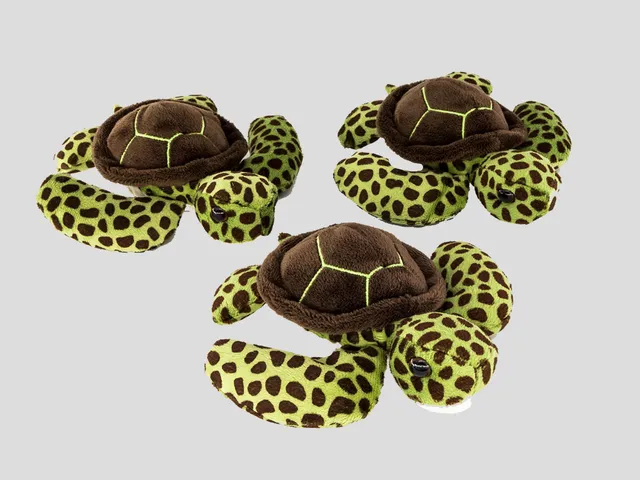
Adopt a sea turtle hatchling
Support WWF’s global efforts to protect wild animals and their habitats and choose from kits with plush and more.