© naturepl.com / Maxime Aliaga / WWF
Orangutans
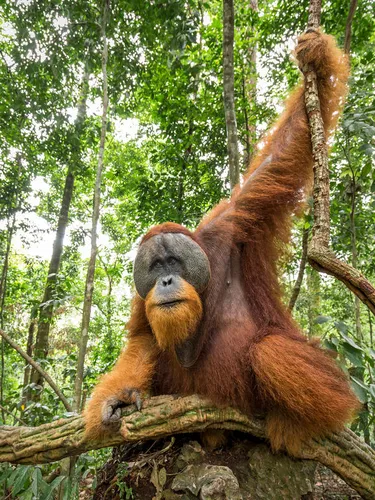
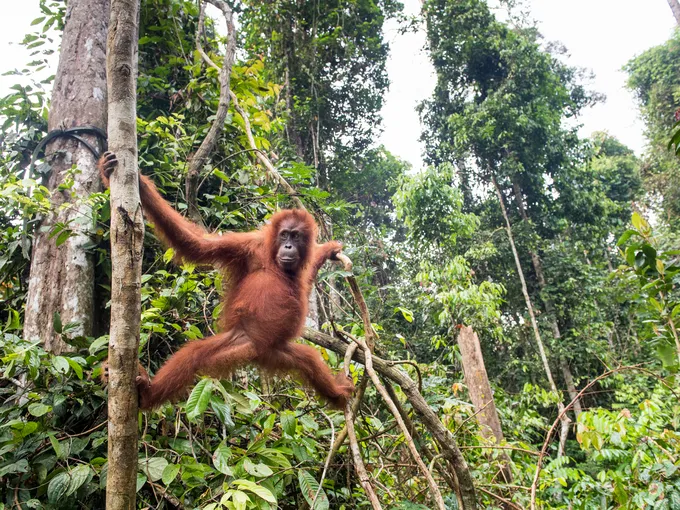
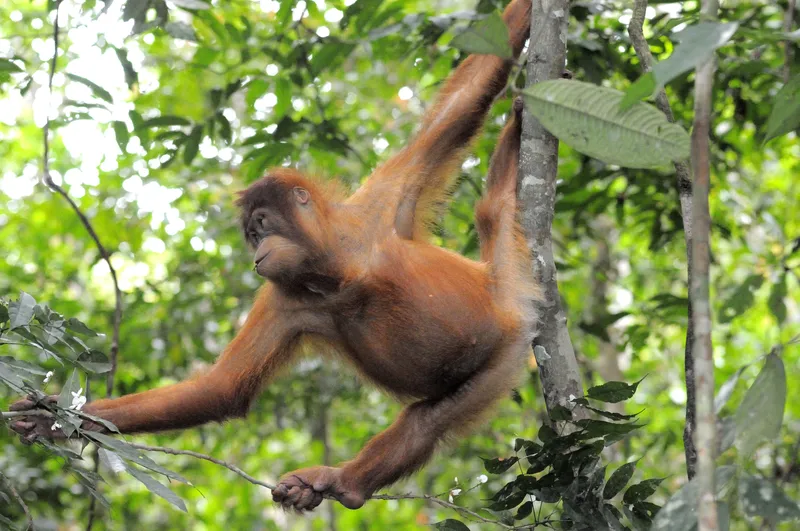
Known for their distinctive red fur, orangutans are the largest arboreal mammals, spending most of their time in trees. Long, powerful arms and grasping hands and feet allow them to move through the branches. These great apes share 96.4% of our genes and are highly intelligent creatures.
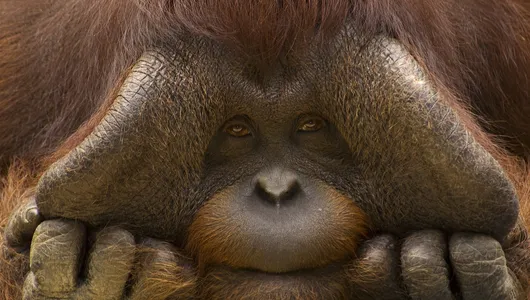
The name orangutan means "man of the forest" in the Malay language. In the lowland forests in which they reside, orangutans live solitary existences. They feast on wild fruits like lychees, mangosteens, and figs, and slurp water from holes in trees. They make nests in trees or vegetation to sleep at night and rest during the day. Adult male orangutans can weigh up to 200 pounds. Flanged males have prominent cheek pads called flanges and a throat sac used to make loud verbalizations called long calls. An unflanged male looks like an adult female. In a biological phenomenon unique among primates, an unflanged male can change to a flanged male for reasons that are not yet fully understood.
Bornean and Sumatran orangutans differ a little in appearance and behavior. While both have shaggy reddish fur, Sumatran orangutans have longer facial hair. Sumatran orangutans are reported to have closer social bonds than their Bornean cousins. Bornean orangutans are more likely to descend from the trees to move around on the ground. Both species have experienced sharp population declines. A century ago, there were probably more than 230,000 orangutans in total, but the Bornean orangutan is now estimated at about 104,700 based on updated geographic range (Endangered), and the Sumatran about 13,846 (Critically Endangered).
A third species of orangutan was announced in November 2017. With no more than 800 individuals in existence, the Tapanuli orangutan is the most endangered of all great apes.
Orangutan facts
- Status View status categories and descriptions
- Critically endangered
- Population
- about 104,700 (Bornean), 13,846 (Sumatran), 800 (Tapanuli)
- Scientific name
- Pongo abelii, Pongo pygmaeus
- Weight
- Up to 200 lbs.
The orangutan family
News and stories
Why orangutans matter
© Fletcher & Baylis/WWF-Indonesia
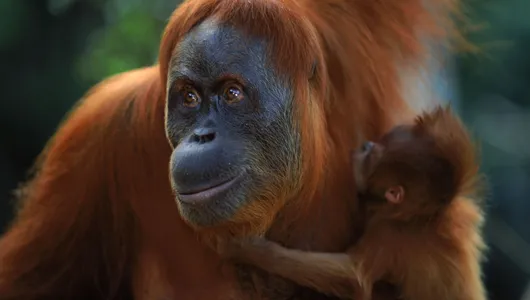
Orangutans are "gardeners" of the forest, playing a vital role in seed dispersal in their habitats. They live in tropical forests and prefer forests in river valleys and floodplains of their respective islands. Orangutans' extremely low reproductive rate makes their populations highly vulnerable. Females give birth to one infant at a time about every 3-5 years, so these species can take a long time to recover from population declines. With human pressure only increasing, orangutans face an increasing risk of extinction.
Threats to orangutans

© Shutterstock / Rich Carey / WWF-Sweden
Deforestation and habitat loss
The habitats of Asia's only great apes are fast disappearing under the chainsaw to make way for oil palm plantations and other agricultural plantations. Illegal logging inside protected areas and unsustainable logging in concessions where orangutans live remain a major threat to their survival. Today, more than 50% of orangutans are found outside protected areas in forests under management by timber, palm oil, and mining companies.
Hunting and illegal wildlife trade
Orangutans are an easy target for hunters because they're large and slow targets. They are killed for food or in retaliation when they move into agricultural areas and destroy crops. This usually occurs when orangutans can't find the food they need in the forest.
Females are hunted most often. When caught with offspring, the young are often kept as pets. The pet trade is a major problem. It is thought that for each orangutan reaching Taiwan, as many as 3-5 additional animals die in the process. Recent enforcement of the law in Taiwan has reduced the importation of orangutans, but the trade remains a threat in Indonesia, where there is still demand for orangutans as pets. There is also trade in orangutan skulls in Kalimantan (Indonesian Borneo).
How WWF is taking action to protect orangutans

© naturepl.com / Anup Shah / WWF
WWF has been working on orangutan conservation since the 1970s. Our efforts include conserving orangutan habitat, antipoaching, promoting sustainable forestry and agriculture, and halting the pet trade.
Protecting orangutans
Sumatra to secure well-managed protected areas and wider forest landscapes to connect sub-populations of orangutans. Our work on the sustainable production of commodities contributes to the conservation of major orangutan habitats in Borneo and Sumatra. We also monitor orangutan populations, work on ecotourism, and provide community-based support for orangutan conservation.
Stopping illegal wildlife trade
WWF works with TRAFFIC, the wildlife trade monitoring network, to help governments enforce restrictions on the trade in live animals and orangutan products. We also help to rescue trafficked orangutans, which recover in refuges and are eventually released back into the wild.
Experts


How you can help
© WWF
Adopt an orangutan
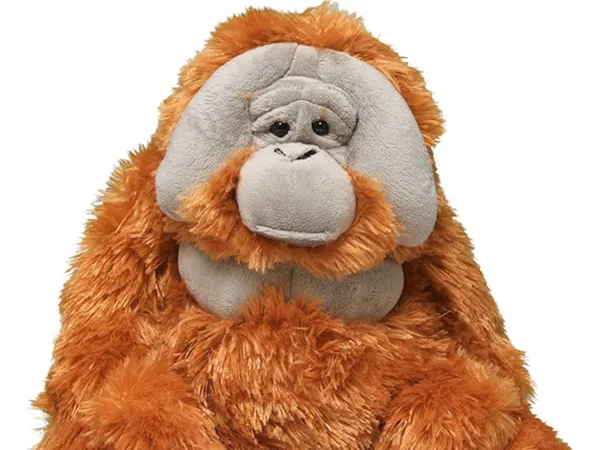
Support WWF’s global efforts to protect wild animals and their habitats and choose from kits with plush and more.