
© Neil Ever Osborne / WWF-US | naturepl.com /Anup Shah / WWF
Sumatran orangutans
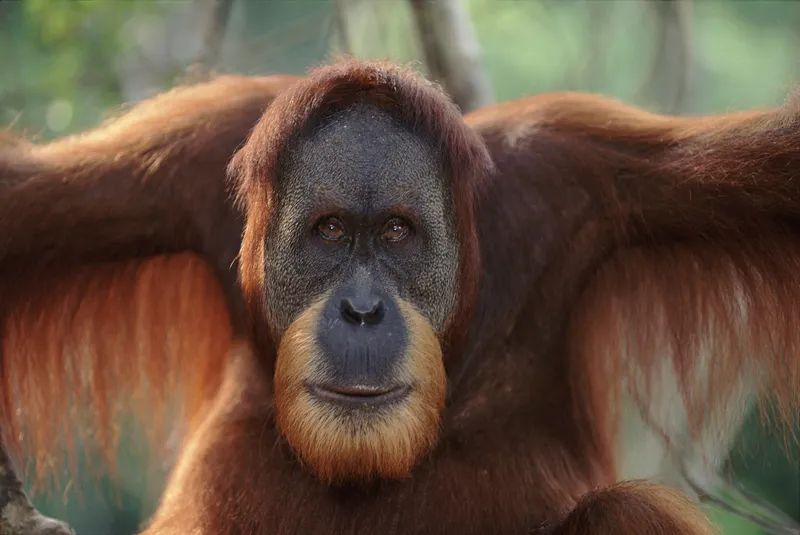
Derived from the Malay words for “person of the forest," Sumatran orangutans are critically endangered.
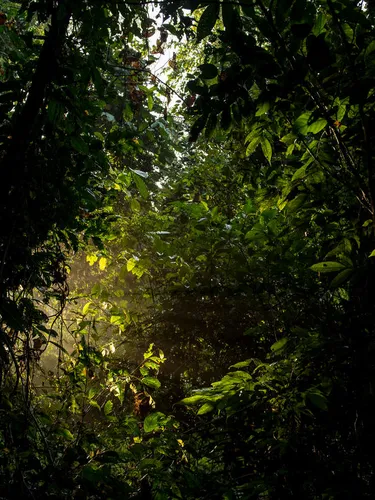
Sumatran orangutans are almost exclusively arboreal, living among the trees of tropical rainforests. Females virtually never travel on the ground, and adult males do so rarely. Sumatran orangutans are reported to have closer social ties than their Bornean cousins. This has been attributed to mass fruit on fig trees, where groups of Sumatran orangutans can come together to feed. Adult males are typically solitary, while females are accompanied by offspring.
Historically, the Sumatran orangutan was distributed over the entire island of Sumatra and further south into Java. The species' range is now restricted to the north of the island, with a majority in the provinces of North Sumatra and Aceh. Of the nine existing populations of Sumatran orangutans, only seven have prospects of long-term viability, each with an estimated 250 or more individuals. Only three populations contain more than 1,000 orangutans. Orangutans that were confiscated from the illegal trade or as pets are being reintroduced to Bukit Tigapuluh National Park. They number around 70 and are reproducing.
Sumatran orangutan facts
- Status Learn more about endangered status categories and explanation
- Critically endangered
- Population
- About 13,846
- Scientific name
- Pongo abelii
- Weight
- 66–198 lbs.
- Height
- 4–5 ft.
- Habitats
- Tropical and subtropical moist broadleaf forests
Why Sumatran orangutans matter
© naturepl.com / Anup Shah / WWF
Orangutans are frugivores and play a vital role in the dispersal of seeds over a huge area. If orangutans were to disappear, so would several tree species, especially those with larger seeds.
© _
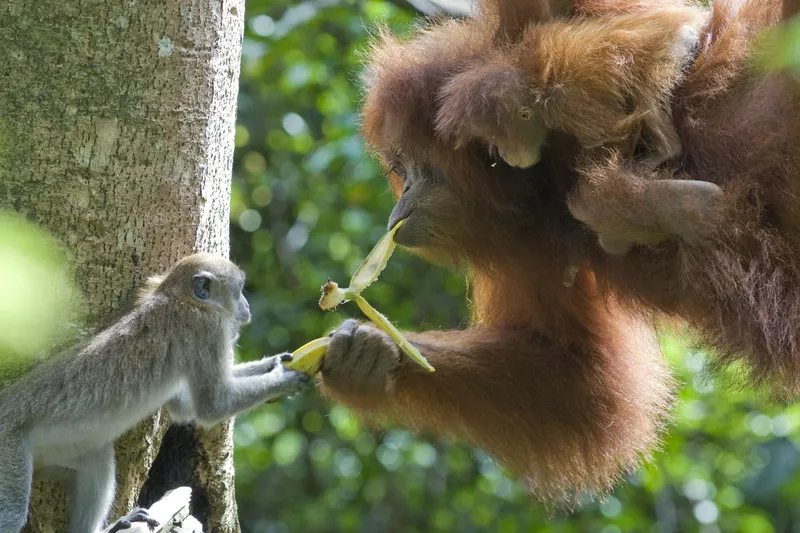
The tropical rainforests where Sumatran orangutans live are also home to other spectacular species, including rare Sumatran tigers, Sumatran elephants, and Sumatran rhinoceroses.
© Neil Ever Osborne / WWF-US
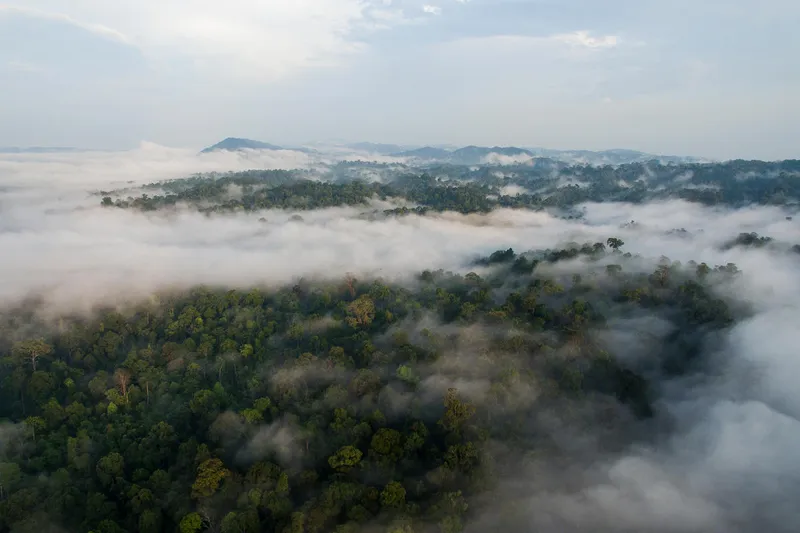
The forests orangutans call home are a vital source of fresh water. Rivers and streams from these forests provide local communities with water for drinking, cooking, bathing, irrigation, and hydroelectricity. The forests are also a valuable source for wildlife products like honey and rattan.
Threats to Sumatran orangutans

© Fletcher & Baylis / WWF-Indonesia
Hunting
Despite legal protection in Indonesia since 1931, orangutans are still captured from the wild and kept in households as status symbols. In some areas, orangutans are hunted for food. Investigations by TRAFFIC, the global wildlife monitoring network, show that the lack of law enforcement against this illegal trafficking poses a serious threat to orangutans. Females give birth to just one infant at a time every eight or nine years, making their populations very susceptible to even very low levels of hunting. Experts estimate that even as little as 1% of females lost each year through hunting or other unnatural causes could put a population on an irreversible trajectory to extinction.
Habitat loss
Orangutan habitat in north Sumatra is being lost at an extremely high rate, mainly due to fire and the conversion of forests to oil palm plantations and other agricultural development. This species depends on high-quality forests. Widespread forest fires, many set deliberately to clear land for plantations, are becoming a regular disaster. Not only do fires destroy vast areas of orangutan habitat, but thousands of these slow-moving apes are thought to have burned to death, unable to escape the flames.
A plan to build a major road in northern Sumatra threatens one of the largest remaining areas of the orangutan’s habitat. Not only will the road fragment the forest, but it will also open up access for illegal logging activities and human settlements. The project is progressing despite proof that conserving the region will help long-term sustainable development.
How WWF is taking action to protect Sumatran orangutans

© naturepl.com / Anup Shah / WWF-Canon
Fighting wildlife crime
WWF works with TRAFFIC, the global wildlife trade monitoring network, to help governments enforce restrictions on the trade in live animals and orangutan products. We continue to investigate the root causes of this trade and encourage stricter law enforcement.
Saving orangutan forests
WWF works with other organizations to stop Asia Pulp and Paper/ Sinar Mas Group from clearing the largest portion of natural forest remaining outside the Bukit Tigapuluh National Park. This unprotected forest provides crucial habitat for the Sumatran orangutan, as well as numerous other species. We helped develop a spatial plan based on Sumatra’s ecosystem to conserve the last stands of forests on the island. We also collaborate with various partners to protect forests in the Bukit Tigapuluh landscape, an important area where an orangutan population is being introduced.
WWF supports the Indonesian government’s 2009 commitment to reduce the country’s greenhouse gas emissions by 26% by 2020, and up to 41% with external aid. After a $1 billion pledge from Norway, the Indonesian government promised to stop granting licenses for clearing tropical and peat forests in Sumatra and elsewhere, starting in 2011. We use our expertise to help the government protect the forests and achieve emission reductions.
Mitigating human-orangutan conflict
WWF works with Indonesian non-governmental organizations to mitigate human-orangutan conflict in and around palm oil plantations. A guide was developed that identifies management practices that will benefit conservation and industry.
Experts

How you can help

© WWF-US / WWFGifts
Adopt an orangutan
Support WWF’s global efforts to protect wild animals and their habitats and choose from kits with plush and more.