Why do polar bears have white fur? And 10 other polar bear facts
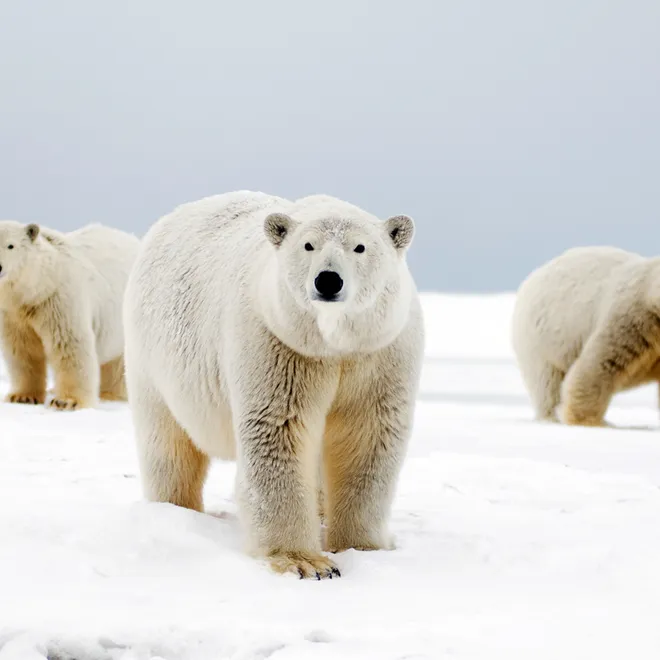
Polar bears have white fur so that they can camouflage into their environment.
© naturepl.com/Steven Kazlowski/WWF
Key takeaways
Polar bears are vital to Arctic ecosystems and cultures but face severe threats from climate change and habitat loss. Learn 10 fascinating facts about polar bears, including why they have white fur, what they eat, and how WWF protects them through research, conflict reduction, and climate advocacy.

© WWF-US/Tara Zokaie
Who doesn't love the big, burly white bears of the north? Polar bears—at the top of the food chain and vital to the health of the Arctic marine environment—are important to the cultures and economies of Arctic peoples.
Polar bears’ lives depend wholly on the sea, their main source of food, and the place they spend most of their lives. But as the climate warms, that ice is melting, threatening polar bears.
Take a look at some interesting facts about polar bears:
1. Why do polar bears have white fur?

© Jon Aars / Norwegian Polar Institute / WWF-Canon
Polar bears have white fur so that they can camouflage into their environment. Their coat is so well camouflaged in Arctic environments that it can sometimes pass as a snow drift. Interestingly, the polar bear’s coat has no white pigment; in fact, a polar bear’s skin is black, and its hairs are hollow. They have a thick layer of body fat, which keeps them warm while swimming, and a double-layered coat that insulates them from the cold Arctic air.
2. What do polar bears eat?

© WWF-US / Elisabeth Kruger
The polar bear is the most carnivorous member of the bear family, feeding mainly on a diet of ringed seals because they need large amounts of fat to survive. A polar bear’s stomach can hold the food equivalent of 15% to 20% of its own bodyweight, and its digestive system absorbs approximately 84% of the protein and 97% of the fat it consumes.
3. How successful are polar bear hunts?

© Sean Beckett
A common method of hunting by polar bears involves the bear keeping perfectly still by a seal's breathing hole, waiting for hours—or even days—for a seal to pop up for air. Seals are slippery and well designed to escape from polar bears; a polar bear might catch only one or two out of 10 seals it hunts, depending on the time of year and other variables.
4. Are polar bears good swimmers?

© Terry Domico / WWF
Polar bears are considered talented swimmers and can sustain a pace of six miles per hour by paddling with their front paws and holding their hind legs flat like a rudder. Their paws are slightly webbed to help them swim. Polar bears are actually classified as marine mammals because they spend most of their lives on the sea ice of the Arctic Ocean.
5. Why do polar bears like to keep clean?

© WWF-US / Elisabeth Kruger
Polar bears like to keep clean because it helps the insulating properties of their fur. Fur that is dirty, matted, and wet does not work as well as an insulator. After feeding, polar bears will usually wash themselves by taking a swim or rolling in the snow. They also roll in the snow to cool off; despite the harsh conditions of their environment, polar bears can be prone to overheating.
6. How big are polar bears when they are born?

© naturepl.com/Steven Kazlowski/WWF
Polar bears are only about the size of an adult guinea pig when they are born. Mothers usually give birth to twins, and cubs live with their mothers for about 28 months. Fully grown, males usually measure about eight to nine feet nose to tail, and females about six to seven feet. Their lifespan is about 20 to 25 years.
8. Where do polar bears live?

© Jon Aars / Norwegian Polar Institute / WWF-Canon
Polar bears live in the Arctic, on ice-covered waters. Polar bears rely on sea ice to access the seals that are their primary source of food, as well as to rest and breed. The total polar bear population is divided into 19 units or subpopulations. Sixty percent of the sub-populations are in Canada. There are 22,000-31,000 polar bears in the wild.
9. What are the biggest threats to polar bears?
© WWF-US / Elisabeth Kruger
© Steve Morello / WWF-Canon
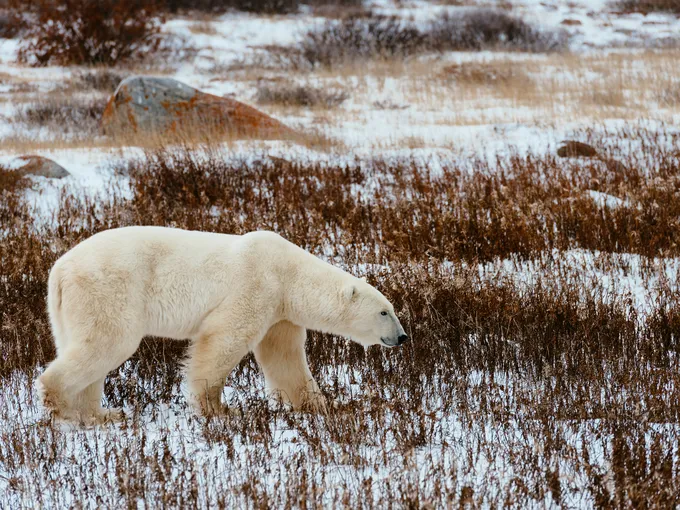
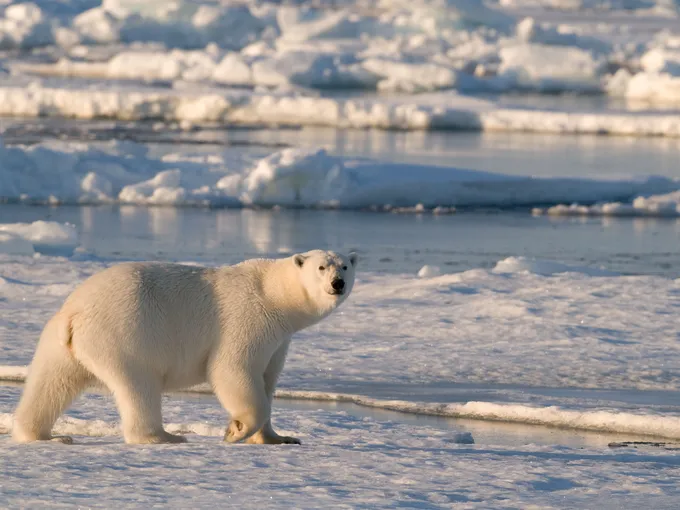
The loss of sea ice habitat is the biggest threat to the survival of polar bears. Because of ongoing and potential loss of their sea habitat resulting from climate change, polar bears were listed as a threatened species in the US under the Endangered Species Act in May 2008. Other key threats include polar bear-human conflicts, overharvesting, and industrial impacts. As climate change forces polar bears to spend longer time onshore, they come in contact more often with Arctic coastal communities and others working in the Arctic. Offshore petroleum installations and operations in the Arctic are expected to increase in number. This would likely affect polar bears and their habitat in many ways. Contact with spilled oil would be fatal for polar bears, and an oil spill would affect the entire food chain.
10. Why are polar bears important?

© Elisabeth Kruger / WWF-US
Polar bears are at the top of the food chain and have an important role in the overall health of the marine environment. For thousands of years, polar bears have also been an important part of the cultures and economies of Arctic peoples. Since they depend on sea ice for their existence, they are directly impacted by climate change—serving as an important indicator species.
11. What is WWF doing to protect polar bears?

© Jon Aars / Norwegian Polar Institute / WWF-Canon
It's important to know as much as possible about polar bears to best protect them. One way WWF is doing this is through collecting eDNA (also known as environmental DNA) from polar bear footprints left in the snow. Animals naturally shed DNA through their feces, skin, and hair, which scientists can extract from a sample of water or soil. eDNA sampling will be quicker, cheaper, and less invasive than traditional methods used to monitor populations and has great potential to be applied to a wide range of biodiversity, including most mammal species, as well as birds, reptiles, amphibians, insects, plants, and even bacteria and viruses.
WWF is addressing climate change, reducing conflict, monitoring populations, and reducing industrial impacts. WWF has successfully advocated for the creation of an international polar bear management plan. WWF supports community projects in Alaska and Russia, like local polar bear patrol teams, better lighting near public places, electric fencing, bear-proof food storage containers, and warning plans for when bears enter communities to help reduce conflict and keep towns and bears safe.