Working with Finish to help replenish the Rio Grande
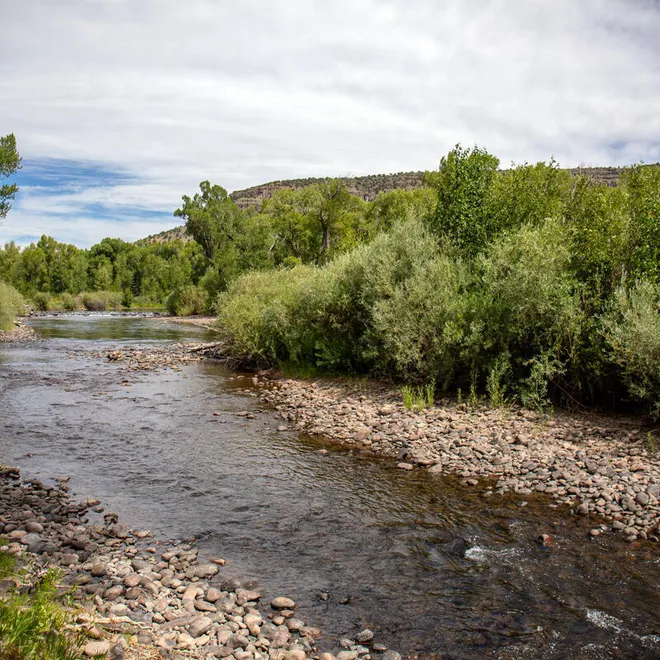
In the US, WWF and Finish partnered together to help protect and replenish the Rio Grande/Rio Bravo, one of America’s most important and endangered rivers.
© WWF-US/Diana Cervantes
For three years, World Wildlife Fund (WWF) and Finish Dishwashing have partnered together to help restore the Rio Grande/Rio Bravo’s degraded ecosystems, optimize how we use water that is available, and promote water-resilient farming.
The collaboration emerged from the shared understanding that corporate investment in water plays a vital role in the health of our planet, and in turn, the health of business. Solutions also require involvement from more than just business and can even start at home. Throughout this partnership, Finish built awareness about the importance of water conservation by encouraging consumers to adopt simple, water-friendly habits in their homes, such as skipping the rinse when loading the dishwasher.
Working across four on-the-ground vital projects, alongside local organizations, and advancing science to inform water management, WWF and Finish demonstrated how companies can go beyond adopting water-efficient practices to become better water stewards.

© WWF-US / Diana Cervantes
The Rio Grande: an ecological treasure
The Rio Grande/Rio Bravo is an ecological treasure, winding 1,900 miles through the Southern Great Plains and the Chihuahuan Desert, the largest desert in North America. An essential river to communities in the American Southwest and Northern Mexico, the Rio Grande/Rio Bravo provides fresh water to nearly 16 million people across both countries, including over 20 Tribal Nations and Pueblos. The Rio Grande is also rich in biodiversity. It is the lifeblood of the Chihuahuan Desert ecoregion, which is home to more mammals than Yellowstone National Park and more birds than the Everglades National Park. And 50% of all fish species in the river are found nowhere else in the world.
The Rio Grande/Rio Bravo is one of the world’s most at-risk rivers, suffering from water scarcity due to climate change, water management, infrastructure, and increasing water use. Without urgent interventions, the river may cease to support the millions of people and wildlife who rely on it and impact its ability to support the production of the commodities that many of us enjoy.

© WWF
Pillars of the partnership
The partnership is aligned with WWF’s greater conservation approach for the Rio Grande and is rooted in WWF’s five strategic pillars:
I. Foster shared vision and raise awareness
II. Ensure critical water flows for nature and people
III. Promote resilient production systems
IV. Enable thriving communities and producers
V. Secure the policies and enabling conditions that underpin a resilient system
Purpose of this strategy:
Build a climate-resilient and socially equitable water management system to restore hydrological connectivity and support thriving communities and ecosystems in the Rio Grande/Bravo*
On-the-ground conservation funding
Beyond consumer education, Finish has also provided on-the-ground conservation funding within the Rio Grande. To date, accomplishments include:
-
6.6 billion gallons
More than 6.6 billion gallons of water replenished annually, for up to 5 years after project completion*
-
244 acres
Two hundred forty-four acres of land or wetland restored, conserved, or protected
-
418 miles
Four hundred eighteen miles of river or stream with improved river flows
-
15,259 people
Over fifteen thousand people directly engaged and benefiting
-
125 native species
One hundred twenty five native species benefited
These results were made possible through four transformative projects led by local organizations across the basin, each addressing critical needs of the river while providing benefits to people, nature, and wildlife who depend on it.
Transformative projects by local organizations
© WWF-US / Bex Young
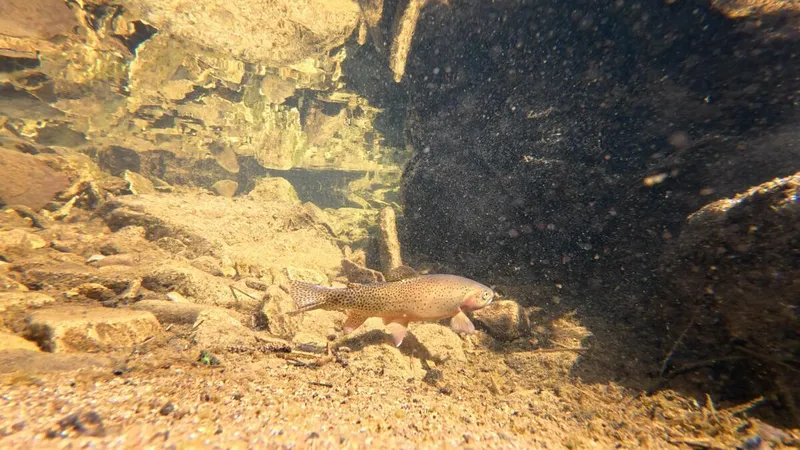
Wild Trout Fishery Conservation
Wild Trout Fishery Conservation in Colorado's Upper Rio Grande Basin restored critical winter flows through an innovative water leasing program led by Trout Unlimited. Local farmers are paid to voluntarily lease unused water during both non-irrigation and irrigation seasons, keeping rivers flowing when trout need it most to spawn and thrive. This benefits both farmers’ livelihoods and the wildlife that depend on this channel, creating a win-win for agriculture and aquatic ecosystems.
Highlights:
- We partnered with Trout Unlimited to restore 14,605,616 ft.3 (413,585 m3) of water, critical to maintain minimum river flows throughout three winter seasons as part of their Winter Water Leasing Program.
- We supported Trout Unlimited to pilot, for the first time ever, an irrigation season water leasing “Farms and Fish Program” in 2025; 113,408,291 ft.3 (3,211,365.18 m3, volumetric water benefit-replenish) was retimed to keep minimum river flows during the driest season in August and September. Due to the success of the pilot, the program will expand in 2026.
© WWF-US / Diane Cervantes
Rio Cebolla Wetland and Watershed Initiative
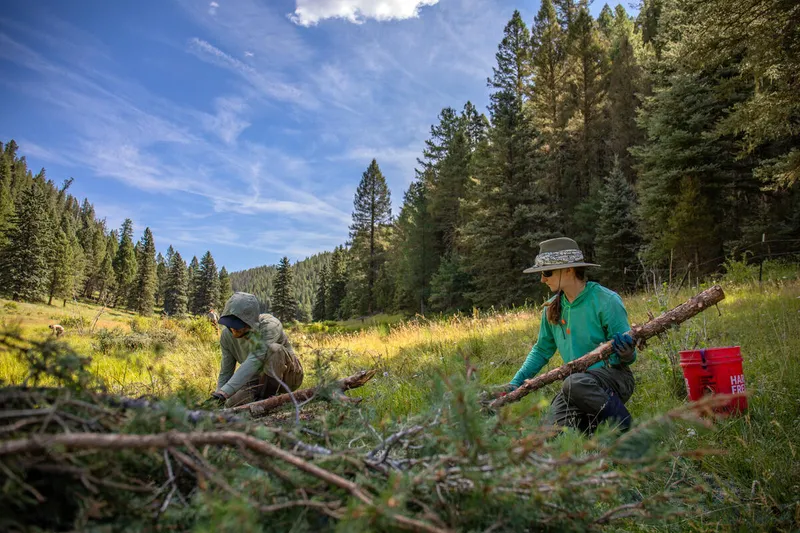
Rio Cebolla Wetland and Watershed Initiative in New Mexico, led by Rio Grande Return, focused on restoring ecosystems in the Rio Grande headwaters through wetland restoration and riparian management, specifically designed to increase natural water distributed storage and encourage beaver populations to return to their ancestral habitats.
Highlights:
- WWF and Rio Grande Return are working to restore the headwaters of the Rio Grande. Across nine miles of the Rio Cebolla, a major tributary to the Rio Grande found high in the Jemez Mountains of Santa Fe National Forest in New Mexico, the Rio Grande Return crew has installed over 200 artificial beaver dams (known as analogs—human-made structures that mimic natural beaver dams using wooden posts, branches, and sediment) and other low-tech restoration structures.
- We replenished over 3.43 billion gallons (13,000 million liters) of water through increased infiltration and wetland water storage in 49 acres (20 ha). In only two years, the restoration work created adequate habitat conditions for beavers, and the first group of beavers moved back into the project area in 2025.
- This project targeted the restoration of one of New Mexico’s Riparian Conservation Opportunity Areas previously identified by a broader conservation coalition riparian restoration initiative.
© Don Getty
Northern New Mexico Rio Grande Tributary Restoration
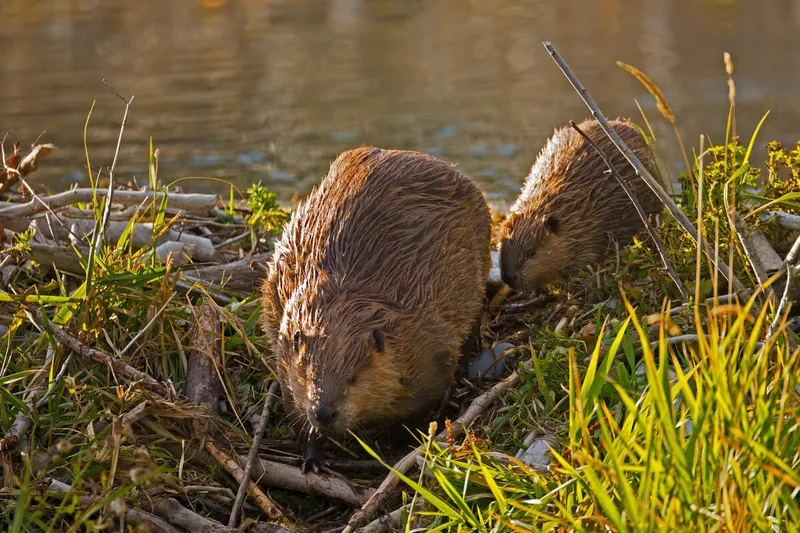
Northern New Mexico Rio Grande Tributary Restoration, led by Defenders of Wildlife combined agricultural water conservation with sustainable production practices, wetland restoration, native vegetation planting, and beaver coexistence strategies, recognizing that healthy Rio Grande tributary streams depend on working with, not against, nature's engineers.
Highlights:
- WWF and Defenders of Wildlife, in partnership with Santa Fe County, the Santa Clara Pueblo, and local communities, installed 33 beaver dam analogs to restore wetlands in the Santa Cruz River, critical for water supply for agriculture, flood control, wildfire protection, and beaver habitat. These low-tech, cost-effective structures are already transforming dry channels back into vibrant wetlands. The beavers that had already returned to the site before the project interventions are maintaining and expanding on the work, proving that when we create the right conditions, nature can heal itself.
- One hundred community members were also engaged in beaver co-existence training and the importance of wetlands and agricultural water conservation for resilient communities.
- This project targeted the restoration of one of New Mexico’s Riparian Conservation Opportunity Areas previously identified by a broader conservation coalition riparian restoration initiative.
© Audra Melton / WWF-US
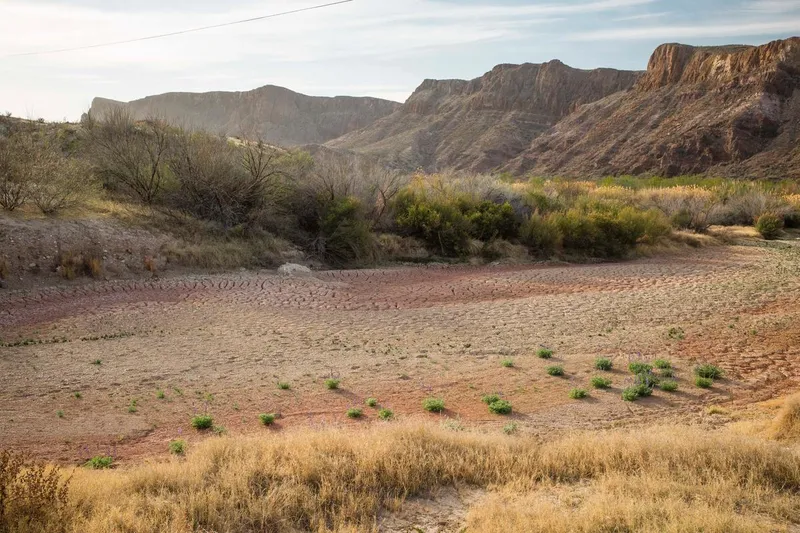
The Big Bend Tributary Stream Storage Enhancement
The Big Bend Tributary Stream Storage Enhancement was implemented by the Rio Grande Joint Venture as part of the Alamito Creek Conservation Initiative, a long-term watershed-scale restoration effort. This project focused on grassland ecosystem interventions in riparian areas to restore natural creek flow, recharge aquifers, and build long-term water resilience in this critical arid region of the Chihuahuan Desert.
Highlights:
- In partnership with the Rio Grande Joint Venture and the Dixon Water Foundation, this project implemented a combination of filter dams, native riparian vegetation planting, and exclusion fencing to address stream incision and floodplain disconnection and increase water, sediment, and nutrient retention on a 2.4 mile (4 km) stretch of the Alamito Creek covering 49 acres (20 hectares) of critical riparian habitats.
- This project developed a biodiversity baseline to assess the impacts of the restoration efforts on bird species, counting up to 43 different bird species in 2025. Riparian zones in grassland habitats are critical for bird species, often supporting more species than their adjacent upland grassland ecosystems.
- This project is becoming a reference for riparian restoration efforts in cattle ranching environments of West Texas to support both sustainable ranching operations and bird conservation.
Learn about our partnership throughout the years
In partnership with National Geographic and award-winning storyteller Pete McBride, learn more about how Finish is driving awareness of the state of the Rio Grande.
*These are modeled results based on the Volumetric Water Benefit Accounting methodology, validated with some field measurements