After gray wolves were reintroduced to Yellowstone National Park in 1995, which of these species declined?
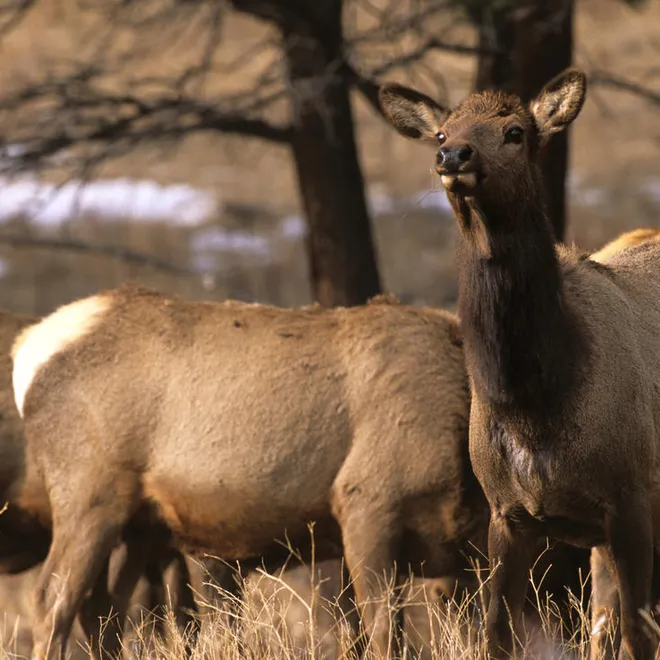
© WWF-US / Steve Morello
Sorry, the correct answer is elk.
As apex predators, wolves help maintain healthy populations of other animals—and even many of the plants—that share their habitats. When gray wolves were extirpated from the Northern Rockies and Yellowstone National Park in the 1920s, populations of elk and other prey species surged, which led to overgrazing by the abundant herbivores, which in turn resulted in negative cascading impacts throughout the greater Yellowstone ecosystem.
Wolves primarily prey on elk, especially those that are more vulnerable, such as calves. Since wolves were reintroduced to Yellowstone in 1995, they have reduced the elk population and other prey animals, which has led to a resurgence of woody plants like willow and aspen.
Because of the increase in their food plants, the beaver population in the park has also increased, resulting in healthier wetlands. The restoration of trees and plants is also improving the habitat for native birds, fish, and other wildlife.