After a decade as the national mammal, America’s bison still need help from Congress
Congress should pass the bipartisan Indian Buffalo Management Act to boost restoration efforts led by Tribal Nations

© WWF-US/Clay Bolt
Key takeaways
- A decade after the National Bison Legacy Act became law on May 9, 2016, to establish the national mammal, the American bison remains absent from much of its historical range.
- Bison provide important environmental, economic, and cultural value.
- Stronger federal support is needed for bison restoration efforts led by Tribal Nations. Congress can help by passing the bipartisan Indian Buffalo Management Act. Tell your representatives today to support this legislation.

© WWF-US/Clay Bolt
An iconic American species
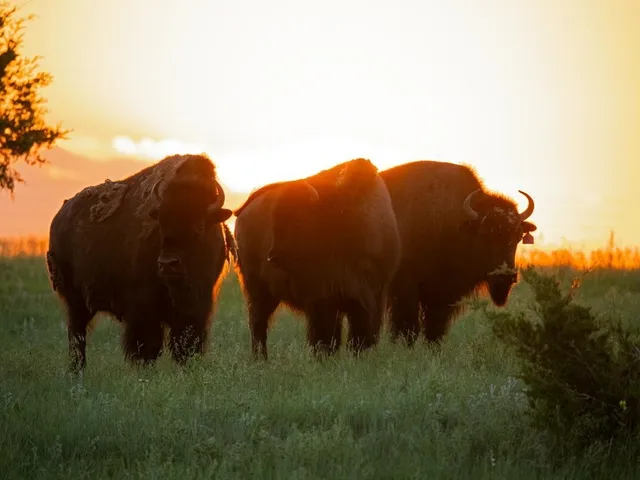
The American bison, also known as buffalo, has been the United States national mammal for nearly 10 years.
The bipartisan National Bison Legacy Act, enacted on May 9, 2016, established bison as an official symbol of the United States in recognition of its importance to America’s history and culture, the cultures and food security of Tribal communities, and grasslands ecosystems.
Yet bison still occupy less than 1% of their historical range in the Great Plains.
Restoration efforts, including those led by Tribal Nations, have brought bison back from the brink of extinction. But the work to rehabilitate this species is far from finished.
As we mark the 10th anniversary of bison becoming the national mammal, here’s why this species is so important—and what Congress can do now to help protect it.

© naturepl.com / Danny Green / WWF
© WWF-US/Clay Bolt
Support Tribes restore buffalo to the Great Plains
The Indian Buffalo Management Act would strengthen support for Tribal Nations who are working to bring buffalo back from the brink of extinction.
How bison nearly went extinct

© WWF-US/Clay Bolt
Bison have come a long way from the late 1800s, when they nearly vanished during Westward Expansion.
Traders settling in the American West slaughtered millions of bison to meet a growing demand for hides. Many more bison were killed under US government campaigns aimed at subduing the Tribal Nations, who relied on them for food, clothing, and shelter. Other settlers shot bison for sport, including while on passenger trains, an activity advertised as “hunting by rail.”
All told, these actions decimated the bison population from what had been tens of millions to fewer than 1,000.
It was devastating for bison, for Tribal Nations, and for grasslands ecosystems in the Great Plains.
Why bison are so valuable to America’s grasslands and food security
© WWF-US/Sarah Mosquera
Restoring bison unlocks environmental, economic, and cultural benefits well beyond this one species.
The presence of bison herds makes grasslands healthier and more productive thanks to their grazing and wallowing habits.
For example, bison aerate soil with their hooves, which promotes water absorption and microbial enrichment. They also create depressions in the ground (known as wallows) from rolling around and packing down soil, which collects rainwater that many animals rely on. The restoration of bison as wildlife to grasslands landscapes—primarily on Tribal and federal lands—can lead to greater plant species diversity as well as higher numbers of pollinators and birds.
Bison meat is also one of the healthiest and leanest forms of protein. Growing the bison population helps improve food security, which in turn strengthens public health—particularly for Tribal Nations. Bison are key to many Indigenous food sovereignty initiatives and to economic and cultural revitalization efforts within these communities.
What Tribal Nations and WWF have been doing to help bison
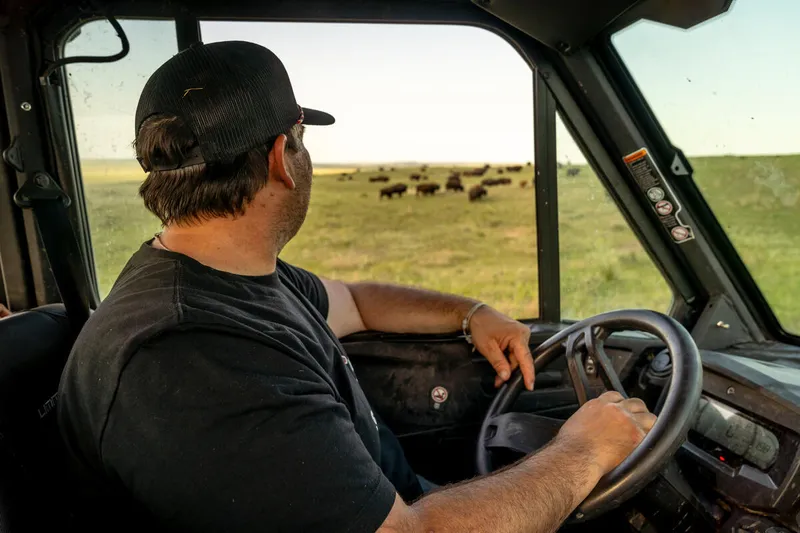
Tribal Nations have been central to efforts to restore bison to the Great Plains.
Across both production and conservation herds, the bison population has grown to nearly half a million today. But most bison are privately owned and managed as livestock. Bison, therefore, remain largely “ecologically extinct,” meaning they are not contributing to their native ecosystems as they did before Westward Expansion.

© Clay Bolt / WWF-US
WWF works closely with bison programs—including many led by Tribes—throughout the Great Plains in Montana, South Dakota, and Colorado. When our work began in 2002, we worked with five partners that had bison herds on roughly 100,000 acres combined. Today, we have expanded our work to 12 partners, and they have herds roaming across almost 400,000 acres—a fourfold increase. But much more remains to be done.
That is why WWF is also collaborating on a range of Tribal buffalo initiatives with other like-minded Tribal and conservation organizations, such as the Coalition of Large Tribes (COLT), Native Americans in Philanthropy, and The Nature Conservancy. We are also advocating for federal programs and funding to help grow and sustain Tribal buffalo herds, including in support of the Inter-Tribal Buffalo Council (ITBC). The ITBC is made up of 90 member Tribes in 23 states and has collectively restored more than 20,000 buffalo on nearly 1 million acres.
What Congress—and you—can do to help
For several years now, the Department of the Interior has provided modest funding to support activities like relocating bison from wildlife refuges onto Tribal reservations and managing fencing systems, including through the ITBC. But the needs and demand far outmatch the federal resources that are currently available.
The Indian Buffalo Management Act would codify and strengthen the government-to-government support for Tribal Nations’ bison restoration programs in recognition of their critical role.

© WWF-US/Clay Bolt
The Senate unanimously passed this legislation in 2024, but the House—which also advanced the bill in a prior Congress—did not take it up in time to pass it again before the end of the last congressional session. Today, there is renewed strong support in both the House and the Senate to finally turn this bill into law.
Ten years after designating bison as the national mammal, now is the time for Congress to get the Indian Buffalo Management Act over the finish line.
You can help by making your voice heard. Send a message to your representatives in Congress now and tell them to support the Indian Buffalo Management Act to help bring back America’s national mammal.
© WWF-US/Clay Bolt
Support Tribes restore buffalo to the Great Plains
The Indian Buffalo Management Act would strengthen support for Tribal Nations who are working to bring buffalo back from the brink of extinction.