Blue-fronted Amazon
Amazona aestiva
There is moderate risk associated with keeping this species as a pet, as explained below. Prospective pet owners should research if they can safely keep the animal for its lifetime, including housing, proper food and veterinary care, and be sure it can be kept as a pet in their jurisdiction.
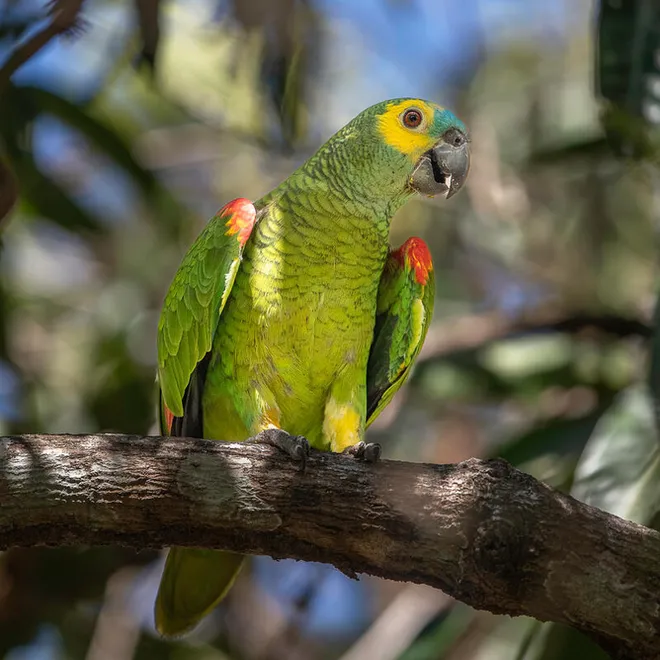
© WWF-Sweden / Ola Jennersten
Assessment results
Moderate risk

Conservation | Low risk
This animal is most likely not threatened by extinction, and/or the exotic pet trade does not impact the wild population. Please check that the animal you want comes from a reputable seller or rescue center that follows best practices when they source their animals.

Legality | Low risk
This animal is not currently protected by any national laws or import restrictions. Exotic pet ownership, however, is regulated at the state, county, or city level, so check your jurisdiction to see if you can own it.

Human and public health | Moderate risk
It is likely that this animal is a potential threat to human or public health, either due to potential zoonotic diseases or due to physical attributes that can harm humans.Learn more about animal-related illness and injuries.

Invasiveness | Moderate risk
This species could negatively impact native biodiversity or habitats. However, never release a pet into the wild for any reason. Learn more about invasive species.

Animal welfare | High risk
Care, diet, and housing needs of this species are extremely difficult to meet for its lifetime, and potential owners are unlikely to be able to provide a good quality of life. Learn more about the challenges with exotic pet welfare.
⚠️ Important considerations
- Blue-fronted Amazon populations are declining in the wild and they are near threatened, targeted for the pet trade, but they are commonly captive bred in the US pet trade.
- Blue-fronted Amazon housing, diet, and social needs are hard to meet in captivity. They need hours of stimulation and social time outside of their cage each day, along with a rotating variety of toys, puzzles, perches, and space to fly.
- Blue-fronted Amazons have been introduced to the US through escaped captive individuals. If you can no longer keep your pet, contact your local rescue center, responsible pet store, accredited zoo, veterinarian, or other trusted home to find someone that can take it in. Never release a pet outside, into the wild.
- As with all pet birds, ensure there is access to a veterinarian that specializes in birds and consult them about proper habitat set up, diet, and care. Find an avian vet near you.
Basic information
Taxonomy:
Psittaciformes, Psittacidae
Lifespan:
Up to 70 years in captivity
Weight:
13-15 in. (33- 38 cm)
Size:
6-8 in (16-20 cm) body with 6.5-8 in (16.5-21 cm) tail
Native range and habitat:
Found throughout Amazonia of South America in savannas, riparian woodlands, grasslands, and floodplains
Diet:
Leaves, seeds, grains, nuts, fruits, and flowers
Activity and behavior:
- Monogamous and social birds that live and forage with a flock.
- They are non-migratory birds, though they may do local migrations for areas with more abundant resources.
- Diurnal birds that forage during the day and roost together in tree canopies at night
© WWF-Japan