Brazilian rainbow boa
Epicrates cenchria
There is moderate risk associated with keeping this species as a pet, as explained below. Prospective pet owners should research if they can safely keep the animal for its lifetime, including housing, proper food and veterinary care, and be sure it came from a legal source and can be kept as a pet in their jurisdiction.
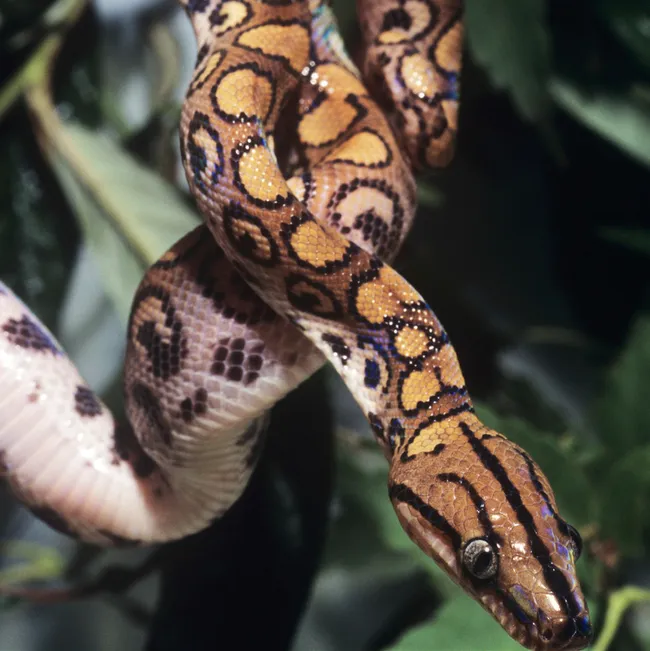
© David Lawson / WWF-UK
Assessment results
Moderate risk

Conservation | Moderate risk
This animal is likely to be threatened by extinction in the wild, and/or it is subject to international trade controls due to demand in the pet trade. Please check that the animal you want comes from a reputable seller or rescue center that follows best practices when they source their animals. Learn more about wildlife conservation and the pet trade.

Legality | Low risk
This animal is likely to be threatened by extinction in the wild, and/or it is subject to international trade controls due to demand in the pet trade. Please check that the animal you want comes from a reputable seller or rescue center that follows best practices when they source their animals. Learn more about wildlife conservation and the pet trade.

Human and public health | Moderate risk
It is likely that this animal is a potential threat to human or public health, either due to potential zoonotic diseases or due to physical attributes that can harm humans.Learn more about animal-related illness and injuries.

Invasiveness | Low risk
This species would not likely impact native biodiversity or habitats. However, never release a pet into the wild for any reason.

Animal welfare | Moderate risk
Care, diet, and housing needs of this species are either insufficiently known or difficult, making it hard to ensure it has a good quality of life for its lifetime. Learn more about the challenges with exotic pet welfare.
⚠️ Important considerations
- Rainbow boas are commonly demanded for pet trade, sourced either as captive bred or from the wild. An updated assessment is needed to understand the impact on their wild populations.
- Most reptiles carry salmonella in their intestinal tract and may not be suitable for young children or immuno-compromised individuals. Always practice good hygiene and hand washing around snakes.
- Rainbow boa housing and dietary needs require additional knowledge and effort. They grow very large as adults, up to 7 ft., and require an enclosure at least that long. Their enclosure needs a gradient of temperatures (70-75ºF in the water with a dry basking area at 85-90ºF) for body temperature regulation, proper humidity (70-80%), and proper amounts of UVA and UVB light from a lamp on a regular day/night cycle, to ensure good health. Their enclosure should have plenty of branches and climbing shelves, plus places to hide and rest.
- As with all pet reptiles, ensure there is access to a veterinarian that specializes in reptiles and consult them about proper habitat setup, diet, and care. Find a reptile vet near you.
Basic information
Taxonomy:
Squamata, Boidae
Lifespan:
7-12 years in the wild, 20-25 years in captivity, but up to 42 years
Weight:
3 lbs. (1.4 kg)
Size:
5-7 ft. (4.6-2.1 m)
Native range and habitat:
Amazon rainforest and coastal rainforests of Central and South America
Diet:
Carnivorous, eating small mammals, birds, eggs, reptiles, and amphibians
Activity and behavior:
- Solitary and aggressive animals that are rarely seen with others
- Nocturnal and most active during the evening and night, living either in the trees or on the ground
© WWF-Japan