ARPA Comunidades
Protecting the Amazon and securing nature’s future
© Adriano Gambarini / WWF Living Amazon Initiative
A global treasure
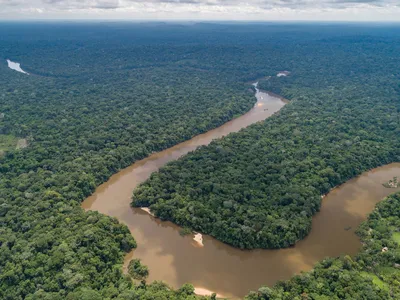
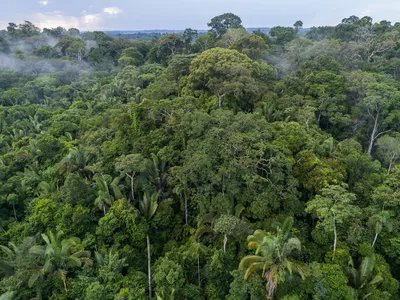
The Amazon is one of Earth’s greatest natural treasures. It shelters one in every 10 known species, from dazzling birds to towering rainforest giants. But it’s more than a biodiversity hot spot; the Amazon stores vast amounts of carbon, helping to stabilize the planet’s climate. It’s also home to more than 40 million people, whose cultures, traditions, and daily lives are deeply tied to the forest’s bounty.
To protect this vital ecosystem, Brazil launched the Amazon Region Protected Areas (ARPA) program in 2002, creating one of the world’s largest tropical forest conservation efforts. The goal? Safeguard just over 154 million acres—an area roughly the size of Texas—through a mix of strict protections and sustainable-use protected areas.

© Marizilda Cruppe / WWF-UK
A bold conservation commitment
Launched in 2025, ARPA Comunidades (Communities) builds on ARPA’s success to ensure long-term conservation of the Brazilian Amazon. It strengthens community resilience and promotes the sustainable use of natural resources in 60 protected areas spanning 58.6 million acres and supports the creation and consolidation of 7.4 million acres of new protected areas, resulting in improved biodiversity conservation, increased sustainable community livelihoods, and reduced deforestation in the Brazilian Amazon.
ARPA Comunidades applies the Project Finance for Permanence (PFP) approach, which secures the policy changes and lasting financial resources needed to make conservation permanent and effective long after initial funds have been spent. The goal is simple but powerful: protect nature and ensure the people who steward and depend on it continue to thrive. ARPA Comunidades is supported by a broad coalition of public and private partners, a $120 million, 15-year donor sinking fund managed by FUNBIO.
Click the map below to view full size.

Impact at a glance
-
130 community organizations
Strengthened by ARPA Comunidades.
-
58.6 million acres
Protected across 60 sustainable-use protected areas.
-
7.4 million acres
Of new protected areas.
-
130,000 people
Benefiting from ARPA Comunidades.
-
$95 million–$132 million per year
In potential revenue from socio-bioeconomy activities
-
77,000 people
Provided access to renewable energy and the internet.
Protecting nature. Supporting communities.
© WWF/Tatiana Cardeal
ARPA Comunidades recognizes that community leadership and sustainable community livelihoods are essential to the long-term protection of the Amazon.
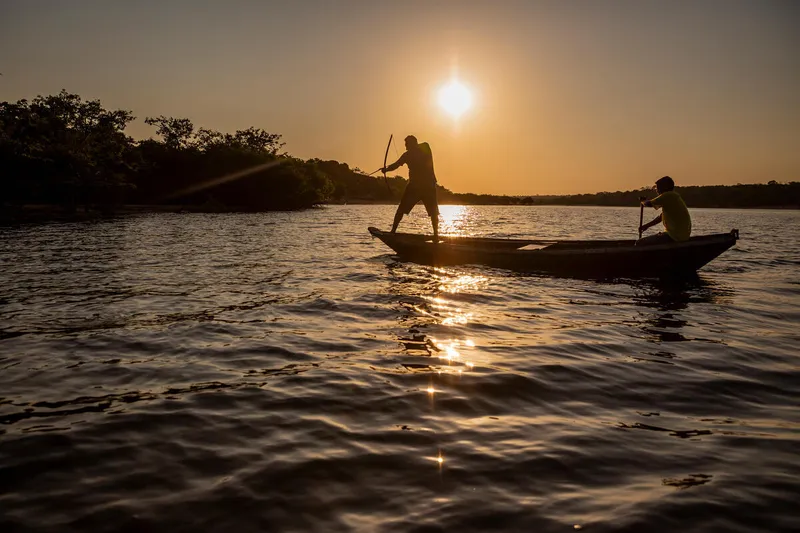
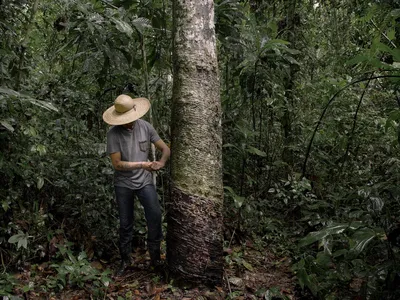
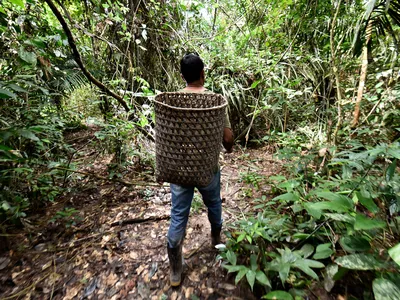
The Amazon is home to hundreds of traditional communities, whose knowledge and sustainable practices are fundamental to the conservation of this biome. ARPA Comunidades will support around 130 community organizations dedicated to helping individuals safeguard their territorial rights, gain better access to public policies and services, identify opportunities for sustainable livelihoods, strengthen local food security, support women and youth, and improve communities’ resilience to the impacts of climate change.
Nature and people thriving together
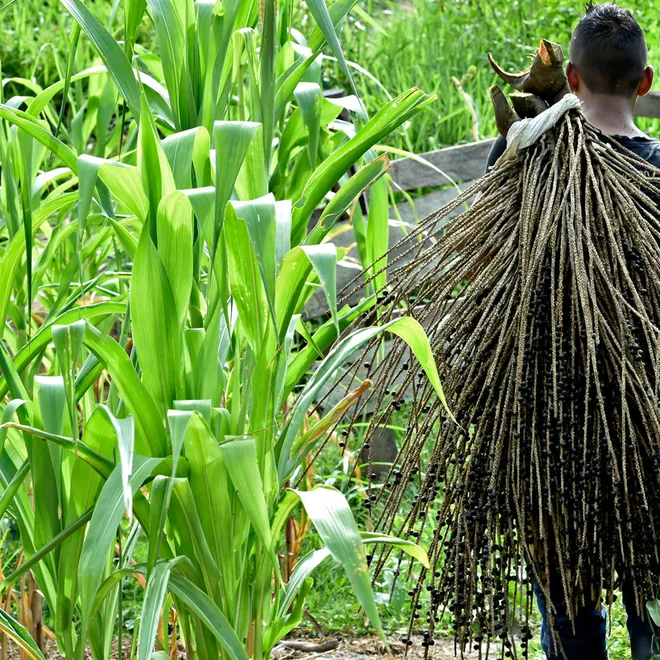
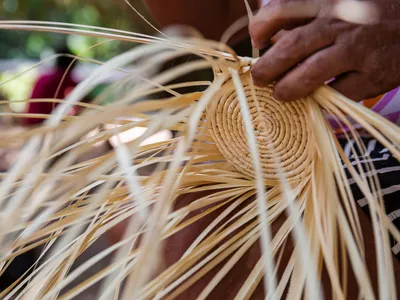
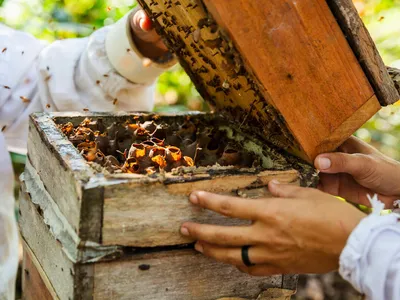
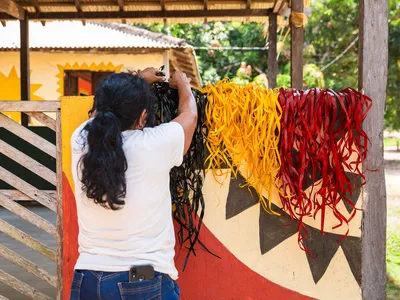
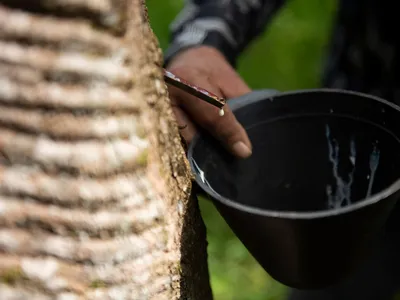
The key innovation in ARPA Comunidades is a concept called socio-bioeconomy, which refers to community-led, sustainable economic development activities, like açai production, handicrafts, and tourism. With support from ARPA Comunidades partners, communities will generate diversified incomes and create opportunities for future generations to protect the rainforest in the face of encroaching threats.
Socio-bioeconomy activities in ARPA sustainable-use protected areas have the potential to generate $95 million–$132 million in annual revenue that can directly benefit over 130,000 people living in these areas, with the potential to lift 100,000 people out of poverty. A Brazilian study exploring the link between poverty reduction and deforestation in the Amazon region found that over an eight-year period, about 62 acres of deforestation were avoided for every 100 people taken out of poverty.
“Traditional peoples and communities, with their ways of life and knowledge passed down through generations, are essential to addressing climate change. ARPA Communities seeks to strengthen their organizations, support the management of their territories, generate sustainable income for extractive populations based on socio-bioeconomy chains, and expand access to energy and connectivity to boost their ventures, This joint effort by the Brazilian government and partners demonstrates that cooperation, solidarity, and co-design are effective paths to public policies that value those who protect our ecosystems.”
- Marina Silva, Brazilian Minister of Environment and Climate Change
© WWF/Tatiana Cardeal
“ARPA Communities is here to innovate the governance model of our territories. It brings the possibility of a sustainable development model that guarantees access to land and a better quality of life for its people. From the moment communities play a leadership role—participating in decision-making and implementation—we will create stronger, more transparent, and active governance. I have no doubt that ARPA Communities will be a transformative instrument that will strengthen sustainable extractive production, valuing our traditions, and contributing to the preservation of our Amazon rainforest.”
- Julio Barbosa, President of the National Council of Extractivist Populations
© Christian Braga / WWF-Brazil
"This is a crucial time, a dramatic tipping point, in fact, for the Amazon and the entire planet. We must safeguard the future of the Brazilian Amazon’s life-giving rainforest and local communities. The traditional populations of the Amazon region play a crucial role in protecting local biodiversity and ensuring the region’s long-term conservation. ARPA Communities will position Brazil as a global leader and provide a model for integrating conservation and nature-based livelihoods that can be replicated within Brazil and around the world.”
- Mauricio Voivodic, Executive Director of WWF-Brazil
© WWF-Brazil / Zig Koch
“For more than 20 years, FUNBIO has been supporting some of the most important initiatives in the Amazon, including ARPA, The Amazon Region Protected Areas Program, which is now the benchmark for other Latin American countries and has inspired similar programs in Africa and Asia. Direct access to financial resources by those who deeply understand the forest is a crucial step for the conservation of the Amazon. With ARPA Comunidades, I truly believe we are changing the face and the future of the Brazilian Amazon for the better.”
- Rosa Lemos de Sá, Secretary General and CEO of FUNBIO
© Andre Dib / WWF-Brazil
“The Brazilian Amazon looms large in our world—an irreplaceable engine for our weather, economies, and well-being. More importantly, it is home to an astonishing array of fish, trees, animals, and great diversity of languages and cultures of the many human communities who call the Amazon their home. Conservation only endures when local people thrive alongside nature. The Project Finance for Permanence model behind ARPA Communidades brings together every sector of society to create a future where both the Amazon and its people flourish.”
- Carter Roberts, President and CEO of WWF-US
© Andre Dib / WWF-Brazil
“ARPA Comunidades is the newest addition to the Project Finance for Permanence community of sustainable finance initiatives, demonstrating what is possible when government, Indigenous peoples, local communities, and partner organizations collaborate to achieve lasting conservation and sustainable development. With the addition of this new project, over 210 million hectares of lands and waters are durably conserved with the support of Enduring Earth and partners, with ten more projects underway and more than 150 local partners engaged around the world. The momentum of this work is driven by local leadership, collective knowledge, and stewardship that safeguard biodiversity, sustain cultural vitality, expand economic opportunities, and ensure the well-being of future generations.”
- Zdenka Piskulich, Managing Director of Enduring Earth
© Adriano Gambarini / WWF Living Amazon Initiative
"Amazonia is vital for the world’s global biodiversity, climate goals, and for the viability of all humanity. Since 2001, the Gordon and Betty Moore Foundation has supported partners in Andes-Amazon countries to help conserve over 400 million hectares in the Amazon. ARPA Comunidades will ensure communities have what they need for sustainable livelihoods and strong environmental stewardship, and we are proud to support Brazil's leadership and ambitious program for the benefit of people and planet.”
- Avecita Chicchón, Program Director of the Gordon and Betty Moore Foundation
© WWF/Tatiana Cardeal
"Conservation only endures when local people thrive alongside nature. The Project Finance for Permanence model behind ARPA Comunidades brings together every sector of society to create a future where both the Amazon and its people flourish.”
- Carter Roberts, President and CEO of WWF-US.
Going further together
ARPA Comunidades is possible because of its partners in collaboration with the government of Brazil, the Brazilian Biodiversity Fund (FUNBIO), and WWF: Andes Amazon Fund, Bezos Earth Fund, Bobolink Foundation, Enduring Earth, Global Environment Facility, Gordon and Betty Moore Foundation, Inter-American Development Bank, Laurie and Jeff Ubben, Margaret A. Cargill Philanthropies, Ministry for Economic Cooperation and Development (BMZ) of the Federal Republic of Germany through KfW, Rainforest Trust, The Nature Conservancy, Walmart Foundation, World Bank, and ZOMA LAB.
ARPA Comunidades is part of the growing community of PFP initiatives that are locally designed and led, and supported by Enduring Earth, which partners with governments, communities, Indigenous peoples, and funders to accelerate conservation and sustainable development, address biodiversity loss, secure durable financing, and enhance economic growth, using the Project Finance for Permanence (PFP) model.
“Andes Amazon Fund is honored to be a part of this new phase of the ARPA project, which provides needed support to the local people working every day to protect the Amazon. As the ARPA Comunidades program strategically invests in new forest protections, we plan to provide critical follow-through for local communities: building the on-the-ground capacity and resources required for long-term conservation success in this globally important ecosystem."
- Megan MacDowell, Executive Director of Andes Amazon Fund
© Andre Dib / WWF-Brazil
“The Nature Conservancy is proud to stand alongside Brazil and local communities in this landmark effort. ARPA Comunidades reflects our commitment to long-term community-led conservation and sustainable development, helping ensure that the Amazon thrives for generations to come. This initiative demonstrates what is possible when governments, communities, and partners unite behind a shared vision: protecting one of the planet’s most vital landscapes while improving the lives of those who call it home.”
- Jennifer Morris, CEO of The Nature Conservancy
© WWF/Tatiana Cardeal
“Rainforest Trust is proud to join Brazil and our partners in the launch of ARPA Comunidades. This initiative represents the next generation of Amazon conservation with community leadership at its core. For nearly 40 years, Rainforest Trust has worked to protect critical habitats by empowering local stewards of the land. ARPA Comunidades reflects that same vision: lasting protection for the Amazon depends on the people who call it home.”
- James Deutsch, CEO of Rainforest Trust
© Andre Dib
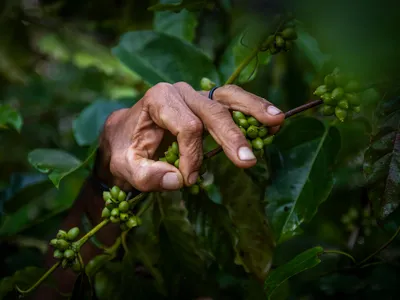
"After looking at the territories covered by the Amazon Protected Areas program, the time has come to focus on the people who live in these territories. This will be done through an effective program of consultation and social participation, which points the way to sustainable development with inclusion. ARPA Comunidades renews our commitment to increase the impact and scale of our actions by developing joint and participatory solutions."
- Annette Killmer, Head of the IDB Group's Country Office in Brazil
© Andre Dib / WWF-Brazil
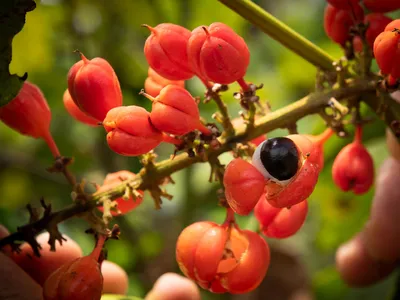
“ARPA Communities provides a unique, multisectoral platform for local communities, the Brazilian Government, and partners to come together and invest in safeguarding the forest, sustainable income opportunities, and improved living conditions—three dimensions that must go hand in hand. We are looking forward to this new chapter of conservation in the Amazon.”
- Niels Annen, State Secretary for the German Federal Ministry for Economic Cooperation and Development (BMZ)
© Andre Dib / WWF-Brazil
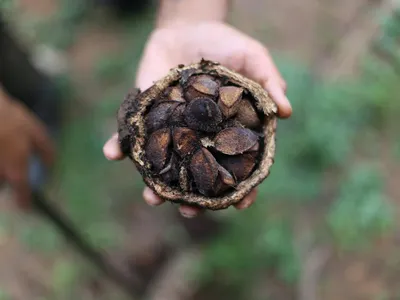
“Initiatives like ARPA Comunidades show how Project Finance for Permanence can secure lasting conservation. By aligning policy and supporting community-led sustainable development, we ensure protected areas thrive and communities prosper. The GEF has supported ARPA since its inception, and we look forward to supporting this new transformative approach.”
- Carlos Manuel Rodríguez, CEO and Chairperson of the Global Environment Facility
© Tessel in 't Veld / WWF-Netherlands
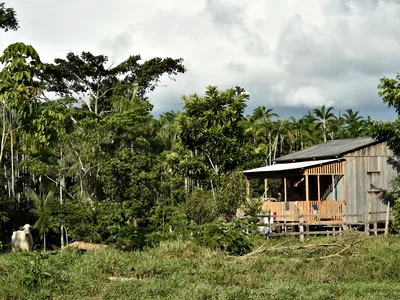
“Empowering communities is critical to protecting forests. We’re pleased our grant will support ARPA Communities, which combines conservation with inclusive sustainable development. This aligns directly with Walmart and Walmart Foundation’s Nature Goal to help protect, restore, and more sustainably manage 50 million acres and 1 million square miles of ocean. We look forward to seeing the impacts of this work and hope to see similar models scaled to other critical regions.”
- Julie Gehrki, President, Walmart Foundation
© Adriano Gambarini / WWF Living Amazon Initiative
“ARPA Communities provides a unique, multisectoral platform for local communities, the Brazilian Government, and partners to come together and invest in safeguarding the forest, sustainable income opportunities, and improved living conditions—three dimensions that must go hand in hand. We are looking forward to this new chapter of conservation in the Amazon.”
- Erwin de Nys, Environment Practice Manager for Latin America and the Caribbean at the World Bank
© Andre Dib / WWF-Brazil
A vision for the future
Through close collaboration with communities and local leaders, ARPA Comunidades is building a future in which community prosperity and nature protection sustain a living Amazon. The initiative strengthens community resilience and supports healthy ecosystems that sustain them. It protects vital rainforests and provides access to renewable energy.
This is Brazil’s promise to future generations: to honor community leadership, care for nature, and build a future that thrives.

© Andre Dib / WWF Brazil
News and stories
Together, we can help secure a thriving future for nature and communities:
© WWF/Tatiana Cardeal
Conserving nearly 60 million acres of the Brazilian Amazon
© Zig Koch / WWF
Securing nature and humanity's future
© WWF/Tatiana Cardeal
Sustainable futures along Brazil’s Tapajós River
© WWF/Tatiana Cardeal
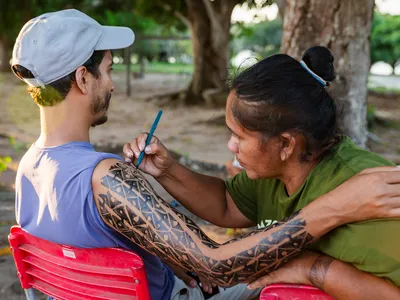
In the Amazon, a community uses tradition to fuel forest-friendly tourism
© WWF-US/Nik Neves
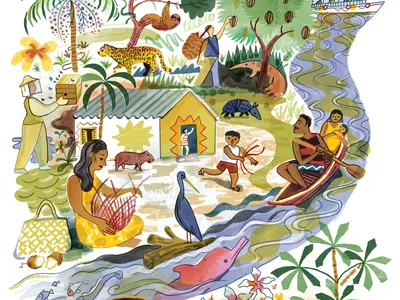
The power of durable conservation in Brazil
© WWF-Brazil / Adriano Gambarini