Publications
-
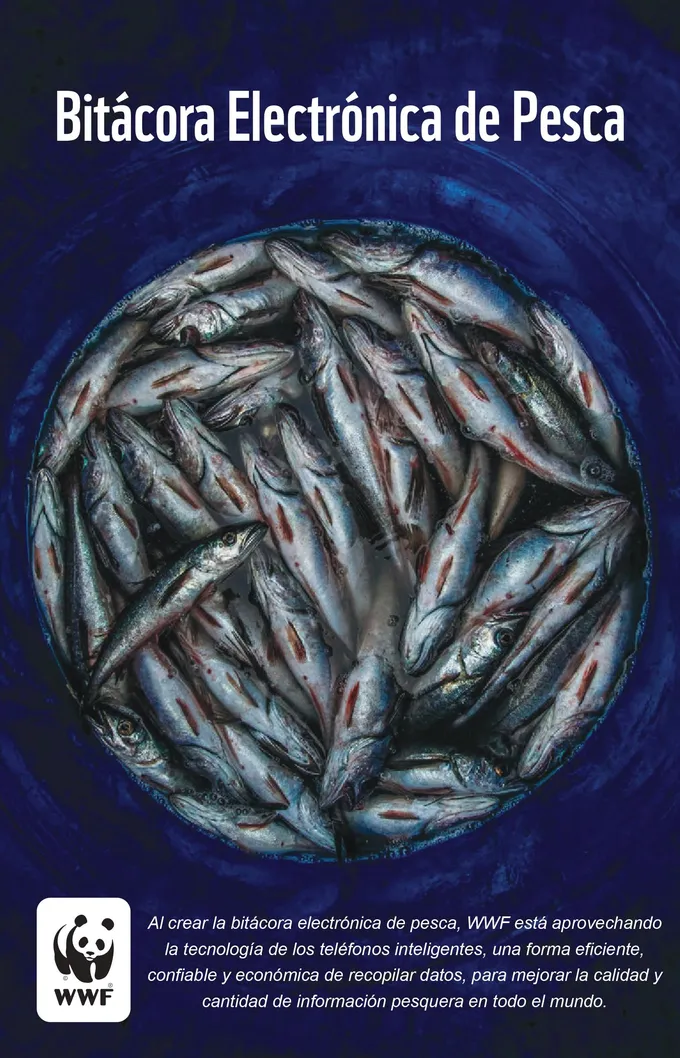
WWF designed and developed an electronic fishing logging system, together with fishermen, authorities, researchers and observers on board, which allows fishermen to use their mobile devices to electronically record and transmit catch and fishing effort data. This brochure summarizes the benefits associated with adopting this system, details the success that the implementation of the system has had in several countries, and indicates some future plans to expand the system in other regions and fisheries.
-
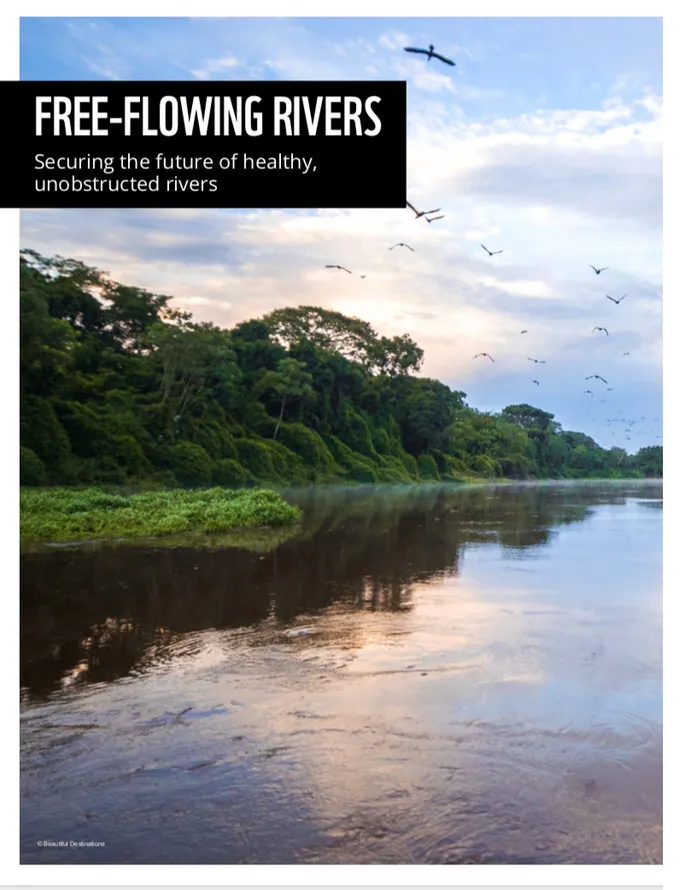
To protect the world‚'s most vital, free-flowing rivers, WWF is undertaking a four-part strategy that includes strategic energy and basin planning, policy protections for rivers and communities, advocacy and outreach, and science and thought leadership.
-
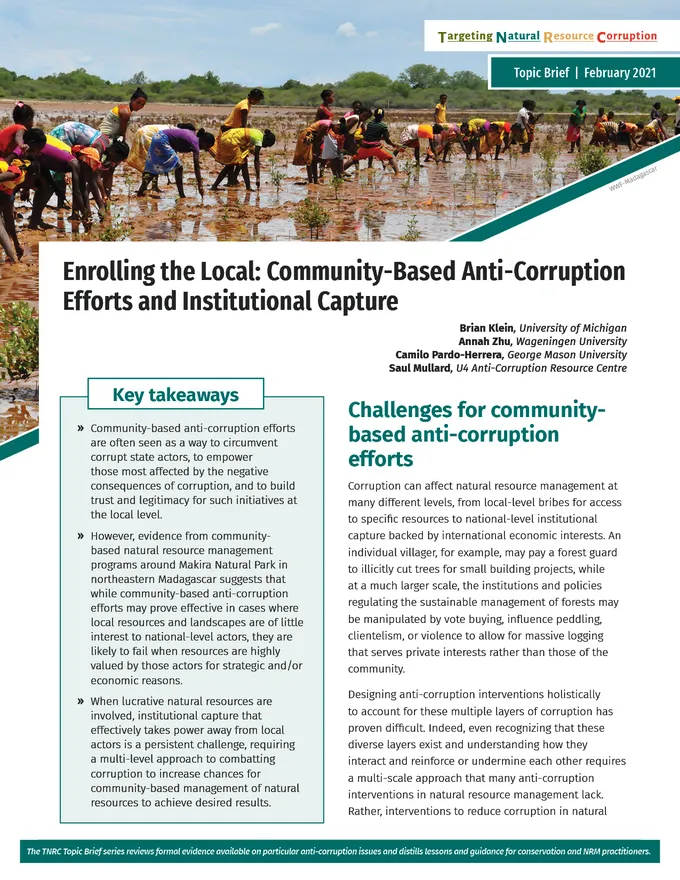
This Brief examines community-based anti-corruption efforts in natural resource management in order to better understand their rationales, potentialities, and challenges‚ – especially complications posed by the intersection of such initiatives with national-level dynamics of institutional capture. The authors present a case study from northeastern Madagascar in order to empirically explore such dynamics, and conclude with a discussion of how multi-level anti-corruption interventions might offer a promising way forward for reducing corruption in natural resource management for certain high-value landscapes or resources that might be subject to challenges connected to institutional capture.
For more information and resources, visit the TNRC Knowledge Hub.---
This content is made possible by the generous support of the American people through the United States Agency for International Development (USAID). The contents are the responsibility of World Wildlife Fund (WWF) and do not necessarily reflect the views of USAID, the United States Government, or individual TNRC consortium members.
-
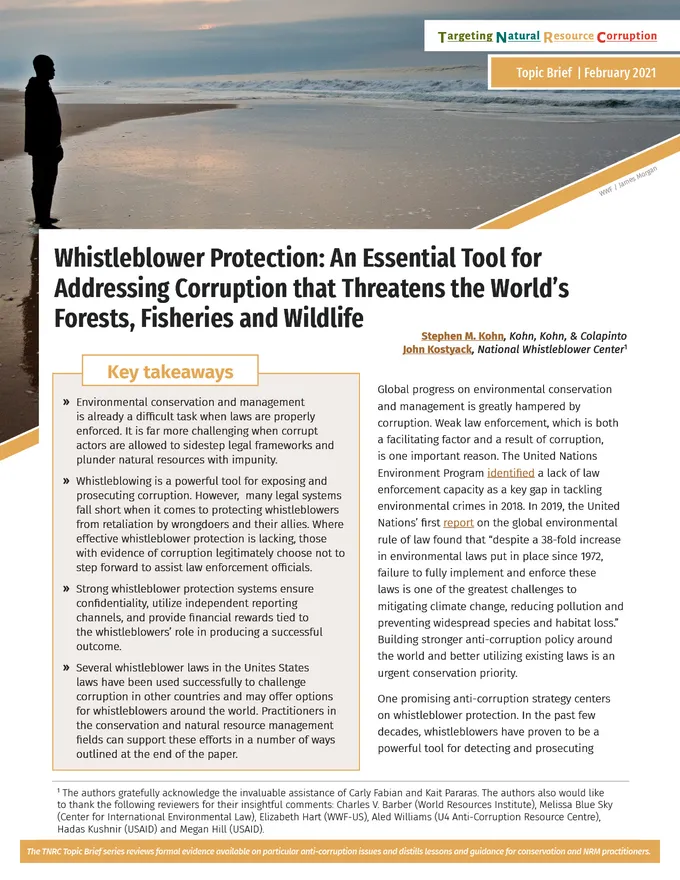
In the past few decades, whistleblowers have proven to be a powerful tool for detecting and prosecuting environmental crimes and corruption. Thanks to modern whistleblower protections, such as those incorporated into the U.S. Foreign Corrupt Practices Act, whistleblowers around the world are currently partnering with law enforcement officials to make a meaningful dent in corruption in a host of industry sectors such as oil and banking. To date, whistleblowers have relied heavily on U.S. laws because of the unique protections and rewards they provide. Conservation practitioners and anti-corruption professionals can support the use of these successful whistleblower laws for the benefit of natural resources conservation.
For more information and resources, visit the TNRC Knowledge Hub.---
This content is made possible by the generous support of the American people through the United States Agency for International Development (USAID). The contents are the responsibility of World Wildlife Fund (WWF) and do not necessarily reflect the views of USAID, the United States Government, or individual TNRC consortium members.
-
WWF‚'s report In Too Deep: What We Know and Don‚'t Know About Deep Seabed Mining takes the reader through the main arguments for why we do not need to mine the deep ocean for minerals, and sets out the threats and risks to the ocean and to the shift to the closed-loop economy if the industry goes ahead. It is based upon an extensive investigation into minerals, mining, as well as the deep ocean ecosystem.
-
WWF published the following position on biobased and biodegradable plastics.
-
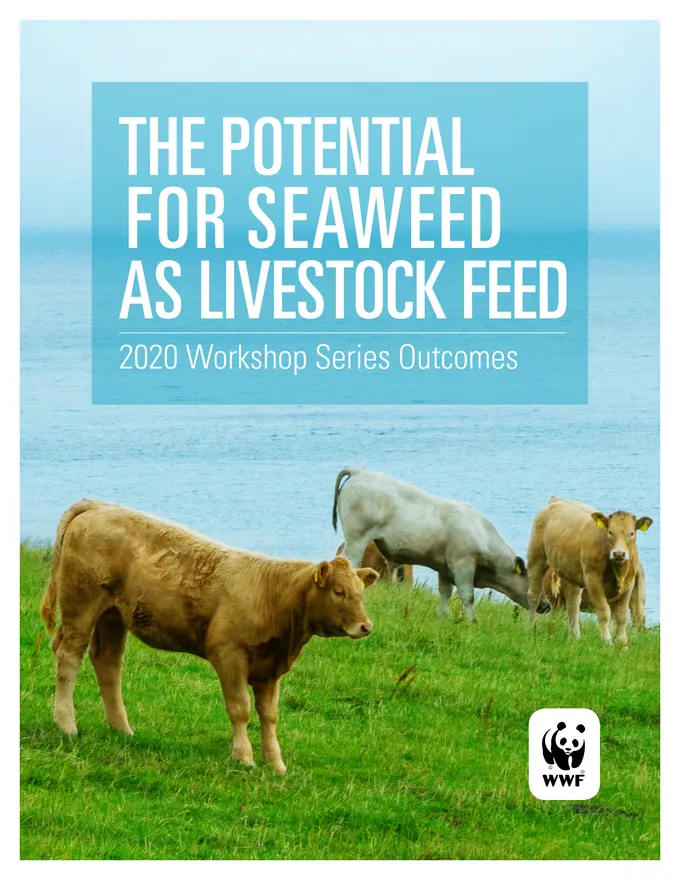
There is growing global interest in the potential for seaweed to reduce enteric methane emissions from ruminants and improve animal health and productivity when included as a component of livestock feed. In fall 2020, WWF‚ in coordination with the Advanced Research Projects Agency-Energy (ARPA-E), Bigelow Laboratory for Ocean Sciences, and the Foundation for Food and Agriculture Research (FFAR)‚Äìconvened a multi-part virtual workshop on this emerging topic with more than 130 international stakeholders.
This summary report describes key findings and major takeaways from the 2020 workshop series. Suggested next steps will help guide researchers, funders, and policymakers‚ and shape the intersection that brings their respective work together‚ to advance our collective understanding of seaweed as a livestock feed ingredient.
Learn more about WWF's seaweed work.
-
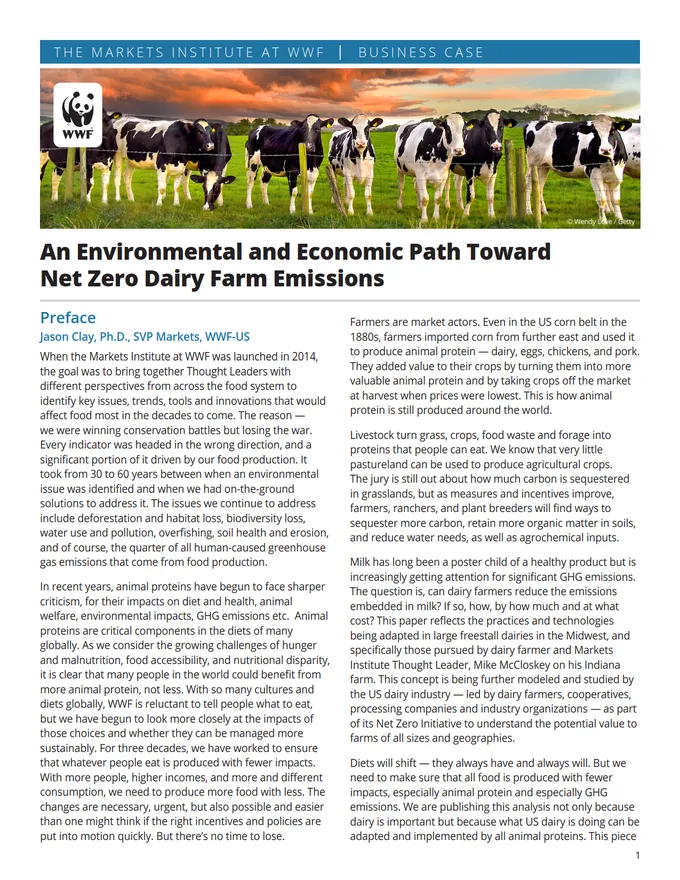
In this business case, analysis conducted by The Markets Institute @ WWF‚ – based on assumptions and data shared by stakeholders in the dairy industry‚ – demonstrates that achieving net zero greenhouse gas emissions for large farms is possible with the right practices, incentives, and policies within five years. If businesses also step up to make investments and collaborate with dairy farmers in their supply chain, the potential to reach these goals can become even more tangible.
Read other business cases for sustainable practices from The Markets Institute.
-
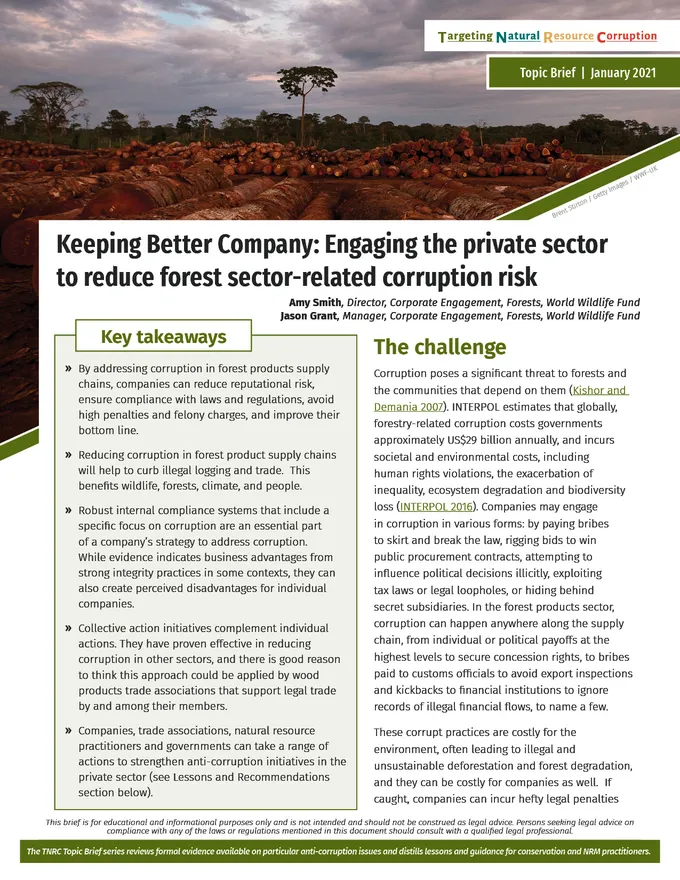
Corruption poses a significant threat to forests and the communities that depend on them. By addressing corruption in forest products supply chains, companies can reduce reputational risk, ensure compliance with laws and regulations, avoid high penalties and felony charges, and improve their bottom line. This topic brief sets forth recommendations for approaches these stakeholders can take in the fight against corruption.
For more information and resources, visit the TNRC Knowledge Hub.---
This content is made possible by the generous support of the American people through the United States Agency for International Development (USAID). The contents are the responsibility of World Wildlife Fund (WWF) and do not necessarily reflect the views of USAID, the United States Government, or individual TNRC consortium members.
-
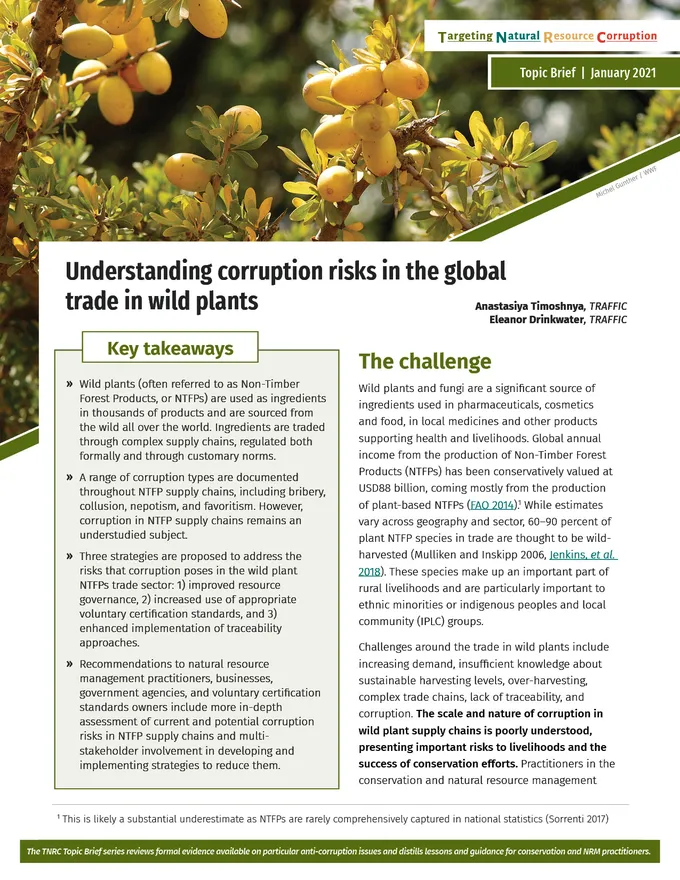
The scale and nature of corruption in wild plant supply chains is poorly understood, presenting important risks to livelihoods and the success of conservation efforts. Practitioners in the conservation and natural resource management (NRM) sector can benefit from a stronger understanding of available evidence on NTFP supply chains to assess risk better and assure sustainability and legality of the trade. The aim of this brief is to understand the corruption risks in NTFP supply chains and outline possible ways to address corruption effectively. The authors reviewed both grey and academic literature to identify different types of corruption in NTFP supply chains.
For more information and resources, visit the TNRC Knowledge Hub.
---
This content is made possible by the generous support of the American people through the United States Agency for International Development (USAID). The contents are the responsibility of World Wildlife Fund (WWF) and do not necessarily reflect the views of USAID, the United States Government, or individual TNRC consortium members.