Publications
-
WWF has made it a priority to combat plastic waste. To inform this work, WWF retained Corona Insights in 2020 to develop and implement research to understand the public‚'s awareness of the issue, current behaviors around usage and recycling, and attitudes toward plastics in the United States.
-
WWF Mongolia, in partnership with the Mongolian Ministry of Environment and Tourism, the Global Snow Leopard & Ecosystem Protection Program (GSLEP), and numerous other partners helped to conduct Mongolia‚'s first ever large-scale snow leopard population and habitat assessment. The assessment found the country‚'s snow leopard population to be stable and confirmed the presence of approximately 953 snow leopard.
Mongolia is home to the world‚'s second largest population of snow leopards, which are important indicators of the health of the landscapes they live in. However, learning about snow leopards and their distribution is a difficult task and there are critical gaps in understanding how many of these big cats are left in the wild. This nationwide survey is in line with Mongolia‚'s global commitment and will provide a benchmark to assess the population size of the snow leopard in other countries.
-
-
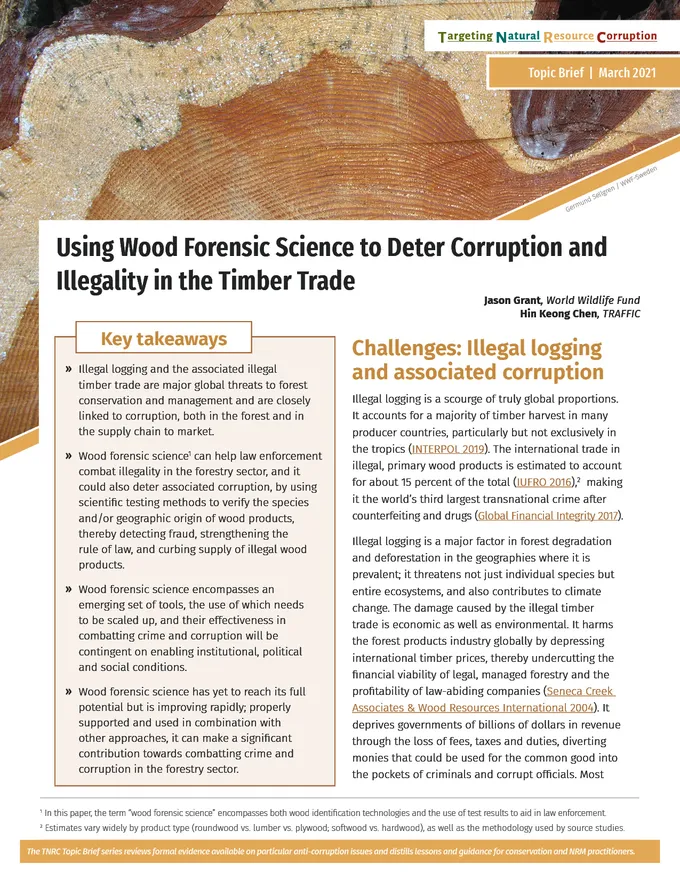
Corruption and crime in the forestry sector are closely interrelated. Much of the world‚'s remaining primary forests containing high-value timber are found in countries with weak governance, where corruption is systemic and forest crime is rampant. One reason that the illegal wood trade and the corruption that facilitates it have flourished is that, by laundering illegal wood in supply chains in ways that make it difficult to distinguish from legal wood, criminals and corrupt actors have generally evaded scrutiny. Wood forensic science has the potential to reveal illicit activities that are otherwise easily disguised, bringing a new level of transparency and accountability to the international timber trade.
For more resources and information, visit the TNRC Knowledge Hub.---
This content is made possible by the generous support of the American people through the United States Agency for International Development (USAID). The contents are the responsibility of World Wildlife Fund (WWF) and do not necessarily reflect the views of USAID, the United States Government, or individual TNRC consortium members.
-
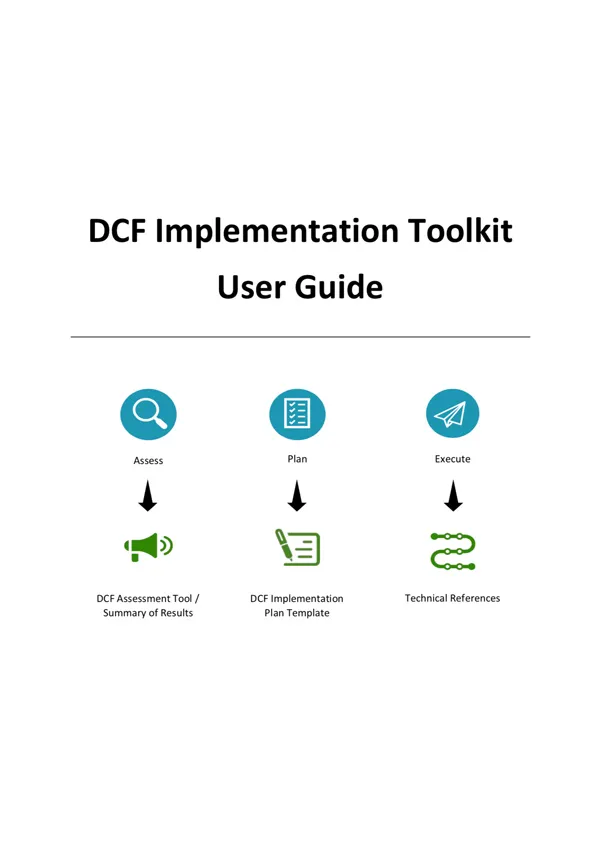
The Deforestation and Conversion Free (DCF) Implementation Toolkit is a process to support companies to implement commitments for beef, soy, and leather in the Amazon, Cerrado, and Chaco biomes. The toolkit can be applied by companies at different stages of maturity in DCF supply chain management and at different places along the value chain (including brands, financial institutions, meatpackers, restaurants, retailers, and soy traders). Other supply chain actors that are also focused on constructing DCF supply chain management may also find certain sections of the toolkit useful.
-
-
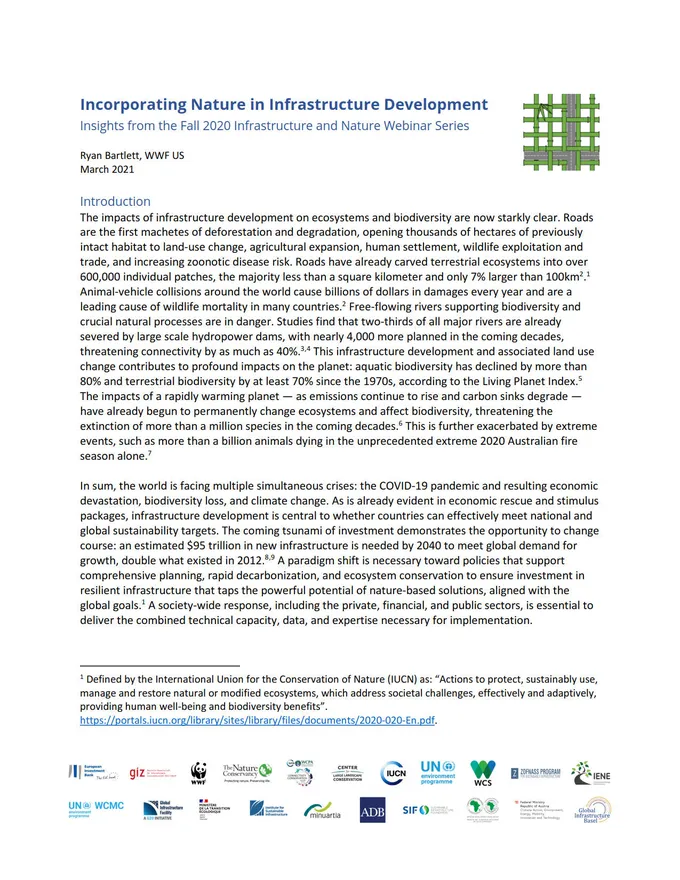
The world is facing multiple simultaneous crises: the COVID-19 pandemic and resulting economic devastation, biodiversity loss, and climate change. As is already evident in economic rescue and stimulus packages, infrastructure development is central to whether countries can effectively meet national and global sustainability targets. The coming tsunami of investment demonstrates the opportunity to change course: an estimated $95 trillion in new infrastructure is needed by 2040 to meet global demand for growth, double what existed in 2012. A paradigm shift is necessary toward policies that support comprehensive planning, rapid decarbonization, and ecosystem conservation to ensure investment in resilient infrastructure that taps the powerful potential of nature-based solutions, aligned with the global goals. A society-wide response, including the private, financial, and public sectors, is essential to deliver the combined technical capacity, data, and expertise necessary for implementation.
-
The US government and its various federal agencies have historically played a leading role in advancing conservation efforts globally, as well as domestically. WWF believes the US needs to not only continue but redouble those efforts in order to meet the global environmental challenges confronting us. Learn more about the priorities WWF is advocating for with the new Administration and Congress and why the US needs to help lead the way.
-
WWF‚'s white paper Moving From a Linear to a Circular Economy outlines the key policy priorities we have as we work to end plastic leakage into nature, ensure communities are treated equitably in materials production and waste management, and transition from an economy that creates waste to one that cares for our planet.
-
A business case from The Markets Institute at WWF identifies the United States Postal Service (USPS) as a potential player in bringing fresh produce to people who may lack access through existing services. "Farmers Post" proposes a model that can reduce on-farm crop loss and overcome affordability and accessibility hurdles of other food delivery services by using the vast logistical network of the USPS to deliver food surplus direct from farm to consumers.
This concept could help the bottom lines of farmers and the USPS, get healthy food to communities and households without many other options, and decrease food loss in a win for both people and nature. Do you want fruit and veggies delivered to your mailbox?
Read other analyses that make the business case for sustainability.