How to enjoy winter: 5 lessons from wildlife
With colder temperatures and shorter days, winter can be a challenging time. Learn how wildlife approach the season—and how you can, too.
© Wild Wonders of Europe / Munier / WWF
As temperatures drop and daylight fades, winter settles across North America. For some, this signals the start of an active snow sport season. For others, it's time for a beach escape. Many of us simply want to curl up by the fire with a steaming cup of hot cocoa. But for most, winter means one thing: finding ways to stay warm.
Like us, animals face the same seasonal challenges, and they've developed diverse strategies for surviving these cold, dark months. Let's explore some of these remarkable winter adaptations and the lessons they offer us.
Lesson 1
Winter can be a time to surrender to a less active period of life.
Press the reset button by entering “low power mode” during these cold months and emerge prepared to overcome new challenges once the world begins to thaw.

© Rick Partlow
From bears to squirrels to frogs, some animals take rest and relaxation to a whole new level during winter.
To conserve energy, many animals enter a state called torpor, lowering their body temperature and slowing their breathing, heart rate, and metabolism. Perhaps the most famous example is brown bears (Ursus arctos), known for their four-to-six-month winter slumber. Bears typically den up in caves or hollows, periodically waking to readjust their position, preventing pressure sores and optimizing heat retention.
Though bears are often referred to as hibernators, they're actually not considered "true hibernators" because of these periodic wakeups. True hibernators are mammals that undergo a prolonged state of torpor, during which they remain in near-death-like states throughout the entire winter. These include only a few species, like some bats, hedgehogs, ground squirrels, and marmots. Cold-blooded reptiles and amphibians enter a similar state called brumation, where their metabolic rate plummets in response to dropping temperatures.
Perhaps the most extreme winter survival strategy belongs to wood frogs (Lithobates sylvaticus), which endure the harsh winters of northern Alaska and Canada by freezing solid. As temperatures drop on the forest floor, wood frogs’ livers flood their bloodstreams with glucose, acting as a natural antifreeze that prevents ice crystals from forming inside their cells. These frogs spend winter as leaf-covered popsicles—no heartbeat, no breathing, no detectable signs of life. Come spring, they simply thaw out and hop away, resuming life as normal.
While wood frogs may take "low power mode" a bit too literally, there's wisdom in the strategy: sometimes the best way forward is to freeze certain aspects of life temporarily and wait for better conditions to emerge.
Lesson 2
Remember to take advantage of the wondrous winter landscape.
From skating to sledding to snowball fights, snow and ice offer endless opportunities for recreation; we’d be remiss to discount it!

© naturepl.com / Sylvain Cordier / WWF
While some animals relax and reset during winter, others stay active and thrive on snowy slopes, inspiring us to get outside and embrace the season.
Take the aptly named snowshoe hare (Lepus americanus). These hoppers are perfectly adapted for winter conditions: beyond their seasonal white camouflage coats, they possess unusually large, furry hind legs and toes. These specialized feet make them exceptionally fast and agile in snow, reaching speeds up to 30 miles per hour—true elite snowshoers.
Nimble snow leopards (Panthera uncia) are another all-star winter athlete. These well-adapted cats can leap nearly 30 feet—six to 10 times their body length—giving Olympic ski jumpers a run for their money. Their thick, warm coats, oversized paws, and long tails allow them to stay warm and limber while navigating the cracks and crags of the high Himalayan mountains, making them expert alpinists.
When it comes to sledding, there is steep competition between emperor penguins (Aptenodytes forsteri) and river otters (Lontra canadensis). Emperor penguins sport a dense, oily coat of insulating feathers to survive the freezing Antarctic, while river otters boast a smooth, double-layered fur that provides effective protection against cold Canadian winters. These waterproof outer layers not only provide exceptional warmth in and out of water but also create perfect, frictionless surfaces for sledding.
For penguins, sledding, otherwise known as tobogganing, is essential for winter survival: by flopping onto their bellies, they traverse long distances with minimal energy expenditure, gliding effortlessly across the ice. River otters, however, take a different approach. These creatures slide across snow-covered surfaces seemingly for the joy of it, turning winter landscapes into their own personal playscapes.
While river otters may be masters of the slide, Japanese macaques (Macaca fuscata)—affectionately nicknamed the "snow monkeys"—may just be winter’s most playful pranksters. Young macaques roll snowballs and steal them from one another, engaging in spirited games of wrestling and keep-away. After their snowy antics, these clever primates warm up in Japan's famous hot springs. Not a bad way to spend the winter!
Whether racing through powder, leaping across mountain peaks, or simply playing in the snow, these winter athletes remind us that the cold season is meant to be enjoyed, not just endured.

© Aflo / naturepl.com / WWF
Lesson 3
Stay warm!
From fur coats to blubber layers to penguin huddles, animals have mastered the art of warmth in cold conditions. Staying warm is key to relaxation and fun in winter.

© Richard Barrett / WWF-UK
Animals living in frigid climates have developed ingenious strategies for surviving freezing temperatures. The most obvious adaptation is fur. While many animals sport coats celebrated for their striped or spotted beauty, a few possess exceptionally effective insulation.
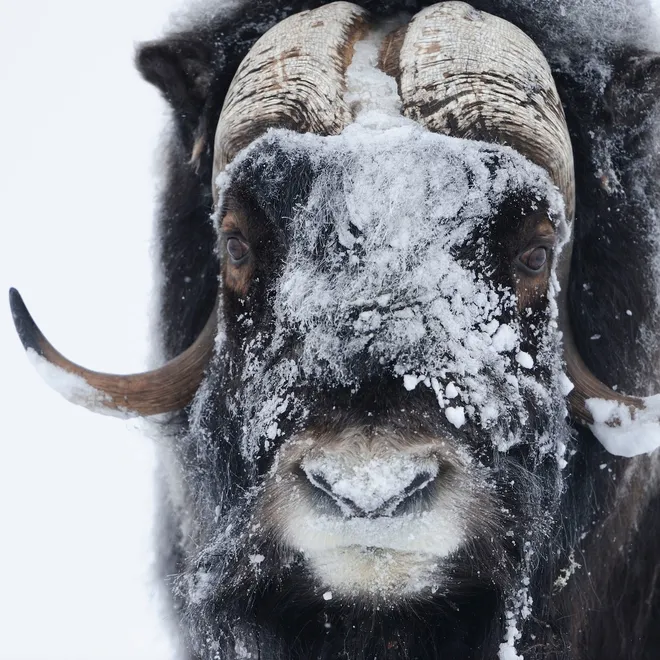
Take mighty musk oxen (Ovibos moschatus), which thrive in sub-freezing Arctic tundra temperatures. These hardy creatures boast remarkable two-layered coats that maximize heat retention. The inner layer, called qiviut, is a soft, dense underwool protected by an outer layer of stiff, shaggy guard hair. Indigenous peoples of the Arctic have long prized musk ox qiviut as a superior material for warm clothing.
Marine mammals take a different approach, relying on blubber—a thick layer of fatty tissue—to stay warm in icy water. Robust walruses (Odobenus rosmarus) exemplify this strategy. Inhabiting the Arctic's icy waters and surrounding seas, walruses develop blubber layers up to six inches thick, covered by an additional inch-and-a-half of tough, protective skin.
Furless birds have evolved their own heat-retention tactics. Many fluff their feathers to trap warm air for insulation, while others tuck their exposed feet and bills to minimize heat loss. Penguins, among other social birds, have perhaps perfected the ultimate cold-weather strategy: huddling together in tight groups for communal warmth and protection against harsh winds.
The lesson is timeless: dress warmly and stick together. Whether through layers of fur, blubber, or feathers, or by gathering in good company, these animals show us that winter comfort comes from both preparation and companionship.

© Shutterstock/Volt Collection
Lesson 4
Prepare “caches” for yourself to make winter prep easier.
Whether physical or emotional, saving resources for yourself during challenging times can alleviate stress.

© Heather Diamond
Preparing for winter can be exhausting and overwhelming. That’s why many animals prepare in advance and enjoy the fruits of their labor throughout the season, including beavers (Castor canadensis). Beavers are famous ecosystem engineers, carefully crafting lodges from surrounding trees and natural resources while damming waterways to transform their environment. In winter, their lodges provide warmth and protection from predators.
Beavers prepare for winter meticulously during the preceding fall months: tree-cutting efforts increase dramatically for lodge repairs and food storage. These food caches are anchored under the ice near their lodge, staying fresh in the cold water surrounding their dams. Beavers can easily access their winter provisions by exiting the underwater entrance of their lodge and gliding quietly beneath the frozen surface, safe from wolves and other predators.
Similarly, American pikas (Ochotona princeps) live year-round in the treacherous alpine terrain above the tree line. To survive winter, pikas spend the summer months collecting and drying leaves, grasses, berries, and wildflowers to store in their dens. These carefully arranged hay piles can weigh over 60 pounds—an impressive feat for an animal just six to eight inches long! Unsurprisingly, pikas are extremely possessive of their stores and will chase away any intruders who dare pilfer from their hard-earned supplies.
Finally, social acorn woodpeckers (Melanerpes formicivorus) may be the greatest hoarders of all. Instead of migrating, these fascinating birds congregate in small colonies and drill thousands of holes into a storage tree—known as a “granary tree”—to cache their nuts. In fact, a single granary tree can hold over 50,000 acorns! By storing acorns this way, woodpeckers prevent them from becoming moldy and keep them safe from consumption by ground-dwelling herbivores like deer. The tree is also easily defended by one colony member, while the others scavenge for more nuts to add to their collection.
So this winter, take a page from nature's playbook: collect and cache your "acorns" early to save yourself some stress, and tuck them away to enjoy when you need them most.

© Shutterstock / Brett Swain
Lesson 5
Sometimes, you just need to get away.
At the end of a stressful year, maybe the answer is a nice beach vacation.

© WWF-US / McDonald Mirabile
While many animals have adopted unique strategies to survive resource-depleted winters, others opt to skip the cold season altogether and head south.
Monarch butterflies (Danaus plexippus) from North America migrate nearly 3,000 miles to escape the winter chill. Every September and October, monarchs embark on an extraordinary journey from the United States and Canada to Mexico. Those from the east travel to Mexico's Sierra Madre Mountains, while their western counterparts head to California's Pacific coast. This arduous migration can take up to two months, with these delicate butterflies covering 50 to 100 miles per day.
North American sandhill cranes (Grus canadensis), easily recognizable by their striking red crests, long legs, and expansive grey wings tipped with black, also migrate south for the winter. Like monarchs, these graceful birds prefer basking in the warm weather of Mexico, California, Texas, and other southern states rather than enduring harsh northern winters. Come spring and summer, they reverse course and return to their breeding grounds in the boreal forests of Canada and Alaska.
But not all winter travelers take to the skies. Critically endangered North Atlantic right whales (Eubalaena glacialis) swim south from the coastal waters of New England and Canada to the warmer seas off Georgia, Florida, and South Carolina. These sheltered waters serve as essential calving grounds where pregnant females give birth before making the return journey North to feed and breed.
When winter gets tough, these seasonal travelers have the right idea—sometimes the best solution is simply to find warmer shores.
Snowy spotlight
How bison tackle winter in the Great Plains.
These iconic mammals build "highways" through the snow.
In winter, bison (Bison bison) play critical roles in facilitating animal movement. Their huge heads and wide shoulders—along with protection from the cold from their thick, insulating fur—allow them to plow through deep snow that other animals struggle to traverse. By creating these winter highways, other Great Plains grazers, such as elk (Cervus canadensis) and pronghorns (Antilocapra americana), can move through snowy landscapes and reach otherwise inaccessible feeding grounds.

© Bruce Flareau
So as snow begins to fall, take inspiration from the creatures who've mastered the art of winter. Whether you're hibernating like a bear, playing like a penguin, or migrating like a monarch, remember that winter isn't just a season to survive but an invitation to discover which strategy helps you thrive.
Research and text by Callie Cho