How bison survive winter in the Great Plains
© naturepl.com / Danny Green / WWF
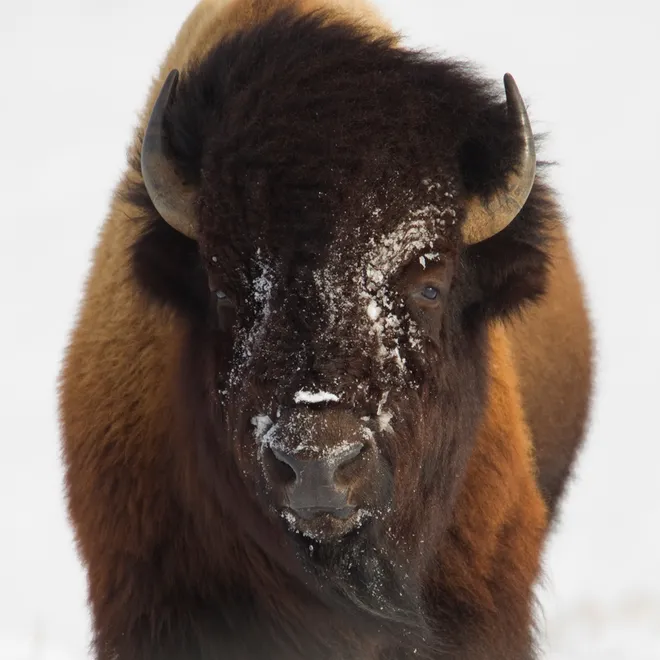
A bison exhales, and the frigid winter air condenses the moisture to a fog. He dips his head—a burly, mussed mass of fur caked with snow—and sweeps his muzzle across the snow. Another snort, another sweep. The plains are cold and blanketed in snow, and he is hungry.
Enduring winter

© Thomas Szajner / WWF-US
Despite roaming vast distances in the Great Plains, bison do not move south as the weather grows cold and inhospitable, though they may move to lower elevations where snow is not so deep. Temperatures plummet well below zero, bitter winds whip across the landscape, and bison still remain. The massive animals (which weigh up to 2,000 pounds and can hit speeds of 40 miles per hour) feed on grasses and sedges year-round. When blizzards blanket the plains with deep snow, bison use their heads as a plow of sorts to push aside the accumulation and reach the forage below.
And they make little fuss about the types of grass they eat, making survival a bit easier. They share habitat with other hooved species, including pronghorn, but tend to focus on different types of vegetation, reducing competition.
The hump on bison’s backs actually helps with this process: it consists of powerful muscles supported by long vertebrae that allow them to shift vast amounts of snow as they swing their heads from side to side.
Imagine the highways bison created in the deep snow for other wildlife when there were millions of them. That would have made a world of difference for animals like pronghorn, which are not adapted for movement in deep snow.
Bison also grow a winter coat of woolly underfur with coarse guard hairs that protect them from the elements. It’s key for surviving extremely low temperatures in areas swept by strong winds.

© Dennis Jorgensen
© WWF-US/Clay Bolt
Support Tribes restore buffalo to the Great Plains
The Indian Buffalo Management Act would strengthen support for Tribal Nations who are working to bring buffalo back from the brink of extinction.
Protecting a hearty species
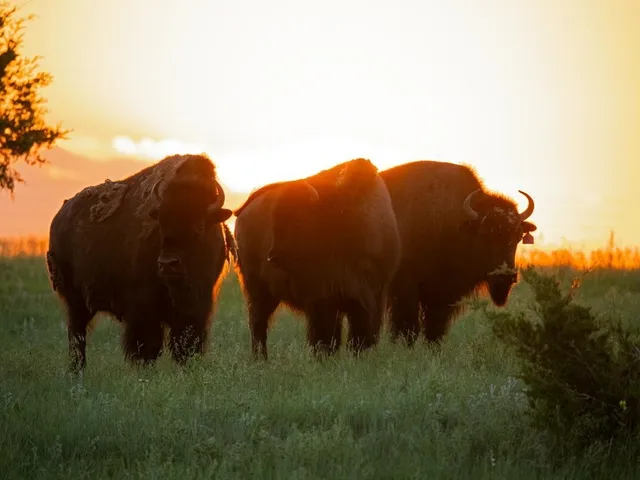
Bison are survivors. They live throughout North America in places of extreme heat and blizzards and survived near extinction in the late 1800s. WWF is committed to ensuring the species thrives again—at scale and in numbers—in suitable landscapes. We're working with tribal partners and national parks to establish at least five herds of 1,000 bison in the Great Plains.
The largest native grazer of America’s Great Plains used to number in the tens of millions. The westward expansion of European settlers and market hunting drove that number to a dangerous low. WWF works with public, private, and tribal entities to help identify opportunities and create places where bison can thrive in large herds and contribute to the well-being of Great Plains communities.
They need room to roam, and we need to do our part to provide those places.

© Diane Hargreaves

© Diane Hargreaves