Five facts about frogs
Learn about some of nature’s weirdest and wonderful marvels
© Clay Bolt
Frogs are some of the coolest but most underappreciated animals in the world. From freezing themselves to swallowing their own babies for protection to undergoing complete metamorphoses, frogs are some of nature’s weirdest and most fascinating species. That said, we still don’t know very much about frogs: on average, 155 new amphibian species are discovered each year.
1. Frogs are a critical part of the food web
Occupying a middle rung, they are both predators and prey, feeding on insects while also providing food for fish, birds, snakes, and mammals.
2. Frogs help keep freshwater ecosystems healthy
Tadpoles eat algae and help recycle nutrients in ponds, streams, and wetlands, which can improve water quality.

© Clay Bolt
3. Frogs are an early warning system
Because they absorb water and chemicals through their skin, frogs are extremely sensitive to pollution and environmental change. When frogs disappear, it can signal that an ecosystem is in trouble.
4. Frogs have inspired scientific and medical research
Chemicals from frog skin have helped researchers study and develop new treatments for pain, infections, and other diseases.
5. Most importantly, frogs are just plain awesome
Swipe below to learn some fun frog facts:
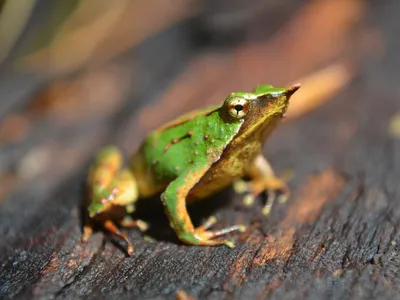
Darwin's frog swallows its own young
Hailing from Chile and Argentina, the male Darwin's frog (Rhinoderma darwinii) picks up fertilized eggs and broods the tadpoles inside his vocal sac for around 50 days, eventually "giving birth" by spitting out fully formed froglets.
© Cayetano Espinosa/ WWF Chile
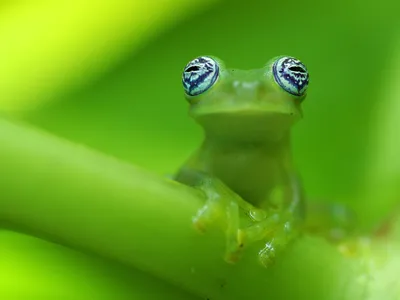
Glass frogs are see-through
Found in Central and South America, glass frogs have translucent skin on their undersides, letting you watch their beating heart, liver, and gut in real time. Some species even have transparent bones.
Because these frogs depend on clean, flowing streams in places like the Amazon and Pantanal, WWF’s conservation work to protect rivers and wetlands helps keep glass frog habitats safe and intact.
© naturepl.com / Edwin Giesbers / WWF
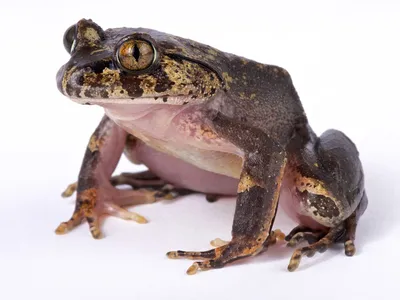
Hairy frogs deliberately break their own bones
The "horror frog" (Trichobatrachus robustus) of Central Africa contracts its muscles so forcefully when threatened that it snaps its own toe bones to push sharp claws through the skin — a biological switchblade.
© Shutterstock
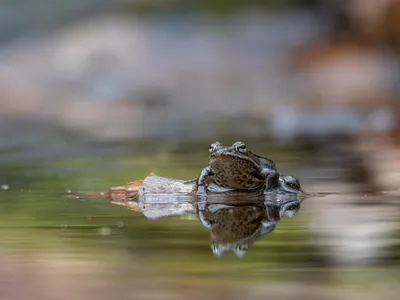
Wood frogs survive being frozen solid
North American wood frogs (Rana sylvatica) can survive winter by letting up to 70% of their body water freeze completely. Their heart stops, breathing ceases, and they thaw back to life in spring using glucose as a natural antifreeze.
Wood frogs rely on connected floodplains for breeding, so WWF’s conservation work in the Rio Grande—restoring river flows, wetlands, and seasonal water pulses—helps sustain the habitats they depend on, especially as water overuse reduces availability.
© Sarah Pietrkiewicz
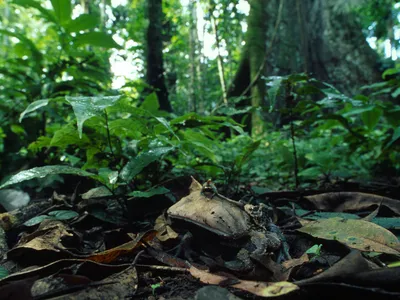
Surinam toadlets pop like pimples out of their mother's back
The male Pipa pipa presses fertilized eggs into the female's soft back skin, which grows over them, encasing each embryo in its own pocket. After 3–4 months of developing beneath the skin, fully formed froglets burst out through the surface — one of the most astonishing and unsettling birth events in the animal kingdom!
Because Surinam toads depend on slow-moving rivers, floodplains, and wetlands, WWF’s conservation work in the Amazon and Pantanal—protecting natural flood cycles and connected waterways—helps sustain the conditions their remarkable breeding process requires.
© André Bärtschi / WWF
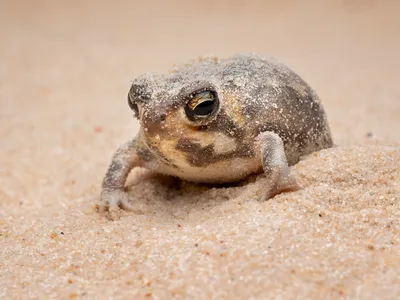
Rain frogs, like the desert rain frog, don't croak, they have a memorable high-pitched squeak that sounds like a balloon deflating
These round, tiny frogs live in arid environments where few other frogs can survive. They have become internet sensations because of their grumpy features but so much about them amazing. Rain frogs are specialized burrowers that live most of their lives underground. Unlike most frogs, they breed on land and lay eggs in moist soil, where fully formed froglets develop without ever needing open water. They also have a booty (I have no idea how to explain this).
© Shutterstock
Why you should care about frogs
Despite their ecosystem importance and impeccable aura, amphibian populations are declining at unprecedented rates, faced with an array of threats, with disease and habitat loss being the main drivers. Pollution, invasive species, climate change, and over-harvesting for the pet and food trades are also major causes of amphibian decline. In fact, amphibians are the most threated group of vertebrates—more threatened than sharks, elephants, or tigers! Two out of five (around 41%) of amphibian species are threatened with extinction.
What WWF is doing
WWF works all over the world to protect and restore river connectivity. River connectivity means that rivers, streams, and wetlands are linked together by the water they share, and plants and animals can move freely from place to place. This connection is very important for amphibians like frogs because it gives them access to food, places to breed, and safe areas during dry times.
WWF partners with local communities, businesses, and governments to plan roads, dams, and other projects in ways that do not block rivers from flowing freely. Our work helps wetlands stay intact and gives amphibians the connected habitats they need to live and grow.