How long do sea turtles live? And other sea turtle facts
Sea turtles are estimated to live 50 to 100 years.
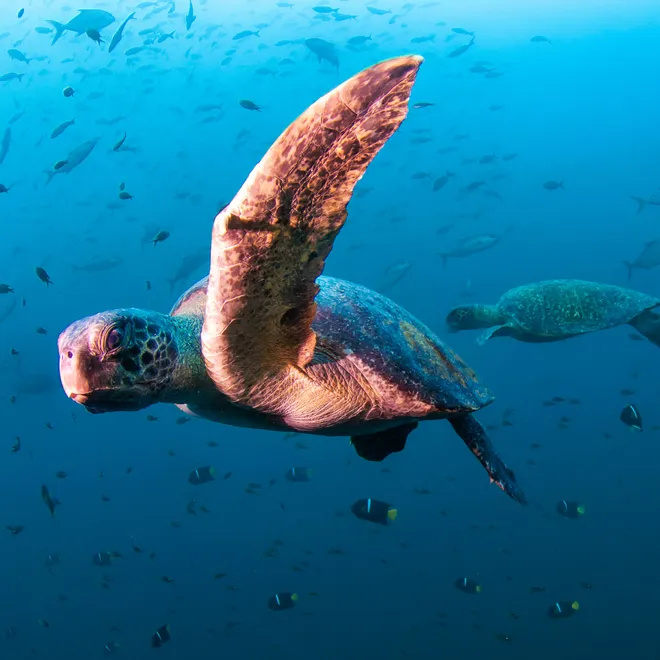
© Antonio Busiello / WWF-US
Sea turtles have roamed the Earth’s oceans for the last 110 million years. An important link to marine ecosystems, such as coral reefs and seagrass beds, some sea turtles also eat large numbers of jellyfish and provide a source of income to local communities as a draw for ecotourism. But sea turtle populations have been on the decline. Thousands of marine turtles are accidentally caught by fishing gear each year, and the beaches upon which they depend for nesting are disappearing.
WWF works with local communities to reduce egg harvesting and protect nesting beaches, and encourages fishers to switch to turtle-friendly equipment.
Here’s a look at some common questions about sea turtles.

© Antonio Busiello / WWF-US
1. How long do sea turtles live?
A sea turtle's natural lifespan is estimated to be 50 to 100 years, though the actual documentation of the age of any species of sea turtle is difficult to determine. What we do know is that sea turtles live a long time and have similar lifespans to humans. Most marine turtles take decades to mature—between 20 and 30 years—and remain actively reproductive for another 10 years.
2. Why are sea turtles endangered?
Five of the seven species of sea turtle are classified globally as Vulnerable to Critically Endangered, and that’s mostly due to human activity. Accidental capture by fishing gear, which often results in death, is the greatest threat to most sea turtles. They are also killed for their eggs, meat, skin, and shells, and suffer from poaching and over-exploitation. Climate change also impacts sea turtle nesting beaches and eggs. WWF helps develop alternative livelihoods so that local people no longer rely on turtle products for income and supports local nest beach patrols.
3. Where do sea turtles live?

© Antonio Busiello / WWF-US
Sea turtles can be found all around the world, from the cold waters off California to the warm beaches of the Coral Triangle. Males never leave the ocean, while females will come ashore to lay their eggs on sandy beaches during the nesting season. WWF tracks sea turtles to learn more about the species’ movements and routes from feeding and breeding grounds to other areas of the ocean.
4. What do sea turtles eat?
Depending on the species, sea turtles feast on anything from seaweed to jellyfish. They consume squid, barnacles, sponges, and sea anemones, among other creatures, while green turtles—the herbivores—primarily eat seagrasses and algae.

© naturepl.com / Alex Hyde / WWF-Canon
5. How far do sea turtles travel in a lifetime?
Sea turtles migrate thousands of miles in their lifetime through ocean basins and high seas. One female leatherback traveled more than 12,000 miles round-trip across the Pacific Ocean, from Indonesia to the northwest coast of the United States. Both males and females migrate long distances between foraging grounds and nesting beaches.
6. How many eggs do sea turtles lay at one time?

© Bastien Preuss / WWF France
In a single nesting season, females lay between two and six clutches of eggs, each containing 65 to 180 eggs. The clutches are laid approximately every two weeks, and the period between female nesting seasons ranges from one to nine years. Temperature determines the sex of the turtle; warmer nests produce female hatchlings and cooler nests produce males. WWF studies how sea turtles are affected by climate change, which can result in fewer male hatchlings, and determines the best ways to reduce sea turtle vulnerability to the changing environment.
7. Do all sea turtles have hard shells?

© WWF-US/Sirachai Arunrugstichai
Six of the seven sea turtle species have hard shells; leatherback turtles are the outliers. Their shells are more supple and akin to leather. Leatherbacks are also the largest sea turtle species and can weigh up to 1,500 pounds and measure 63 inches.
© WWF-US / WWFGifts
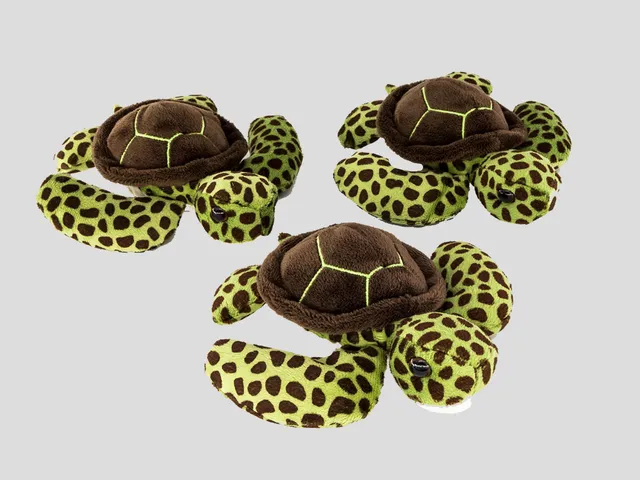
Adopt a sea turtle hatchling
Support WWF’s global efforts to protect wild animals and their habitats and choose from kits with plush and more.