African sulcata tortoise
Centrochelys sulcata
There is moderate risk associated with keeping this species as a pet, as explained below. Prospective pet owners should research if they can safely keep the animal for its lifetime, including housing, proper food and veterinary care, and be sure it came from a legal source and is allowed in their jurisdiction.
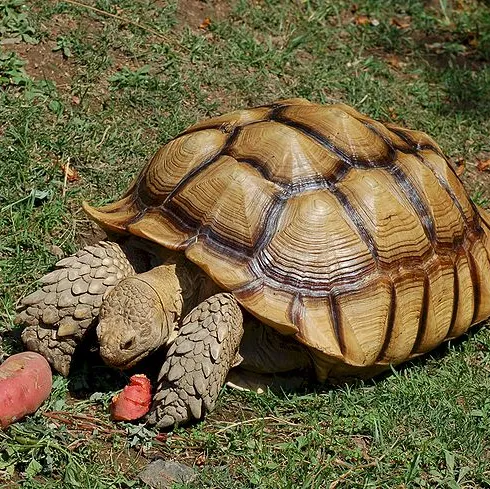
© Melissa Mitchell/Wikimedia Commons
Assessment results
Moderate risk

Conservation | Moderate risk
This animal is likely to be threatened by extinction in the wild, and/or it is subject to international trade controls due to demand in the pet trade. Please check that the animal you want comes from a reputable seller or rescue center that follows best practices when they source their animals. Learn more about wildlife conservation and the pet trade.

Legality | Moderate risk
It’s likely that the animal has some national legal protections or import restrictions; however, exotic pet ownership is regulated at the state, county, or city level, so check your jurisdiction to see if you can own it. Keeping these protected or prohibited species can have legal consequences for the owner, including fines or bans on pet ownership or sale. Learn more about relevant exotic pet trade and ownership laws.

Human and public health | Moderate risk
It is likely that this animal is not a threat to human or public health, but make sure to practice good hygiene when handling any animal.

Invasiveness | Low risk
This species would not likely impact native biodiversity or habitats. However, never release a pet into the wild for any reason.
Animal welfare | Moderate risk
Care, diet, and housing needs of this species are either insufficiently known or difficult, making it hard to ensure it has a good quality of life for its lifetime. Learn more about the challenges with exotic pet welfare.
⚠️ Important considerations
- African sulcata tortoise populations are declining in the wild, and they are an endangered species, targeted for poaching and illegal trade. However, they can be captive bred with a proper setup and legal and legitimate breeding facilities exist. Make sure to obtain your tortoise from a reputable captive breeding source.
- Most reptiles carry salmonella in their intestinal tract and may not be suitable for young children or immunocompromised individuals. Always practice good hygiene and hand washing around African sulcata tortoises.
- African sulcata tortoise diet and habitat needs are hard to provide in captivity. Proper temperature options (not below 60 degrees F and ideally 80-90 degrees F), humidity levels, and exposure to UV light consistent with a day-night cycle are important for good health. This can be provided through an outdoor enclosure in the right climate or indoors through UVA/UVB lights and basking lamps.
- Sulcata tortoises are very long-lived and could outlive their owner. They also grow very large, and extremely heavy with needs that quickly surpass many keepers’ expectations and abilities. Ensure you have a plan for your tortoise if you can no longer keep it like another trusted home or rescue shelter.
- Ensure you have access to a veterinarian that specializes in reptiles and consult them about proper habitat setup, diet, and care. Find a reptile vet near you.
Basic information
Taxonomy:
Testudines, Testudinidae
Lifespan:
80+ years
Weight:
65-120 lbs (29-54 kg)
Size:
20-30 in (50-76 cm) long
Native range and habitat:
Semi-arid grasslands, savannas, and thorn shrublands in the Sahara Desert and Sahel of Africa
Diet:
Strict herbivores that eat mostly a variety of grasses and hays, along with some weeds and flowers; ensure to check with your veterinarian about the proper diet for your tortoise in captivity. They require a high-fiber, low-protein, low-fat, low-sugar, grass-based diet to stay healthy. Some recommended foods include mixed fresh grasses, grass hays (e.g., timothy, orchard grass), clover, dandelion, edible flowers, and spineless Opuntia (prickly pear) cactus pads. The exclusive use of commercial diets is not recommended but could be used for a small portion of their diet with supplementation.
Activity and behavior:
- Outgoing and active tortoises that are most active at dawn and dusk, when they leave their den to forage
- Dig dens that are up to 10 feet deep to cool off and will become inactive during extreme temperatures
© WWF-Japan
© WWF-US / WWFGifts
Adopt a giant tortoise
Support WWF’s global efforts to protect wild animals and their habitats and choose from kits with plush and more.