Capuchin monkey
Sapajus spp.
There is a high risk associated with keeping this species as a pet. This is not a suitable pet.
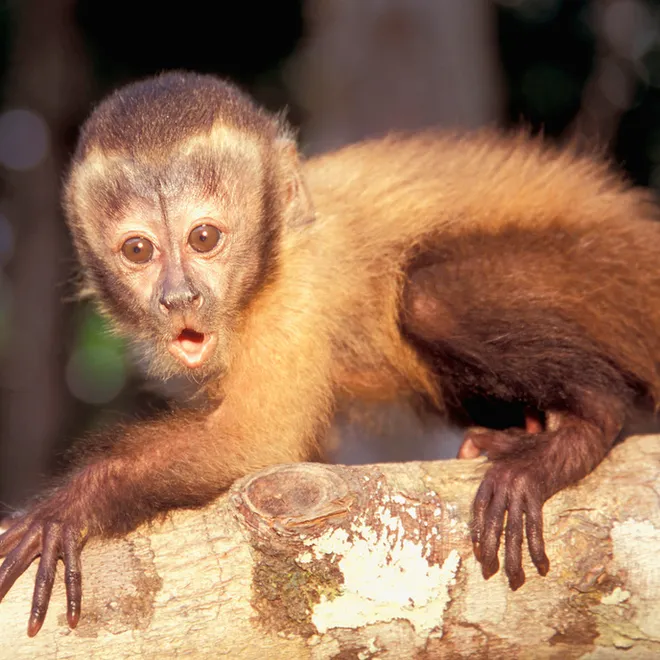
© R.Isotti, A.Cambone / Homo Ambiens / WWF
Assessment results
High risk

Conservation | Moderate risk
This animal is likely to be threatened by extinction in the wild, and/or it is subject to international trade controls due to demand in the pet trade. Please check that the animal you want comes from a reputable seller or rescue center that follows best practices when they source their animals. Learn more about wildlife conservation and the pet trade.

Legality | High risk
This animal is either protected by national law, is restricted to import into the US, and/or many states do not allow ownership. Keeping these protected or prohibited species can have legal consequences for the owner, including fines or bans on pet ownership or sale. Learn more about relevant exotic pet trade and ownership laws.

Human and public health | High risk
It is likely that this animal is a threat to human or public health due to potential life-threatening zoonotic diseases and physical attributes that can harm humans. Learn more about animal-related illness and injuries.

Invasiveness | High risk
This species would not likely impact native biodiversity or habitats. However, never release a pet into the wild for any reason.

Animal welfare | High risk
Care, diet, and housing needs of this species are extremely difficult to meet for its lifetime, and potential owners are unlikely to be able to provide a good quality of life. Learn more about the challenges with exotic pet welfare.
⚠️ Important considerations
- Capuchin monkey populations are declining in the wild and they are an endangered species, targeted for poaching and illegal pet trade.
- Check your local laws on capuchin monkey ownership. In the majority of US states, primate ownership is illegal or restricted. It is also illegal to import any non-human primate to the US for the pet trade.
- Capuchin monkeys, especially those that come from the wild, are known to carry zoonotic diseases that can be life threatening to humans.
- In order to ‘tame’ primates as pets, babies are often taken from their moms when they are a few days old. They are very social animals that need to be reared by their mother and live among a large family group of primates of their own kind. They do very poorly and are stressed by the isolated lifestyle in a person’s home.
- Their housing, diet, and social needs are very hard to meet in captivity, and are financially expensive and time consuming. They are not domesticated and hard to train, including potty training. They need social companionship and face many nutritional issues due to improper diet in captivity. Large outdoor facilities are the best environment for capuchins in captivity and they should not be handled once adults.
Basic information
Taxonomy:
Primates, Cebidae
Lifespan:
Generally, they live 15 to 20 years in the wild, but can live 35-45 years in captivity.
Weight:
3-9 lbs (1.4- 4 kg)
Size:
12-22 in (30- 56 cm) with a tail length of 12-22 in (30- 56 cm)
Native range and habitat:
They are widely found in forests and grasslands in Central and South America.
Diet:
Omnivorous, eating a variety of foods including fruits, seeds, insects, frogs, lizards, birds, eggs, sometimes small mammals, carrion, stems, flowers, and leaves. There is a lot of variation depending on the region and season.
Activity and behavior:
- Social animals that live in family groups of up to 40 individuals, consisting of one or more males, several females and their young. Males leave the group as adults, but females stay with their original group for the rest of their lives.
- They are most active during the day, spending their time foraging or resting in trees.
- They are highly intelligent and known to be playful and curious.
© WWF-Japan
© WWF
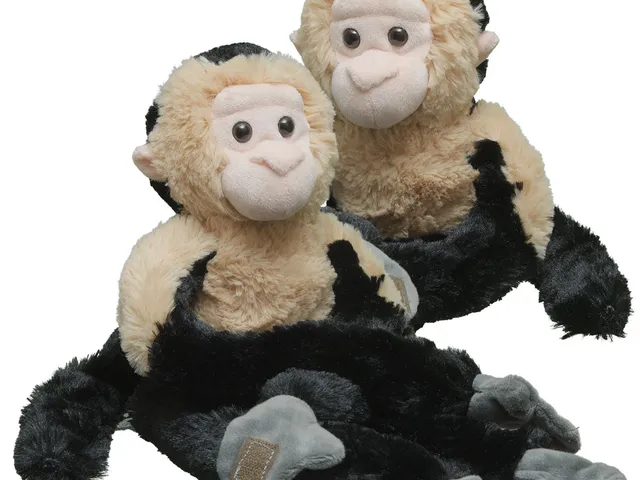
Adopt a capuchin monkey
Support WWF’s global efforts to protect wild animals and their habitats and choose from kits with plush and more.