Ferret
Mustela putorius furo
There is moderate risk associated with keeping this species as a pet, as explained below. Prospective pet owners should research if they can safely keep the animal for its lifetime, including housing, proper food and veterinary care, and be sure it came from a legal source and is allowed in their jurisdiction.
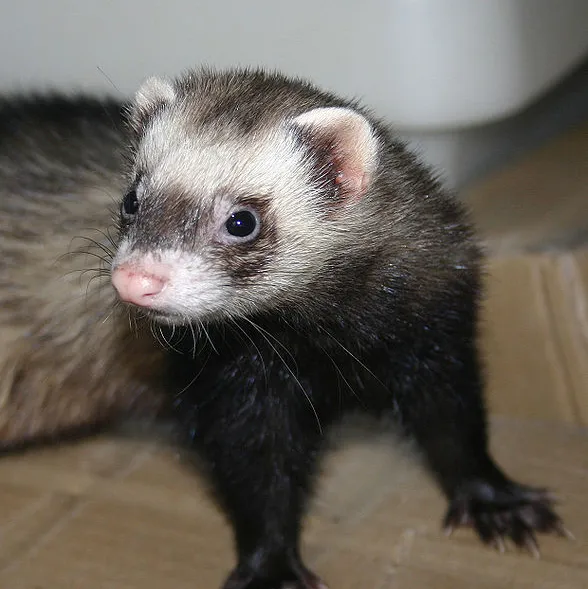
© Gilowyn/Wikimedia Commons
Assessment results
Moderate risk

Conservation | Low risk
This animal is most likely not threatened by extinction, and/or the exotic pet trade does not impact the wild population. Please check that the animal you want comes from a reputable seller or rescue center that follows best practices when they source their animals.

Legality | Moderate risk
It’s likely that the animal has some national legal protections or import restrictions; however, exotic pet ownership is regulated at the state, county, or city level, so check your jurisdiction to see if you can own it. Keeping these protected or prohibited species can have legal consequences for the owner, including fines or bans on pet ownership or sale. Learn more about relevant exotic pet trade and ownership laws.

Human and public health | Moderate risk
It is likely that this animal is a potential threat to human or public health, either due to potential zoonotic diseases or due to physical attributes that can harm humans. Learn more about animal-related illness and injuries.

Invasiveness | Moderate risk
This species could negatively impact native biodiversity of habitats. Never release this pet, or any pet, into the wild for any reason. Learn more about invasive species.

Animal welfare | Moderate risk
This species could negatively impact native biodiversity of habitats. Never release this pet, or any pet, into the wild for any reason. Learn more about invasive species.
⚠️ Important considerations
- Check your local laws on exotic pet ownership. In the US, some states or municipalities do not allow you to keep a ferret as a pet.
- Ferrets are highly susceptible to canine distemper, strep throat, human influenza and COVID if exposed and can spread the latter three illnesses back to humans as well. They are prone to many medical problems after the age of 3, so will likely require a high financial commitment.
- De-scenting and regular bathing, along with spaying or neutering a ferret is recommended. Unneutered males are aggressive and unspayed females are always in heat if not bred, which can cause a life-threatening bone-marrow disease.
- Ferrets housing, social, and diet needs require additional knowledge, time, and effort compared to some pets. They are highly social creatures and should be handled from a young age, and need a large, escape-proof cage, along with an even larger enclosed space where they can run.
- They require preventative care such as teeth brushing, nail trimming, and vaccinations, heartworm and flea/tick preventatives. Ensure you have access to a veterinarian that can treat your ferret and take your pet in for annual checkups. Find an exotic mammal vet near you.
Basic information
Taxonomy:
Carnivora, Mustelidae
Lifespan:
5-9 years
Weight:
1.5-4.5 lbs
Size:
13-16 in (33-40 cm) long
Native range and habitat:
Domestic ferrets are not found in the wild, but likely descended from European polecats, which are found in forests, mountains, farmlands, semi-desert, steppe, and tundra in Europe, Western Asia, and North Africa.
Diet:
Obligate carnivores (they can’t absorb nutrients from plants); in captivity, lean meats and eggs are good or a high quality commercial diet
Activity and behavior:
- Highly social animals that are most active at dawn and dusk and sleep for most of the day. They should be kept in a pair or small group of same-sex littermates or a pair of a neutered male and a spayed female. Solitary ferrets often become depressed.
- Ferrets are notorious chewers and thieves and prone to escape, so require a lot of supervision
© WWF-Japan
© WWF-US / WWFGifts
Adopt a black-footed ferret
Support WWF’s global efforts to protect wild animals and their habitats and choose from kits with plush and more.