Red-eared slider
Trachemys scripta elegans
There is moderate risk associated with keeping this species as a pet, as explained below. Prospective pet owners should research if they can safely keep the animal for its lifetime, including housing, proper food and veterinary care, and be sure it can be kept as a pet in their jurisdiction.
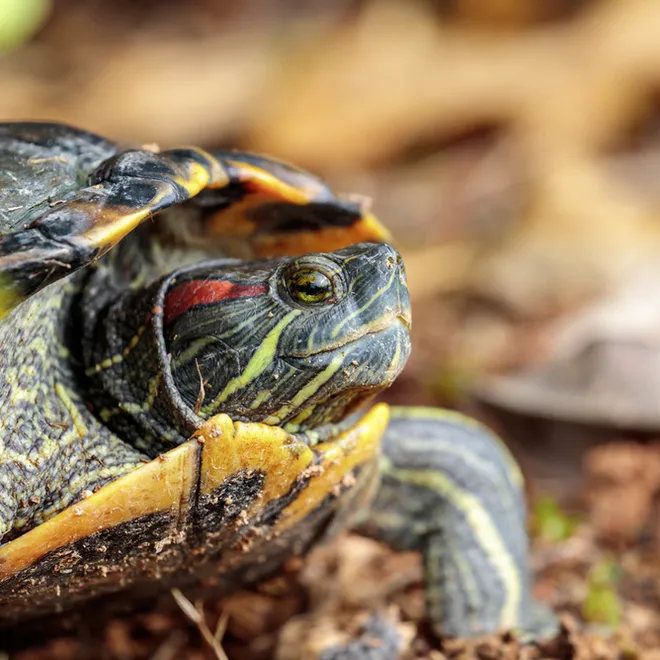
© Harish Segar / WWF
Assessment results
Moderate risk

Conservation | Low risk
This animal is most likely not threatened by extinction, and/or the exotic pet trade does not impact the wild population. Please check that the animal you want comes from a reputable seller or rescue center that follows best practices when they source their animals.

Legality | Moderate risk
It’s likely that the animal has some national legal protections or import restrictions; however, exotic pet ownership is regulated at the state, county, or city level, so check your jurisdiction to see if you can own it. Keeping these protected or prohibited species can have legal consequences for the owner, including fines or bans on pet ownership or sale. Learn more about relevant exotic pet trade and ownership laws.

Human and public health | Moderate risk
It is likely that this animal is a potential threat to human or public health, either due to potential zoonotic diseases or due to physical attributes that can harm humans. Learn more about animal-related illness and injuries.

Invasiveness | High risk
This species could negatively impact native biodiversity of habitats. Never release this pet, or any pet, into the wild for any reason. Learn more about invasive species.

Animal welfare | Moderate risk
Care, diet, and housing needs of this species are either insufficiently known or difficult, making it hard to ensure it has a good quality of life for its lifetime. Learn more about the challenges with exotic pet welfare.
⚠️ Important considerations
- Most reptiles carry salmonella in their intestinal tract and may not be suitable for young children or immuno-compromised individuals. Always practice good hygiene and hand washing around turtles.
- Check your local laws on exotic pet ownership. In the US, some states have restrictions on the keeping of red-eared sliders as pets due to invasive concerns.
- Red-eared sliders are an invasive species in many US states outside of their natural range due to escaped or released captive individuals, and many countries globally. If you can no longer keep your pet, contact your local rescue center, responsible pet store, accredited zoo, veterinarian, or other trusted home to find someone that can take it in. Never release a pet outside, into the wild.
- Red-eared slider housing and dietary needs require additional knowledge and effort. They can grow quite large and require more space and financial commitment than expected. Their enclosure needs a gradient of temperatures (75-80ºF in the water with a dry basking area at 85-95ºF) for body temperature regulation, and proper amounts of UVA and UVB light from a lamp on a regular day/night cycle, to ensure good health.
- As with all pet reptiles, ensure there is access to a veterinarian that specializes in reptiles and consult them about proper habitat setup, diet, and care. Find a reptile vet near you.
Basic information
Taxonomy:
Testudines, Emydidae
Lifespan:
20-30 years
Weight:
Up to 7 lbs. (3.1 kg)
Size:
6-12 in.- (15-30.5 cm)
Native range and habitat:
Natural freshwater habitats in southern US and northern Mexico
Diet:
Omnivorous; mainly carnivores as juveniles and become more herbivorous as they mature
Activity and behavior:
- Diurnal and spend most of their day basking in the sun in groups
- Social animals that are often found in large groups
© WWF-Japan