Scarlet macaw
Ara macao
There is a high risk associated with keeping this species as a pet. This is not a suitable pet.
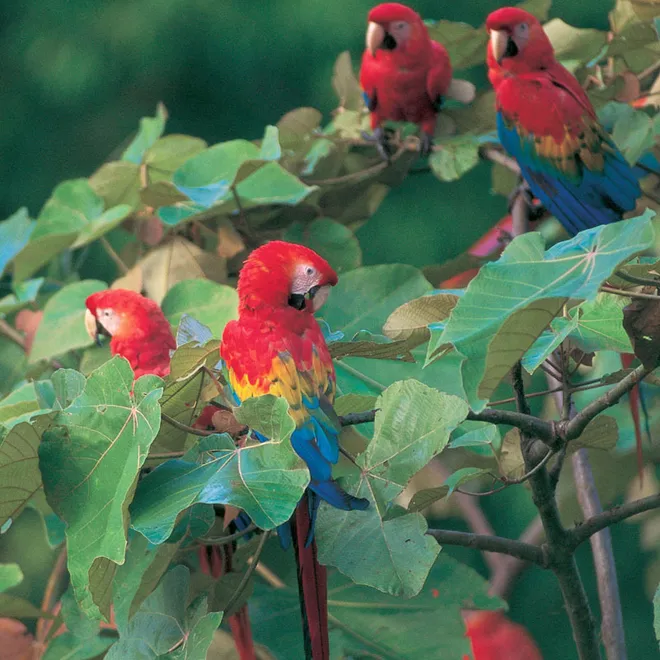
© Roger Leguen / WWF-Canon
Assessment results
High risk

Conservation | Moderate risk
This animal is likely to be threatened by extinction in the wild, and/or it is subject to international trade controls due to demand in the pet trade. Please check that the animal you want comes from a reputable seller or rescue center that follows best practices when they source their animals. Learn more about wildlife conservation and the pet trade.

Legality | High risk
This animal is either protected by national law, is restricted to import into the US, and/or many states do not allow ownership. Keeping these protected or prohibited species can have legal consequences for the owner, including fines or bans on pet ownership or sale. Learn more about relevant exotic pet trade and ownership laws.

Human and public health | Moderate risk
It is likely that this animal is a potential threat to human or public health, either due to potential zoonotic diseases or due to physical attributes that can harm humans. Learn more about animal-related illness and injuries.

Invasiveness | Low risk
This species would not likely impact native biodiversity or habitats. However, never release a pet into the wild for any reason.

Animal welfare | Low risk
Care, diet, and housing needs of this species are extremely difficult to meet for its lifetime, and potential owners are unlikely to be able to provide a good quality of life. Learn more about the challenges with exotic pet welfare.
⚠️ Important considerations
- Their population is declining in the wild, and they are regularly targeted for poaching and illegal trade; the actual number of birds illegally captured for the pet trade is unknown but is thought to be substantial. However, they can be captive bred with a proper setup and legal and legitimate breeding facilities exist. Make sure to obtain pet birds from a reputable captive breeding source.
- The commercial trade of wild macaws is forbidden, and import to the US is illegal
- Macaws have a large beak that can be harmful to people should they be provoked and bite.
- In captivity, macaws can live exceptionally long lives, potentially over 80 years.
- Scarlet macaw’s housing, diet, and social needs are hard to meet in captivity. They can be noisy and destructive and need hours of stimulation and social time outside of their cage each day, along with a rotating variety of sturdy toys, puzzles, perches, and space to fly. They are prone to behavioral issues from boredom and nutritional diseases, and beak overgrowth if not given a proper diet and rough surfaces to chew. Scarlet macaws should be kept in at least pairs, or a pet owner can become a macaw’s companion as long as they can provide daily attention and interaction.
- Ensure you have access to a veterinarian that specializes in birds and consult them about proper habitat set up, diet, and care. Find an avian vet near you.
Basic information
Taxonomy:
Psittaciformes, Psittacidae
Lifespan:
40-50 years on average, but up to 80+
Weight:
2-3 lbs (900- 1400 g)
Size:
35 inches
Native range and habitat:
Canopies of tropical rainforests of Central and South America
Diet:
Nuts, leaves, berries, and seeds; in captivity, a formulated parrot diet plus seeds, fruits, vegetables, nuts, and high calcium-greens like kale and spinach are important
Activity and behavior:
- Intelligent birds with a lot of energy and character that need daily socialization, stimulation, and exercise
- Live in small flocks in the wild, and have a monogamous bonded pair relationship for life
© WWF-Japan
© WWF-US / WWFGifts
Adopt a macaw
Support WWF’s global efforts to protect wild animals and their habitats and choose from kits with plush and more.