Tokay gecko
Gekko gecko
There is moderate risk associated with keeping this species as a pet, as explained below. Prospective pet owners should research if they can safely keep the animal for its lifetime, including housing, proper food and veterinary care, and be sure it can be kept as a pet in their jurisdiction.
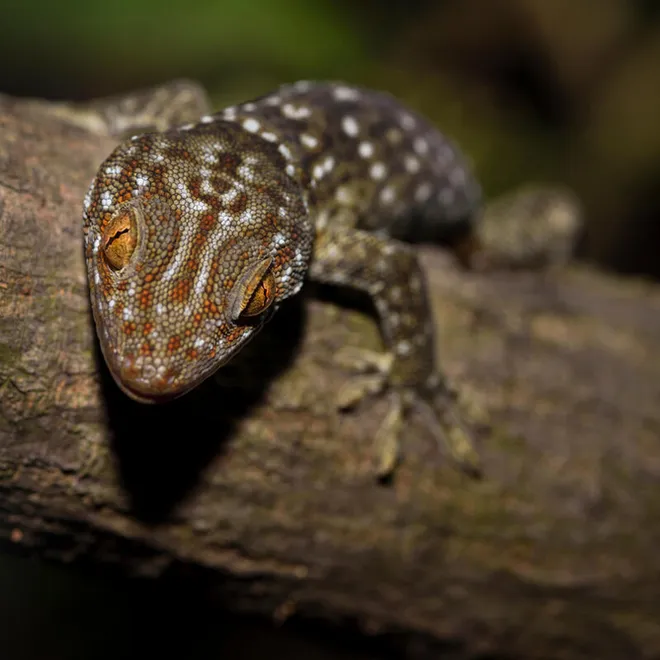
© Magnus Lundgren / Wild Wonders of China / WWF
Assessment results
Moderate risk

Conservation | Moderate risk
This animal is likely to be threatened by extinction in the wild, and/or it is subject to international trade controls due to demand in the pet trade. Please check that the animal you want comes from a reputable seller or rescue center that follows best practices when they source their animals. Learn more about wildlife conservation and the pet trade.

Legality | Low risk
This animal is not currently protected by any national laws or import restrictions. Exotic pet ownership, however, is regulated at the state, county, or city level, so check your jurisdiction to see if you can own it.

Human and public health | Low risk
It is likely that this animal is a potential threat to human or public health, either due to potential zoonotic diseases or due to physical attributes that can harm humans. Learn more about animal-related illness and injuries.

Invasiveness | Moderate risk
This species could negatively impact native biodiversity or habitats. However, never release a pet into the wild for any reason. Learn more about invasive species.

Animal welfare | Moderate risk
Care, diet, and housing needs of this species are either insufficiently known or difficult, making it hard to ensure it has a good quality of life for its lifetime. Learn more about the challenges with exotic pet welfare.
⚠️ Important considerations
- Tokay geckos are popular in the international pet trade. Captive breeding is common, but there is evidence of false captive breeding claims from Indonesia, laundering wild caught animals at unsustainable levels. However, most of the trade is for traditional Asian medicinal use.
- Most reptiles carry salmonella in their intestinal tract and may not be suitable for young children or immuno-compromised individuals. Always practice good hygiene and hand washing around geckos.
- Tokay gecko housing and diet needs require additional knowledge and effort. They need a tall glass 20-gallon vivarium with plenty of branches and vines for climbing, places to hide and rest during the day, and good ventilation to prevent bacterial infections. Their enclosure needs a gradient of temperatures (80-85ºF on the cool end during the day and no lower than 75 ºF at night with 90-105ºF on the warm end) in their environment to be able to regulate their own body temperature, proper humidity (60-80% through nightly misting), and proper amounts of UVA and UVB light, to ensure good health. They are prone to metabolic bone disease without UV light exposure and enough calcium and vitamin D3. The substrate used in their environment is important and should not be something they could ingest. They are also easily stressed and do not enjoy handling and can inflict a powerful bite.
- Tokay geckos are an invasive species in some US states through escaped captive individuals. If you can no longer keep your pet, contact your local rescue center, responsible pet store, accredited zoo, veterinarian, or other trusted home to find someone that can take it in. Never release a pet outside, into the wild.
- As with all pet reptiles, ensure there is access to a veterinarian that specializes in reptiles and consult them about proper habitat setup, diet, and care. Find a reptile vet near you.
Basic information
Taxonomy:
Squamata, Gekkonidae
Lifespan:
7-10 years in the wild, 10-20 years in captivity
Weight:
8.5-12.5 oz. (0.25- 0.35 kg)
Size:
11-14 in. (28-35.5 cm)
Native range and habitat:
Tropical rainforests from northeastern India to Indo-Australian Archipelago.
Diet:
Insectivores
Activity and behavior:
- Solitary animals and territorial, only encountering others of the opposite sex during breeding season.
- Tokay geckos are nocturnal and arboreal
© WWF-Japan