Umbrella cockatoo
Cacatua alba
There is a high risk associated with keeping this species as a pet. This is not a suitable pet.
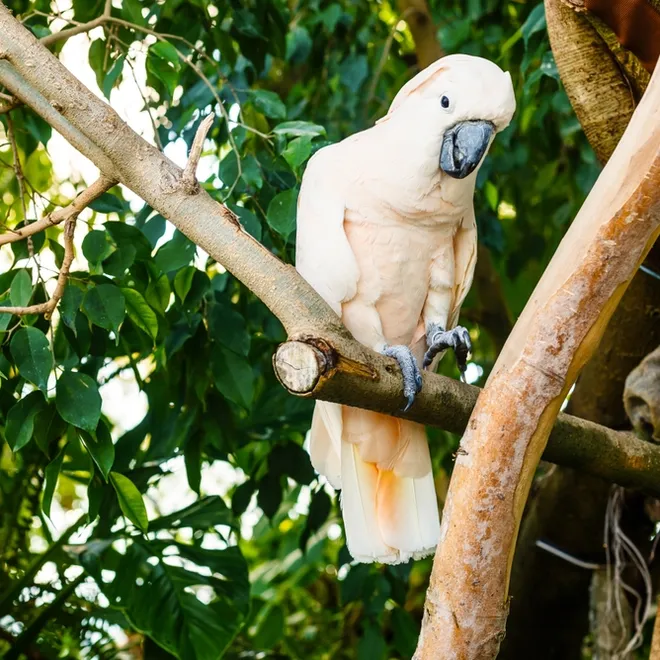
© Shutterstock
Assessment results
High risk

Conservation | High risk
This animal is threatened by extinction in the wild, and there is global demand which is creating potentially more unsustainable and illegal poaching of the species. By having it as a pet creates more demand for these animals, which can worsen their situation in the wild. Learn more about wildlife conservation and the pet trade.

Legality | Moderate risk
This animal is threatened by extinction in the wild, and there is global demand which is creating potentially more unsustainable and illegal poaching of the species. By having it as a pet creates more demand for these animals, which can worsen their situation in the wild. Learn more about wildlife conservation and the pet trade.

Human and public health | Moderate risk
It is likely that this animal is a potential threat to human or public health, either due to potential zoonotic diseases or due to physical attributes that can harm humans. Learn more about animal-related illness and injuries.

Invasiveness | Low risk
This species would not likely impact native biodiversity or habitats. However, never release a pet into the wild for any reason.

Animal welfare | High risk
Care, diet, and housing needs of this species are extremely difficult to meet for its lifetime, and potential owners are unlikely to be able to provide a good quality of life. Learn more about the challenges with exotic pet welfare.
⚠️ Important considerations
- Umbrella cockatoo populations are declining in the wild and they are an endangered species, targeted for the illegal pet trade. US laws regulate their trade as a result.
- Umbrella cockatoo housing, diet, and social needs are hard to meet in captivity. They become very attached to their owners and need hours of stimulation and social time outside of their cage each day, along with a rotating variety of toys, puzzles, perches, and space to fly. Feather destructive behavior is a common problem in Umbrella cockatoos from not having their care needs met. Ideally, they should be housed with multiple umbrella cockatoos in a large aviary for flight space.
- As with all pet birds, ensure there is access to a veterinarian that specializes in birds and consult them about proper habitat set up, diet, and care. Find an avian vet near you.
Basic information
Taxonomy:
Psittaciformes, Psittacidae
Lifespan:
20-40 years in the wild, up to 70 years in captivity
Weight:
17-22 oz. (0.4- 0.6 kg)
Size:
~18 in (45.7 cm) on average with a wingspan of 10 to 12 in. (25-30 cm)
Native range and habitat:
Forests and open woodlands, mangroves, swamps, and agricultural fields of the Northern Moluccan islands of Indonesia.
Diet:
Mainly fruits from trees, and sometimes insects, small reptiles, grains, nuts and seeds.
Activity and behavior:
- Social birds, but don't form close bonds with one another unless they are a mating pair. Umbrella cockatoos can be found alone in pairs and small groups, or in flocks of up to 15 individuals.
- Diurnal and tend to be sedentary, but do wander in search of food, and are very smart and curious birds.
© WWF-Japan