Publications
-
-
-
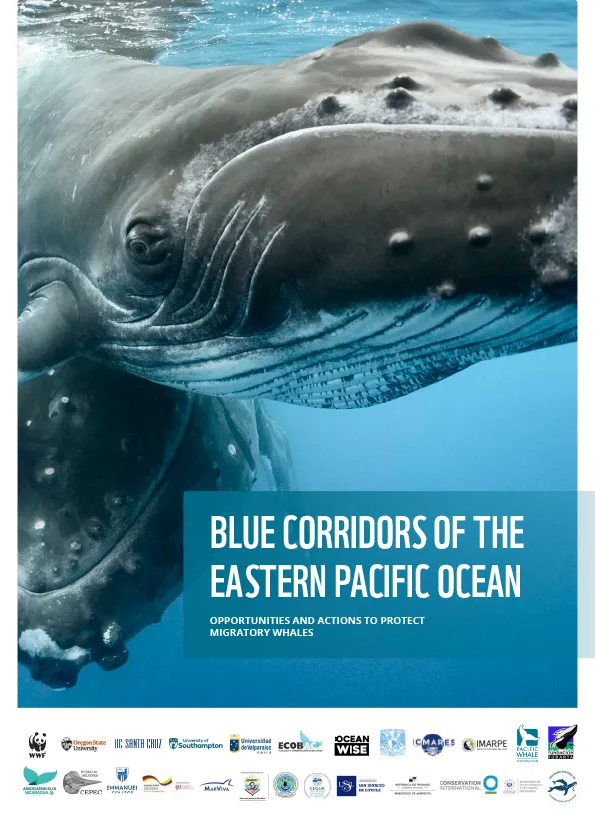
The focus of this report is the Eastern Pacific Ocean where there are growing risks and conservation opportunities for whales undertaking oceanic migrations over thousands of kilometers. The productive oceanographic conditions, features and currents of the Eastern Pacific Ocean support a wealth of great whale populations.
Climate change, ship traffic, underwater noise and fishing activity are impacting whales along multiple points on their important migration routes, crucial for their survival. WWF and partners have identified actions for governments, industry and individuals to safeguard whale superhighways across the Eastern Pacific Ocean by 2030.
In 2022, drawing on the latest scientific evidence from years of satellite tracking data and knowledge from the global research community, WWF and its partners – including the University of California Santa Cruz, Oregon State University, University of Southampton and many others – compiled over thirty years of data to map routes of migratory whales as they move through international waters, national seas and coastal areas, between key breeding and foraging locations.
The analysis in this report focuses on the Eastern Pacific Ocean, from the Bering Strait to the Antarctic Peninsula. It draws on a conservation practice already widely used on land known as "connectivity conservation" but applies it to the world‚'s seas. Connectivity conservation is a concept that recognizes that species survive and adapt better when their habitats are managed and protected as large, interconnected networks.
Based on satellite tracking, photo identification and other data sources, the report illustrates case studies of emerging blue corridors for whales and some hotspots where there is growing human interference. The report highlights conservation opportunities and ideas to implement solutions.
-
The WWF-CARE Alliance works at the critical intersection of development and conservation. Powered by two global leaders in their respective fields, the Alliance leverages complementary skills, competencies, and scale to strengthen ecosystems, support the women who depend on them, and help build a future where people and nature thrive.
-
This brief highlights the importance and potential of robust internal controls in helping achieve the objectives of agencies tasked with protecting wildlife and the environment by identifying performance gaps and opportunities for improvement, enabling oversight, and fostering accountability. However, in some countries, internal controls are not always applied to wildlife-related corruption or even natural resource management. Conservation or anticorruption partners can help government institutions strengthen their systems of internal controls, building on procedures already in place. Well-designed systems of internal controls can discourage corrupt behavior and mitigate other risks to wildlife and natural resources. While no system can completely eliminate the potential for corrupt behavior, enhancing internal controls can help close the implementation gap between agency objectives and what happens in practice.
For more resources and tools, visit TNRCproject.org.
---This content is made possible by the generous support of the American people through the United States Agency for International Development (USAID). The contents are the responsibility of World Wildlife Fund (WWF) and do not necessarily reflect the views of USAID, the United States Government, or individual TNRC consortium members.
-
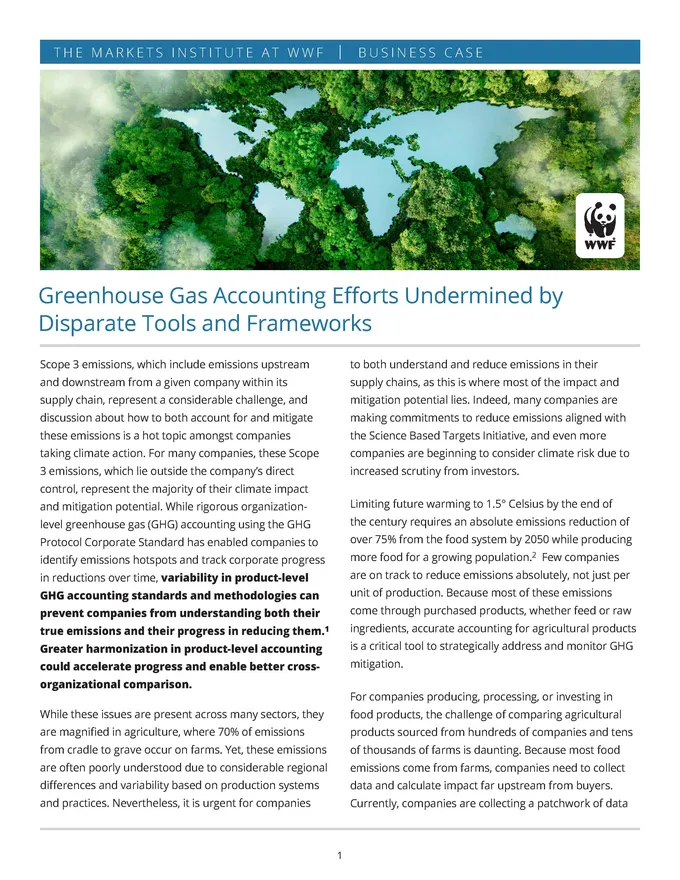
Scope 3 emissions, which include emissions upstream and downstream from a given company within its supply chain, represent a considerable challenge, and discussion about how to both account for and mitigate these emissions is a hot topic amongst companies taking climate action. For many companies, these Scope 3 emissions, which lie outside the company‚'s direct control, represent the majority of their climate impact and mitigation potential.
While rigorous organization-level greenhouse gas (GHG) accounting using the GHG Protocol Corporate Standard has enabled companies to identify emissions hotspots and track corporate progress in reductions over time, variability in product-level GHG accounting standards and methodologies can prevent companies from understanding both their true emissions and their progress in reducing them. Greater harmonization in product-level accounting could accelerate progress and enable better cross-organizational comparison.
-
There are challenges facing the preservation and management of protected natural areas in Serbia, despite the country's positive regulations and commitments. Illegal construction and large capital projects have endangered these areas due to limited management opportunities and insufficient government action and civil society organizations have limited standing to act in procedures related to the protection of these areas, which further hinders their active participation. This manual helps Serbian civil society organizations understand rules of spatial and urban planning, opportunities for public participation, key illegal practices in the management and implementation of activities within protected areas, legal procedures, and how to improve citizen participation to combat corruption.
This manual was created as part of the "Systematic and early engagement as a cure for policy capture and a key instrument for prevention of corruption in policy planning" project implemented by WWF Adria in Serbia, funded by the Targeting Natural Resource Corruption (TNRC) project.
For more resources and tools, visit TNRCproject.org.
---This content is made possible by the generous support of the American people through the United States Agency for International Development (USAID). The contents are the responsibility of World Wildlife Fund (WWF) and do not necessarily reflect the views of USAID, the United States Government, or individual TNRC consortium members.
-
The Open Government Partnership and Anti-Corruption in Conservation: Templates for Collective Action
The Open Government Partnership (OGP) is a collaboration of over 150 national and local governments and more than 1000 civil society partners working to promote transparent, participatory, inclusive, and accountable governance. OGP offers a promising opportunity to bring transparency, participation, and accountability to the governance of natural resources, as participating governments collaborate with their civil societies to commit to concrete, impactful reforms to bring transparency, accountability, and participation to bear on the most relevant and important challenges those publics face. This guidance shows how conservation organizations can start taking advantage of OGP as a possible key platform for accomplishing conservation priorities.
Visit the TNRC Knowledge Hub for more resources.---
This content is made possible by the generous support of the American people through the United States Agency for International Development (USAID). The contents are the responsibility of World Wildlife Fund (WWF) and do not necessarily reflect the views of USAID, the United States Government, or individual TNRC consortium members.
-
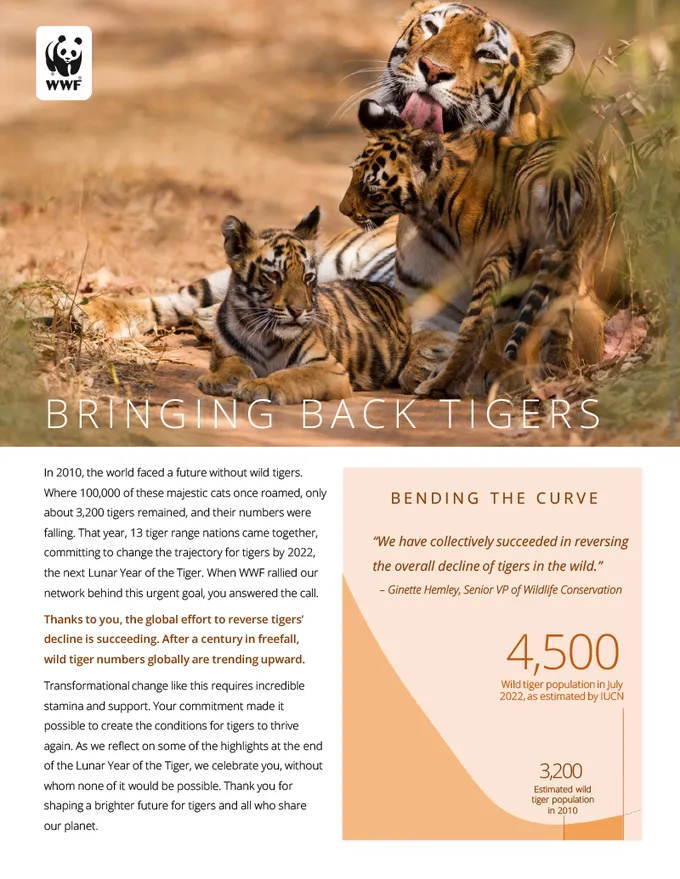
In 2010, the world faced a future without wild tigers. Where 100,000 of these majestic cats once roamed, only about 3,200 tigers remained, and their numbers were falling. That year, 13 tiger range nations came together, committing to change the trajectory for tigers by 2022, the next Lunar Year of the Tiger. This report outlines the actions WWF, governments, and communities have taken to help tigers recover, and the impact of that work.
-
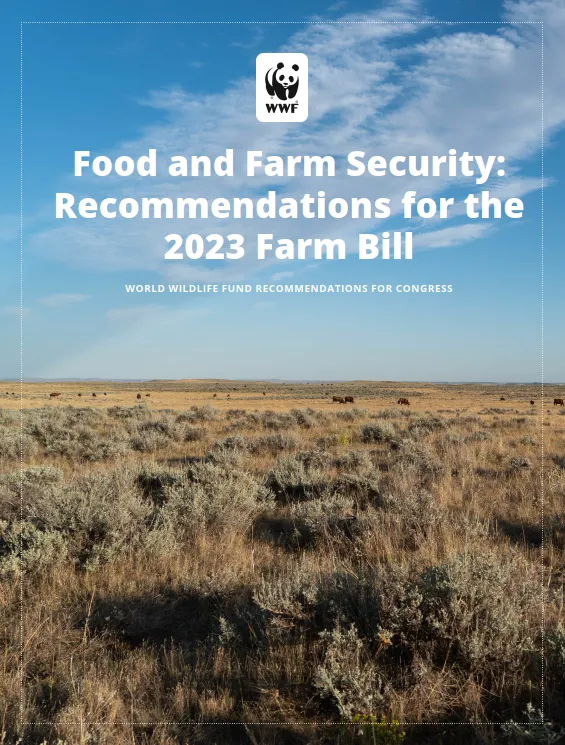
The Farm Bill is among the most significant federal policies providing direct support to the US agriculture sector and affecting the conservation of the nation's soil, land, and water resources. Noted for its decades of bipartisan support, the Farm Bill governs many of the nation's most influential food, agriculture, and conservation programs. World Wildlife Fund urges Congress to pass a 2023 Farm Bill that addresses the ever-increasing challenges facing rural communities and the landscapes and natural resources they depend upon. We need a Farm Bill that invests in farmers, ranchers, and forest owners to make agriculture net zero by 2040, end habitat conversion, and reverse species decline while supporting the viability of US producers.