An online tool charts the recovery of Africa's tourism from the pandemic
A survey of communities in 11 African countries set out to understand the impacts of the COVID-19 pandemic on tourism. The findings highlight the vulnerability of the sector to outside shocks and the need tourism-dependent communities have for diversified income streams.

© NIKHIL ADVANI
Africa supports the world’s most diverse and abundant large-mammal populations, and approximately 17% of the continent’s land area is designated as under protection. These vast areas have attracted travelers from around the world wanting to see elephants, lions, and gorillas in their natural habitats, as well as rare birds and pristine landscapes. Increasingly, Africa’s rich cultural heritage has driven tourism, too. As recently as 2019, Africa’s tourism industry was growing faster than its economy as a whole. It seemed able to transform the protection of biodiversity into the dollars and cents rural communities needed to survive.
Then came the COVID-19 pandemic and the global travel bans that took effect in March 2020.
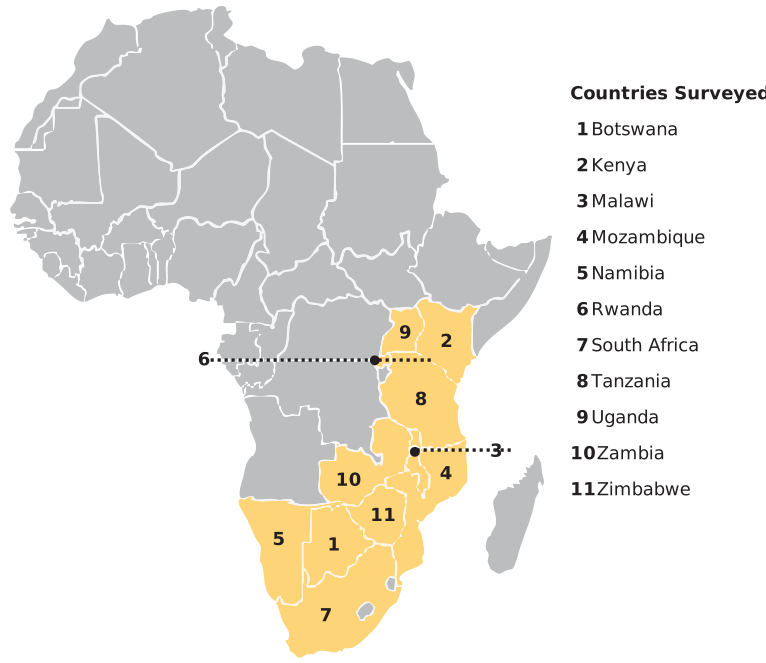
Key survey takeaways
An analysis of data from the survey shows that enterprises in various African countries that have traditionally relied on tourism are in need of diverse forms of income.
-
31,528 total staff pre-COVID
Nature-based tourism total staff (from enterprises surveyed in all countries)
-
13,512 current staff
Nature-based tourism total staff (from enterprises surveyed in all countries)
Most-requested support
BOTSWANA Financial support for projects, training, and mentorship
KENYA Staff salaries and infrastructure
MALAWI Soft loans and grants
MOZAMBIQUE Funds for community projects and education
SOUTH AFRICA Equipment and machinery
TANZANIA Financial support
UGANDA Financial support and infrastructure
ZAMBIA Financial support
ZIMBABWE Equipment
Understanding the impact
To capture the full picture of COVID-19’s impacts and to help Africa’s tourism sector recover and become more resilient, WWF and a host of global, national, and regional partners created the African Nature-Based Tourism Platform. Established in 2021 with $1.9 million from the Global Environment Facility, the platform’s web-based tool compiles data on the effects of the pandemic on tourism businesses, helping to identify the hardest-hit communities and enterprises and their most pressing needs.
In Zimbabwe, for example, the most urgently requested support was equipment—including uniforms for employees, tents, larger machinery, and cyber trackers for wildlife—along with fuel and veterinary medications. Also prioritized were infrastructure development needs: roads, clinics, schools, lodges, and boreholes to improve water access and sanitation systems.
In Sidinda, 50 miles from the iconic Victoria Falls, villagers are concerned about having enough to eat. “We’ve failed to grow anything this season because there is no water. We are worried about food,” says farmer Jeremiah Shoko. He has some goats and a few chickens, which he can sell, but “we’re looking for projects to help us get money to feed our babies,” he says. His village used to have a solar-powered irrigation scheme (funded by a wildlife conservancy) that drew water from the Zambezi River, but the pump broke down and there is no money to repair it.
“The goal is to mobilize at least $15 million to benefit the most vulnerable people,” says Nikhil Advani, WWF’s community, climate, and wildlife lead and the manager of the platform. “We’re looking for funding to help communities and small and medium enterprises recover from the pandemic and become more resilient to future shocks and stressors.”
To better understand these complex dynamics, platform partners collaborated with representatives from grassroots organizations to survey tourism providers. In some countries, these surveys documented for the first time the informal businesses that are part of the tourism value chain. “In countries like Namibia or in Kenya’s Maasai Mara, we know quite well how communities are involved in tourism. But in other places, we’re getting crucial baseline data,” says Advani.
And while the platform’s data-driven approach originated from the aftermath of the global travel bans, it addresses a problem that predates the pandemic: an overreliance on tourism-based economies in African countries, especially ones that rely on foreign travelers.
Nearly all protected areas in Africa rely on funding from tourism. For example, approximately 80% (US$52 million) of South African National Parks’ annual budget comes from the sector; about 80% of Zimbabwe Parks and Wildlife Management Authority’s budget is derived from tourism as well.
Everyday jobs, life-altering income
The survey also asked about nature-based activities to support and complement tourism and conservation that better feed, employ, and equip local people.
One activity identified by Zambian communities was fish farming. There was interest in beekeeping and agriculture as well. Forest-dependent efforts like carbon trading, timber production, birding, and game ranching were also named.
“We learned a lot of lessons from this pandemic,” says Rodgers Lubilo, who helped roll out surveys through the Zambia Community-Based Natural Resource Management Forum. “Any calamity can come, and we need to be prepared and have strategies that are able to provide some resilience to communities, like developing environmentally friendly activities that can be sustainably managed at the local level, as opposed to again depending too much on external support.”
The platform’s next step is to match resilience-building activities with funding options. “We’ve found out the needs of the communities. Now we’re trying to connect with the funders,” says Advani. In some cases, funders may simply want to use the platform’s data; in other cases, the platform team might work from beginning to end with beneficiaries to develop proposals and get them funded. This will be done in an inclusive manner, holding in-person workshops with the community members.
Advani is passionate about local communities being at the forefront of conservation interventions. “We’ve put so much effort this past year into building the network and project infrastructure. It’s because we wanted to get as close to the communities as we could and remove as many layers as possible between them and the platform,” he explains.
“When I look back at this project,” he says, “I want to be able to say that we helped some of the most marginalized communities in Africa become more resilient; that they are no longer solely dependent on tourism; and that they will never again be in the position they’ve been in over the past two years.”
While the platform’s data-driven approach originated from the aftermath of the global travel bans, it addresses a problem that predates the pandemic: an over-reliance on tourism-based economies in African countries, especially ones that rely on foreign travelers.

© Tim Flach Photography
Explore more
Keep reading this issue of World Wildlife magazine