Living with giants
Capturing the complex, often uneasy coexistence between humans and elephants in southwest Zambia
Photography by
-
Jasper Doest

© Jasper Doest / WWF
(Above) Male elephants move quietly through the narrow streets of Livingstone, a town at the edge of Mosi-oa-Tunya National Park. Human-wildlife conflict has escalated here in recent years as expanding settlements and agriculture have encroached on elephant habitats and severe drought has forced the animals to venture into residential areas to seek out food. Often, the large mammals eat and destroy crops and damage property, jeopardizing local livelihoods and leaving residents feeling vulnerable. With both populations vying for limited resources, tensions are rising, increasing the risk of conflicts while posing serious threats to people and elephants alike.
© Jasper Doest / WWF
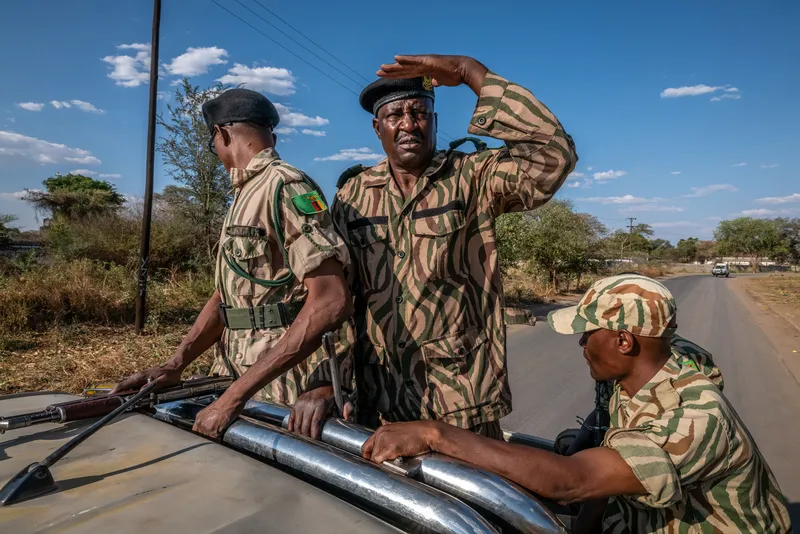
Livingstone’s human-wildlife conflict rapid response team, part of the Department of National Parks and Wildlife, drives toward a reported human-elephant conflict site. Their aim is to prevent and mitigate such conflicts, which have intensified as the region’s elephant population has stabilized, and educate local community members on how to handle elephant encounters.
© Jasper Doest / WWF
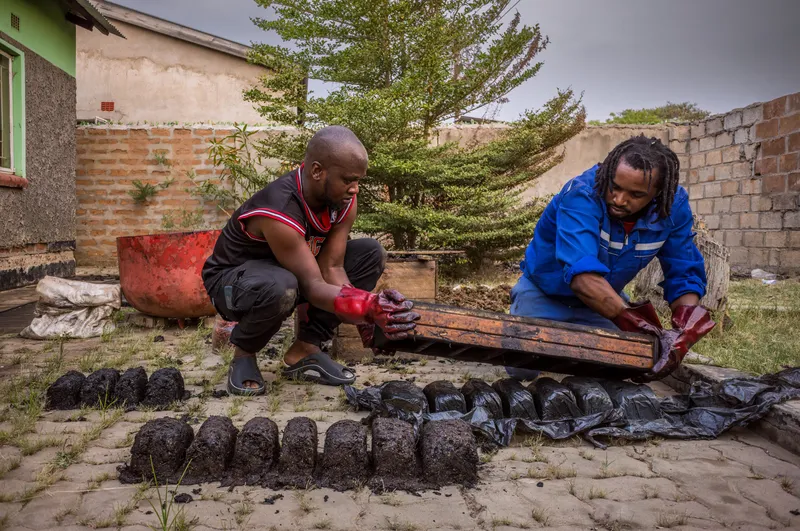
CATS volunteers Chamunolwa Jimayi (left) and Mathews Chilambe make chili bricks from elephant dung and chili peppers to distribute in the community. When burned, the bricks produce irritating smoke that deters elephants from homes and gardens, forestalling potential conflicts. And by sourcing locally produced chili, CATS provides a stable income for growers.
© Jasper Doest / WWF
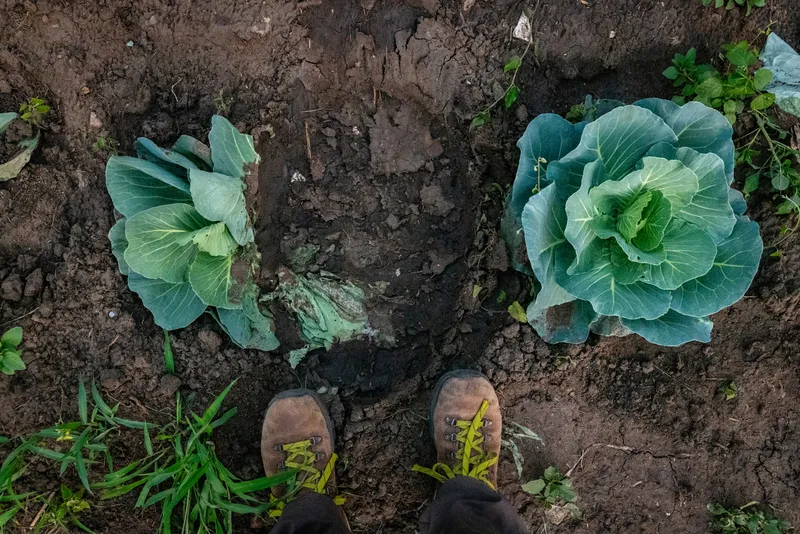
At the Livingstone Institute for Business and Engineering Studies, elephants have persistently breached a wall to raid a garden, causing unexpected maintenance expenses and posing threats to students’ safety.
© Jasper Doest / WWF
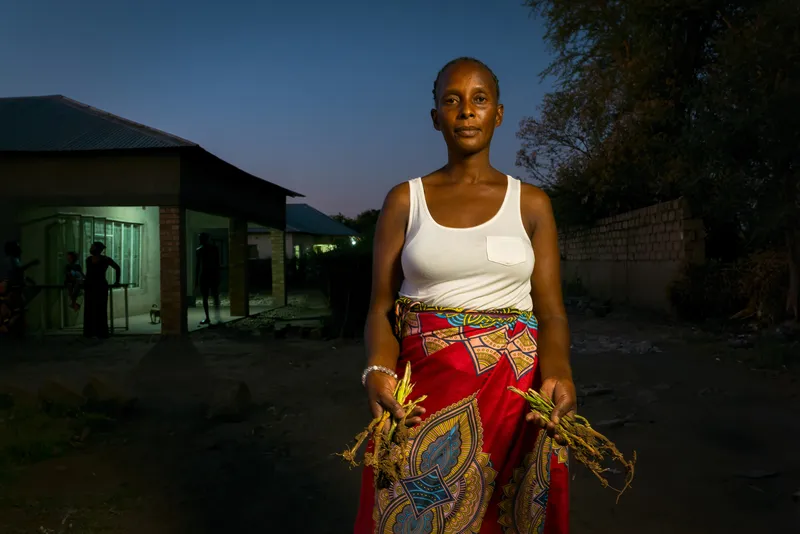
Lucy Mbuzi stands outside her home in Livingstone, where a group of elephants recently ravaged her vegetable garden. As the animals have increasingly come into town to forage foods like mango trees and maize, it’s become more and more challenging for Mbuzi to cultivate crops and provide for her family.
© Jasper Doest / WWF
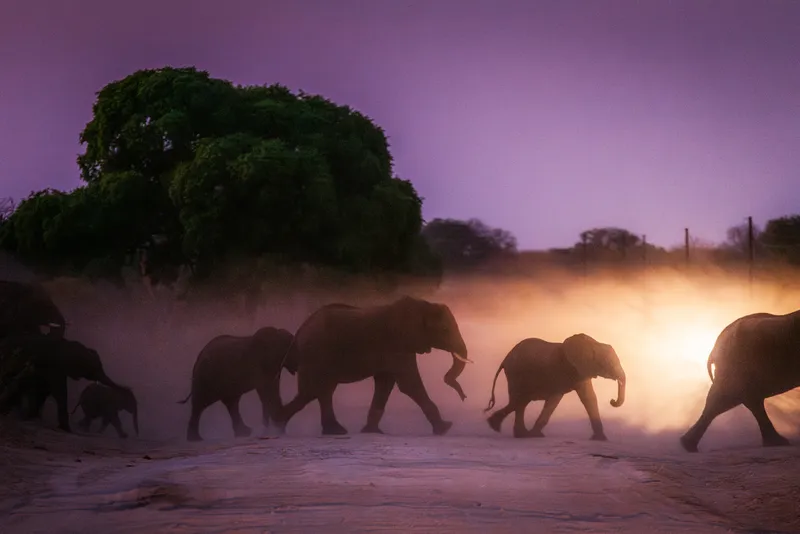
A herd of around 130 elephants traverses the M10 highway. The road cuts through a vital migration corridor, forcing the animals to contend with traffic as they march daily toward the Zambezi River, their main water source during the dry season from August to November.
© Jasper Doest / WWF
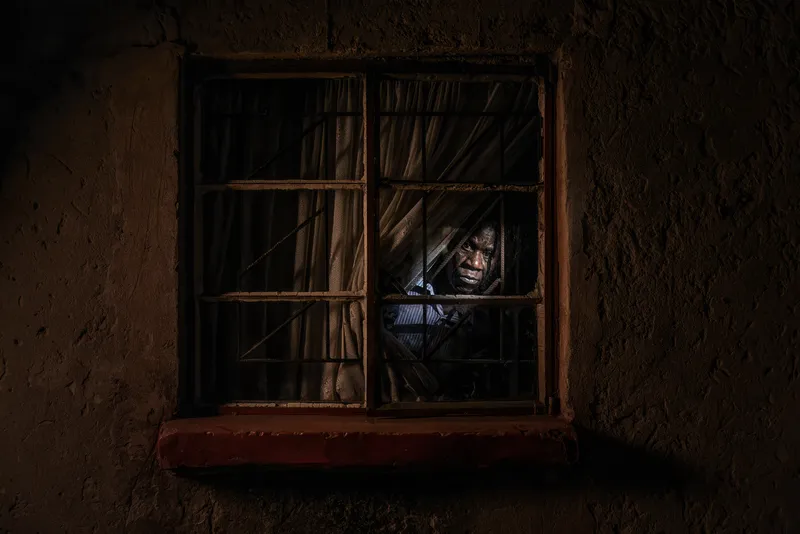
Livingstone’s outskirts turn perilous at night, compelling John Sianga to stay indoors. “Between 1 am and 3 am, elephants invade, trampling gardens as they move from the woods,” he says. “Our nightly peace is shattered.”
© Jasper Doest / WWF
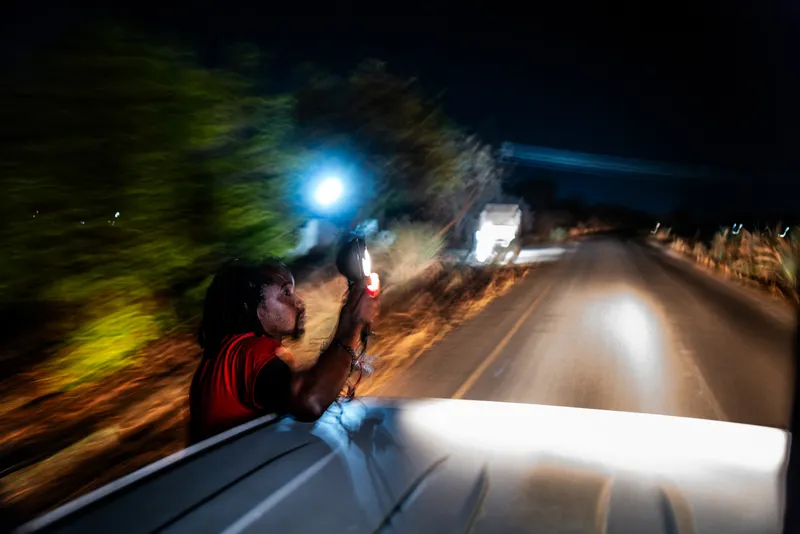
Mathews Chilambe scans the landscape for elephants. He’s a member of a small elephant response team launched in 2019 by the Conservation And Tourism Society (CATS), a local nonprofit that works to foster more peaceful human-elephant coexistence. CATS volunteers respond to emergency calls, locate elephants, and guide the animals away from the community and safely back into Mosi-oa-Tunya National Park.
© Jasper Doest / WWF
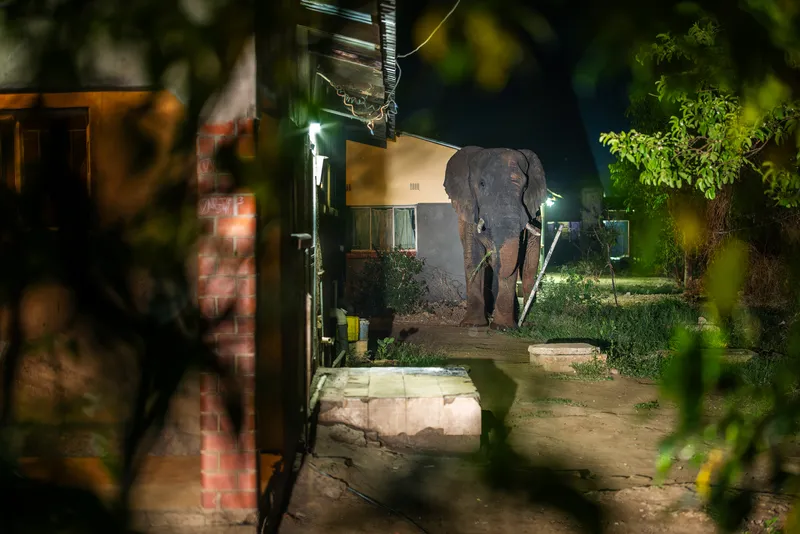
A male elephant strolls through a local neighborhood, his colossal figure towering over single-story brick homes. His companions are nearby, and their deep rumblings reverberate through the night. Among other efforts to reduce the rising, sometimes deadly, incidents between people and elephants, the town has imposed a curfew that goes into effect at dusk and urges residents to remain indoors.
Jasper Doest is a contributing photographer to National Geographic, a senior fellow of the International League of Conservation Photographers, and a WWF-Netherlands ambassador.
© MIKE HILL/GETTY IMAGES
Explore more
Keep reading this issue of World Wildlife magazine